Steve Howell – författare
Visar alla böcker från författaren . Handla med fri frakt och snabb leverans.
4 produkter
4 produkter
Häftad, Engelska, 2022
141 kr
Skickas
Häftad, Engelska, 2026
365 kr
Skickas
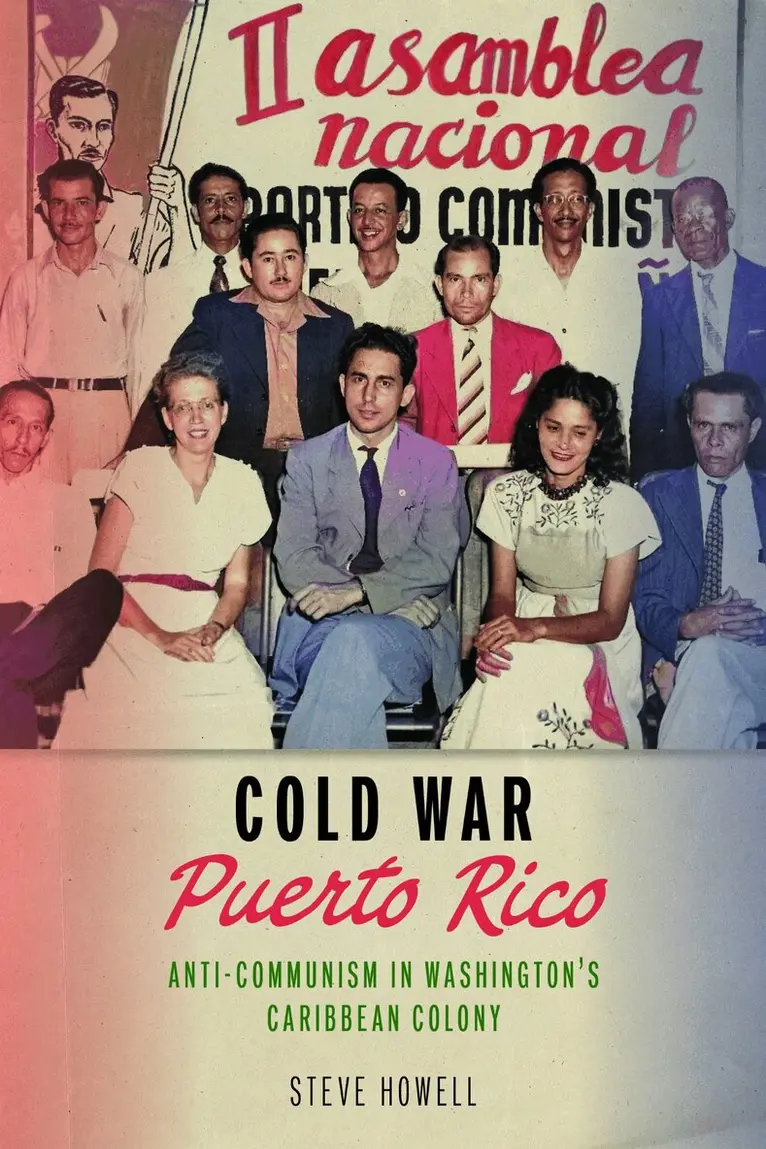
A gripping history of FBI surveillance, political repression, and the fight for Puerto Rican independence In the 1940s, with the construction of a naval base and a bombing range, Puerto Rico became a major geo-political military outpost for the United States. For a power claiming global leadership in a decolonizing world, however, the archipelago’s colonial condition underscored the dissonance between American democratic rhetoric and its imperial reality. The solution was a deal that, in 1952, gave Puerto Rico a degree of self-government without changing its legal status as an “unincorporated” US territory. The US then publicly claimed Puerto Rico was now more autonomous while using repressive tactics such as FBI surveillance, arrests, destabilization, and other methods developed in Washington to silence activists and political parties pushing for full independence. In Cold War Puerto Rico, Steve Howell examines how J. Edgar Hoover and the FBI targeted Puerto Rican communists as part of an offensive against pro-independence parties and activists generally. Howell’s US-born father, who fell afoul of Hoover for producing radical cartoons while working in San Juan in the 1940s, remained on the FBI’s watch list long after exiling himself in Britain. His close friends, the Puerto Rican author Cesar Andreu Iglesias and Jane Speed de Andreu, were meanwhile arrested and imprisoned three times during the 1950s. Drawing on a wealth of new sources, including interviews and FBI files, Howell tells their stories along with those of other activists who battled indictment in 1954 under the Smith Act, challenged the jurisdiction of the House Un-American Activities Committee in San Juan in 1959, and revived the Puerto Rican independence movement in the 1960s, despite the FBI deploying the covert tactics of COINTELPRO against them. Puerto Rico is virtually invisible in histories of what is generally called McCarthyism, yet anti-communist repression was in many ways more intense there than in the mainland US. Now, with Puerto Rico’s future currently hanging in the balance, Howell’s compelling history demonstrates why we need to understand the long enforcement of its colonial status.
Inbunden, Engelska, 2026
1 125 kr
Skickas inom 5-8 vardagar
A gripping history of FBI surveillance, political repression, and the fight for Puerto Rican independence In the 1940s, with the construction of a naval base and a bombing range, Puerto Rico became a major geo-political military outpost for the United States. For a power claiming global leadership in a decolonizing world, however, the archipelago’s colonial condition underscored the dissonance between American democratic rhetoric and its imperial reality. The solution was a deal that, in 1952, gave Puerto Rico a degree of self-government without changing its legal status as an “unincorporated” US territory. The US then publicly claimed Puerto Rico was now more autonomous while using repressive tactics such as FBI surveillance, arrests, destabilization, and other methods developed in Washington to silence activists and political parties pushing for full independence. In Cold War Puerto Rico, Steve Howell examines how J. Edgar Hoover and the FBI targeted Puerto Rican communists as part of an offensive against pro-independence parties and activists generally. Howell’s US-born father, who fell afoul of Hoover for producing radical cartoons while working in San Juan in the 1940s, remained on the FBI’s watch list long after exiling himself in Britain. His close friends, the Puerto Rican author Cesar Andreu Iglesias and Jane Speed de Andreu, were meanwhile arrested and imprisoned three times during the 1950s. Drawing on a wealth of new sources, including interviews and FBI files, Howell tells their stories along with those of other activists who battled indictment in 1954 under the Smith Act, challenged the jurisdiction of the House Un-American Activities Committee in San Juan in 1959, and revived the Puerto Rican independence movement in the 1960s, despite the FBI deploying the covert tactics of COINTELPRO against them. Puerto Rico is virtually invisible in histories of what is generally called McCarthyism, yet anti-communist repression was in many ways more intense there than in the mainland US. Now, with Puerto Rico’s future currently hanging in the balance, Howell’s compelling history demonstrates why we need to understand the long enforcement of its colonial status.
E-bok
PDF, Engelska, 2002174 kr
Läs direkt efter köp
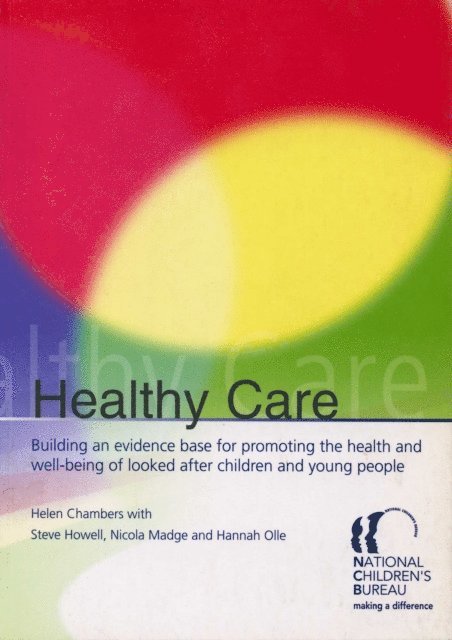
Children and young people who are looked after are among the most socially excluded of all young people. They are reported to have greater health needs than their peers, yet are less likely to receive adequate health care and treatment, or be supported in developing their knowledge and skills in making decisions that promote health and well-being.The National Healthy Care Standard is a national programme to promote the health and well-being of looked after children and young people. Healthy Care is a guidance document for the Standard. It summarises key national and international research and existing best practice; builds an evidence base for promoting the health and well-being of looked after children and young people; sets out current standards and guidance in England; provides health promotion models for the development of future practice.