Steve Waddell - Böcker
Visar alla böcker från författaren Steve Waddell. Handla med fri frakt och snabb leverans.
6 produkter
6 produkter
556 kr
Skickas inom 10-15 vardagar
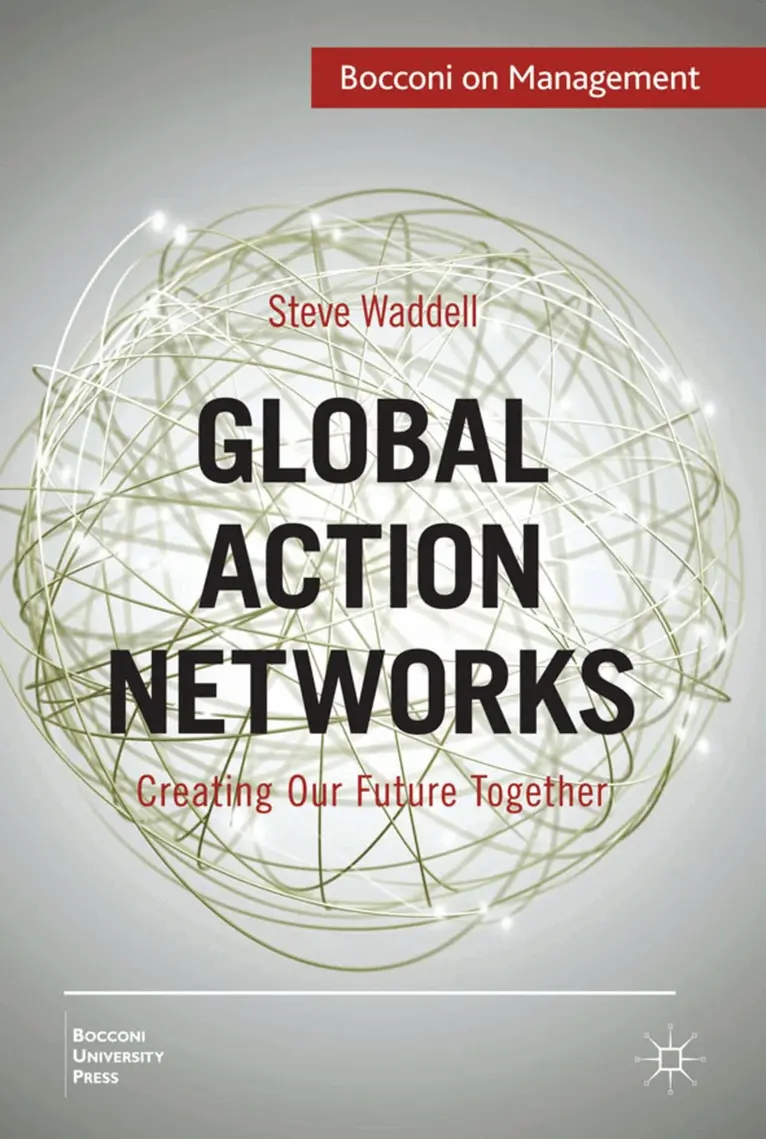
The world's governments are overwhelmed with climate change, war and unrest, the global financial crisis and poverty but there is a promising invention in Global Action Networks (GANs). GANs mobilize resources, bridge divides and promote the long-term deep change and innovation work that is needed to address the global challenges.
556 kr
Skickas inom 10-15 vardagar
The world's governments are overwhelmed with climate change, war and unrest, the global financial crisis and poverty but there is a promising invention in Global Action Networks (GANs). GANs mobilize resources, bridge divides and promote the long-term deep change and innovation work that is needed to address the global challenges.
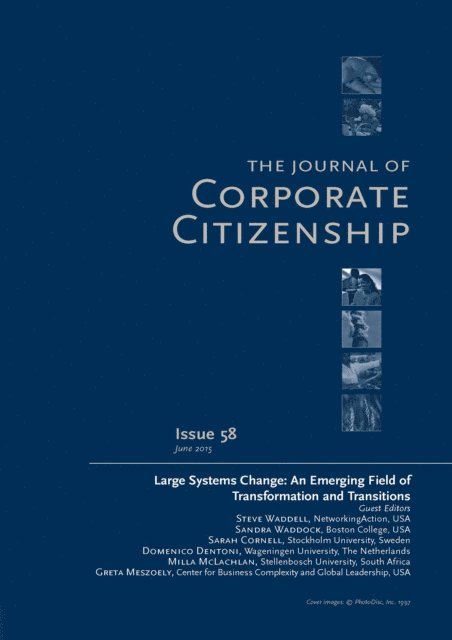
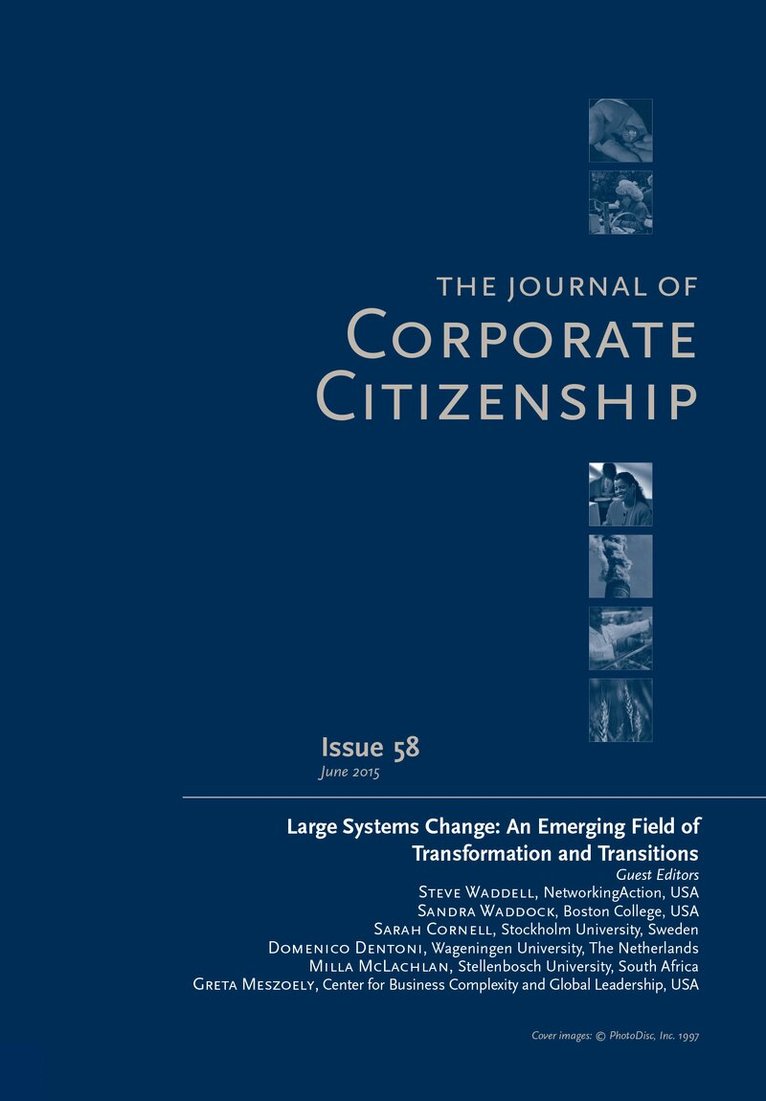
Large Systems Change: An Emerging Field of Transformation and Transitions
A Special Theme Issue of The Journal of Corporate Citizenship (Issue 58)
Häftad, Engelska, 2015
730 kr
Skickas inom 10-15 vardagar
Large Systems Change (LSC) is a field of study and action that is characterized by its focus on transformational pathways towards a participative, flourishing future through inter- and trans-disciplinary approaches that value engagement with practitioners and those aspiring for such futures. Its emergence holds great promise for addressing critical issues. Advancing its development requires aggressiveness to cross the many disciplinary, institutional and other boundaries and build the necessary scale of effort; however, humbleness is also required to recognize that although we have substantial knowledge and methodologies for approaching LSC, we are still at early stages of their development. The papers in this Special Issue of The Journal of Corporate Citizenship focus on the question of how to scale to the field of LSC. We can see the contributors and editors reflect on this at the three levels: broadening by increasing the numbers of people and organizations identified with it; going up and out with a more receptive environment arising with failures of traditional management approaches; and deepening of knowledge and methods for supporting LSC. This Special Issue will be essential reading for those researching in this emerging field, and practitioners looking for the latest thinking on how LSC may be a solution to global challenges.
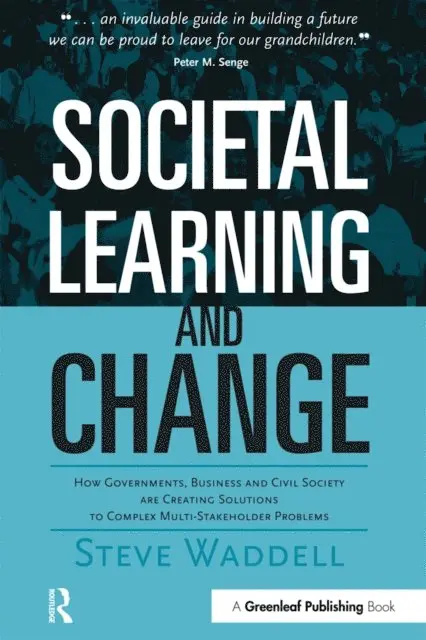
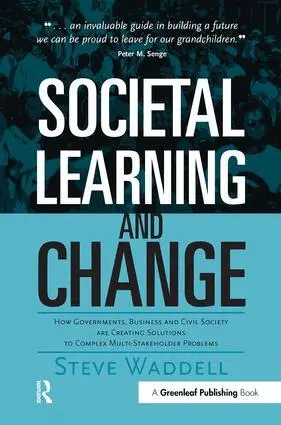
Societal Learning and Change
How Governments, Business and Civil Society are Creating Solutions to Complex Multi-Stakeholder Problems
Inbunden, Engelska, 2005
935 kr
Skickas inom 10-15 vardagar
Constructing roads in Madagascar; forestry along Canada's Pacific Coast; water and sanitation projects in South Africa; community banking in the United States; constructing a new global system for corporate reporting. These all have something in common. They provide great illustrations of the types of profound and wise changes needed in the way we run our affairs if we are to respond to the scale of environmental and social challenges and opportunities facing us. They are examples of "societal learning and change". Today, this phenomenon is occurring across industries as diverse as resources extraction, infrastructure development, agriculture and information technology at the local, national, regional and global levels. Its essence involves the ability to create rich relationships that bridge large differences. This book describes this phenomenon for practitioners to help them address issues and develop opportunities more effectively. Building on the traditions of individual and organizational learning, this book suggests that our challenge is to create learning societies and processes. This involves both change in ourselves as individuals, but also change in the way the three key systems that make up our societies – the political system (government), economic system (business) and social system (civil society) – function by creating more robust interactions that respond to human and environmental imperatives rather than organizational ones. Societal Learning and Change presents a meta-framework that covers diverse approaches, including corporate citizenship, social responsibility, community development, private-public partnerships, inter-sectoral collaboration and sustainability strategies. It makes sense of all of these by emphasising that they all share the need to change relationships at the societal level and explaining how to do this from a systems perspective. The book helps overcome the conundrum where individual organisations are unsuccessfully trying to achieve big change with their stakeholders. Rather than stakeholder management with an organization-centric viewpoint, this book describes the importance of taking a stakeholder engagement and issue/opportunity-centric strategy. Wherever you are, you can make a contribution to shifting the paradigm through a societal learning and change strategy. The critical contribution is creating new relationships between people and organizations that traditionally would not interact but in fact have common interests. When these relationships become meaningful by addressing a problem or developing an opportunity, people begin to learn about each other and develop mutual appreciation and understanding. Often this process is complicated and confusing. People do not use words in the same way even if they speak the same formal language; they do not learn or perceive the world the same way although they may share a common culture; their organizations have diverse goals, resources and weaknesses that make working together problematic. However, it is these very differences that are the source of the value of working together. Societal Learning and Change aims to make it easier to solve differences in order to work together successfully; it does this by identifying some of the differences as sources of tension and opportunity and describing the development processes of building relationships that can produce mutually rewarding innovation that is unimaginable when the relationship begins. This is an extremely optimistic book at a time of great pessimism about the huge forces of globalization and corporate power that seem to be overwhelming us. It will be essential reading for students and practitioners in the fields of organizational learning, sustainability, poverty, international development and stakeholder relations.
Societal Learning and Change
How Governments, Business and Civil Society are Creating Solutions to Complex Multi-Stakeholder Problems
Häftad, Engelska, 2005
569 kr
Skickas inom 10-15 vardagar
Constructing roads in Madagascar; forestry along Canada's Pacific Coast; water and sanitation projects in South Africa; community banking in the United States; constructing a new global system for corporate reporting. These all have something in common. They provide great illustrations of the types of profound and wise changes needed in the way we run our affairs if we are to respond to the scale of environmental and social challenges and opportunities facing us. They are examples of "societal learning and change". Today, this phenomenon is occurring across industries as diverse as resources extraction, infrastructure development, agriculture and information technology at the local, national, regional and global levels. Its essence involves the ability to create rich relationships that bridge large differences. This book describes this phenomenon for practitioners to help them address issues and develop opportunities more effectively. Building on the traditions of individual and organizational learning, this book suggests that our challenge is to create learning societies and processes. This involves both change in ourselves as individuals, but also change in the way the three key systems that make up our societies – the political system (government), economic system (business) and social system (civil society) – function by creating more robust interactions that respond to human and environmental imperatives rather than organizational ones. Societal Learning and Change presents a meta-framework that covers diverse approaches, including corporate citizenship, social responsibility, community development, private-public partnerships, inter-sectoral collaboration and sustainability strategies. It makes sense of all of these by emphasising that they all share the need to change relationships at the societal level and explaining how to do this from a systems perspective. The book helps overcome the conundrum where individual organisations are unsuccessfully trying to achieve big change with their stakeholders. Rather than stakeholder management with an organization-centric viewpoint, this book describes the importance of taking a stakeholder engagement and issue/opportunity-centric strategy. Wherever you are, you can make a contribution to shifting the paradigm through a societal learning and change strategy. The critical contribution is creating new relationships between people and organizations that traditionally would not interact but in fact have common interests. When these relationships become meaningful by addressing a problem or developing an opportunity, people begin to learn about each other and develop mutual appreciation and understanding. Often this process is complicated and confusing. People do not use words in the same way even if they speak the same formal language; they do not learn or perceive the world the same way although they may share a common culture; their organizations have diverse goals, resources and weaknesses that make working together problematic. However, it is these very differences that are the source of the value of working together. Societal Learning and Change aims to make it easier to solve differences in order to work together successfully; it does this by identifying some of the differences as sources of tension and opportunity and describing the development processes of building relationships that can produce mutually rewarding innovation that is unimaginable when the relationship begins. This is an extremely optimistic book at a time of great pessimism about the huge forces of globalization and corporate power that seem to be overwhelming us. It will be essential reading for students and practitioners in the fields of organizational learning, sustainability, poverty, international development and stakeholder relations.
235 kr
Skickas inom 5-8 vardagar