Steven I. Wilkinson – författare
Visar alla böcker från författaren Steven I. Wilkinson. Handla med fri frakt och snabb leverans.
5 produkter
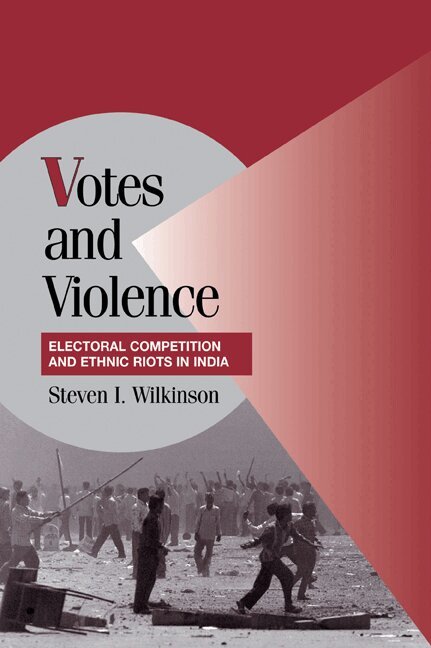
Votes and Violence
Electoral Competition and Ethnic Riots in India
Häftad, 2006
569 kr
Lägg i varukorg
Why do ethnic riots break out when and where they do? Why do some governments try to prevent ethnic riots while others do nothing or even participate in the violence? In this book, Steven I. Wilkinson uses collected data on Hindu-Muslim riots, socio-economic factors and competitive politics in …
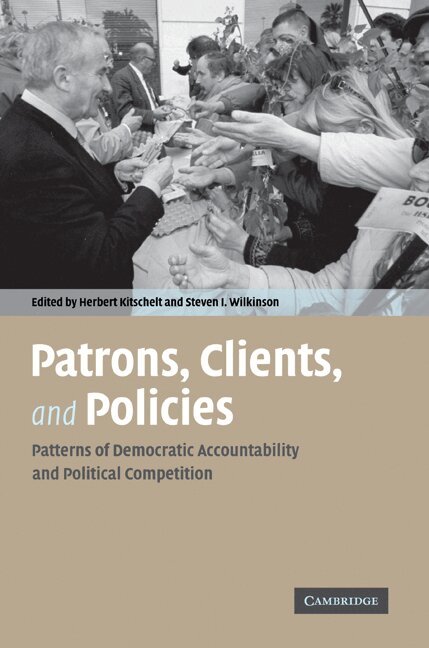
Patrons, Clients and Policies
Patterns of Democratic Accountability and Political Competition
Av Herbert Kitschelt, Steven I. Wilkinson
Häftad, 2007
667 kr
Lägg i varukorg
Most models of party competition assume that citizens vote for a platform rather than narrowly targeted material benefits. However, there are many countries where politicians win elections by giving money, jobs, and services in direct exchange for votes. This is not just true in the developing …
Votes and Violence
Electoral Competition and Ethnic Riots in India
Inbunden, 2004
1628 kr
Lägg i varukorg
Why do ethnic riots break out when and where they do? Why do some governments try to prevent ethnic riots while others do nothing or even participate in the violence? In this book, Steven I. Wilkinson uses collected data on Hindu-Muslim riots, socio-economic factors and competitive politics in …
Patrons, Clients and Policies
Patterns of Democratic Accountability and Political Competition
Av Herbert Kitschelt, Steven I. Wilkinson
Inbunden, 2007
1832 kr
Lägg i varukorg
Most models of party competition assume that citizens vote for a platform rather than narrowly targeted material benefits. However, there are many countries where politicians win elections by giving money, jobs, and services in direct exchange for votes. This is not just true in the developing …
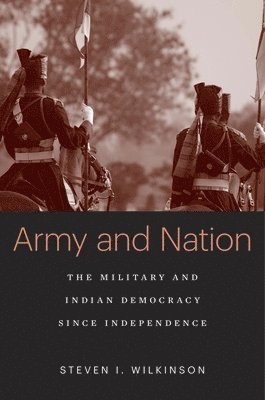
Army and Nation
The Military and Indian Democracy since Independence
Inbunden, 2015
524 kr
Lägg i varukorg
At Indian independence in 1947, the country’s founders worried that the army India inherited—conservative and dominated by officers and troops drawn disproportionately from a few “martial” groups—posed a real threat to democracy. They also saw the structure of the army, with its recruitment on the …