Steven McMullen – författare
482 kr
Skickas inom 10-15 vardagar
2 068 kr
Skickas inom 10-15 vardagar
538 kr
Läs direkt efter köp
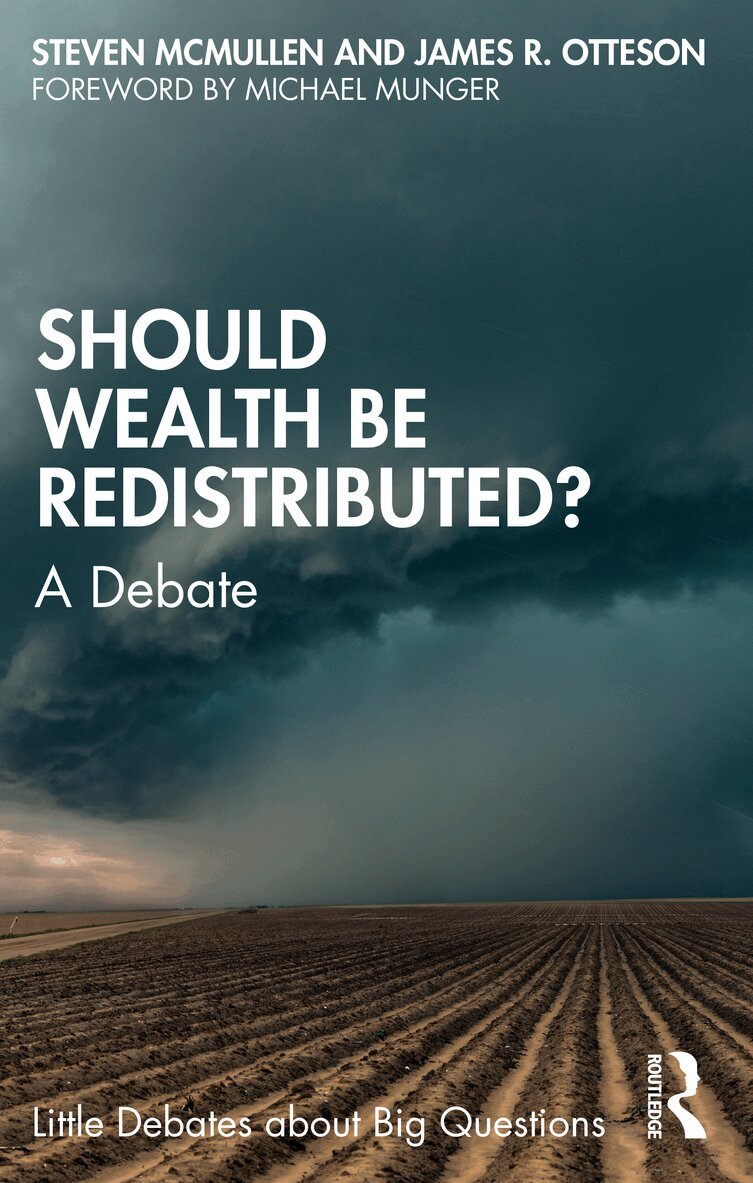
A central contested issue in contemporary economics and political philosophy is whether governments should redistribute wealth. In this book, a philosopher and an economist debate this question. James Otteson argues that respect for individual persons requires that the government should usually not alter the results of free exchanges, and so redistribution is usually wrong. Steven McMullen argues that governments should substantially redistribute wealth in order to ensure that all have a minimal opportunity to participate in economic life. Over the course of the exchange, the authors investigate a number of important questions. Is redistribution properly a question of justice, and what is the appropriate standard? Has the welfare state been effective at fighting poverty? Can we expect government intervention in the economy to be helpful or counterproductive? Are our obligations to help the poor best met through government action, or through private philanthropy and individual charity?
The book features clear statements of each argument, responses to counterarguments, in-text definitions, a glossary of key terms, and section summaries. Scholars and students alike will find it easy to follow the debate and learn the key concepts from philosophy, politics, and economics necessary to understand each position.
Key Features:
Offers clear arguments written to be accessible to readers and students without a deep background in economics, philosophy, or political theory. Fosters a deep exchange of ideas with responses from each author to the main arguments. Provides in-text definitions and a glossary with definitions of key terms. Includes section summaries that give an overview of the main arguments and a comprehensive bibliography for further reading.
538 kr
Läs direkt efter köp
A central contested issue in contemporary economics and political philosophy is whether governments should redistribute wealth. In this book, a philosopher and an economist debate this question. James Otteson argues that respect for individual persons requires that the government should usually not alter the results of free exchanges, and so redistribution is usually wrong. Steven McMullen argues that governments should substantially redistribute wealth in order to ensure that all have a minimal opportunity to participate in economic life. Over the course of the exchange, the authors investigate a number of important questions. Is redistribution properly a question of justice, and what is the appropriate standard? Has the welfare state been effective at fighting poverty? Can we expect government intervention in the economy to be helpful or counterproductive? Are our obligations to help the poor best met through government action, or through private philanthropy and individual charity?
The book features clear statements of each argument, responses to counterarguments, in-text definitions, a glossary of key terms, and section summaries. Scholars and students alike will find it easy to follow the debate and learn the key concepts from philosophy, politics, and economics necessary to understand each position.
Key Features:
Offers clear arguments written to be accessible to readers and students without a deep background in economics, philosophy, or political theory. Fosters a deep exchange of ideas with responses from each author to the main arguments. Provides in-text definitions and a glossary with definitions of key terms. Includes section summaries that give an overview of the main arguments and a comprehensive bibliography for further reading.
1 084 kr
Skickas inom 10-15 vardagar
1 416 kr
Läs direkt efter köp
This bookexplores the economic institutions that determine the nature of animal lives assystematically exploited objects traded in a market economy. It examines humanroles and choice in the system, including the economic logic of agriculture,experimentation, and animal ownership, and analyses the marginalization ofethical action in the economic system.
Animals and the Economy demonstrates that individual consumers andfarmers are often left with few truly animal-friendly choices. Ethicalparticipants in the economy must either face down an array of institutionalbarriers, or exit mainstream markets entirely. This bookargues that these issues are not necessary elements of a market system, andevaluates a number of policy changes that could improve the lives of animals inthe context of a market economy.