Steven S. Gouveia - Böcker
Visar alla böcker från författaren Steven S. Gouveia. Handla med fri frakt och snabb leverans.
14 produkter
14 produkter
628 kr
Skickas inom 10-15 vardagar
This volume collects twenty original essays on the philosophy of film. It uniquely brings together scholars working across a range of philosophical traditions and academic disciplines to broaden and advance debates on film and philosophy. The book includes contributions from a number of prominent philosophers of film including Noël Carroll, Chris Falzon, Deborah Knight, Paisley Livingston, Robert Sinnerbrink, Malcolm Turvey, and Thomas Wartenberg.While the topics explored by the contributors are diverse, there are a number of thematic threads that connect them. Overall, the book seeks to bridge analytic and continental approaches to philosophy of film in fruitful ways. Moving to the individual essays, the first two sections offer novel takes on the philosophical value and the nature of film. The next section focuses on the film-as-philosophy debate. Section IV covers cinematic experience, while Section V includes interpretations of individual films that touch on questions of artificial intelligence, race and film, and cinema’s biopolitical potential. Finally, the last section proposes new avenues for future research on the moving image beyond film.This book will appeal to a broad range of scholars working in film studies, theory, and philosophy.
628 kr
Skickas inom 10-15 vardagar
This volume addresses key questions related to how content in thought is derived from perceptual experience. It includes chapters that focus on single issues on perception and cognition, as well as others that relate these issues to an important social construct that involves both perceptual experience and cognitive activities: aesthetics. While the volume includes many diverse views, several prominent themes unite the individual essays: a challenge to the notion of the discreet, and non-temporal, unit of perception, a challenge to the traditional divide between perception and cognition, and a challenge to the traditional divide between unconscious and conscious intentionality. Additionally, the chapters discuss the content of perceptual experience, the value of traditional notions of content, disjunctivism, adverbialism, and phenomenal experience. The final section of essays dealing with perception and cognition in aesthetics features work in experimental aesthetics and unique perspectives from artists and gallerists working outside of philosophy. Perception, Cognition and Aesthetics is a timely volume that offers a range of unique perspectives on debates in philosophy of mind surrounding perception and cognition. It will also appeal to scholars working in aesthetics and art theory who are interested in the ways these debates influence our understanding of art.
2 100 kr
Skickas inom 10-15 vardagar
This volume collects twenty original essays on the philosophy of film. It uniquely brings together scholars working across a range of philosophical traditions and academic disciplines to broaden and advance debates on film and philosophy. The book includes contributions from a number of prominent philosophers of film including Noël Carroll, Chris Falzon, Deborah Knight, Paisley Livingston, Robert Sinnerbrink, Malcolm Turvey, and Thomas Wartenberg.While the topics explored by the contributors are diverse, there are a number of thematic threads that connect them. Overall, the book seeks to bridge analytic and continental approaches to philosophy of film in fruitful ways. Moving to the individual essays, the first two sections offer novel takes on the philosophical value and the nature of film. The next section focuses on the film-as-philosophy debate. Section IV covers cinematic experience, while Section V includes interpretations of individual films that touch on questions of artificial intelligence, race and film, and cinema’s biopolitical potential. Finally, the last section proposes new avenues for future research on the moving image beyond film.This book will appeal to a broad range of scholars working in film studies, theory, and philosophy.
2 100 kr
Skickas inom 10-15 vardagar
This volume addresses key questions related to how content in thought is derived from perceptual experience. It includes chapters that focus on single issues on perception and cognition, as well as others that relate these issues to an important social construct that involves both perceptual experience and cognitive activities: aesthetics. While the volume includes many diverse views, several prominent themes unite the individual essays: a challenge to the notion of the discreet, and non-temporal, unit of perception, a challenge to the traditional divide between perception and cognition, and a challenge to the traditional divide between unconscious and conscious intentionality. Additionally, the chapters discuss the content of perceptual experience, the value of traditional notions of content, disjunctivism, adverbialism, and phenomenal experience. The final section of essays dealing with perception and cognition in aesthetics features work in experimental aesthetics and unique perspectives from artists and gallerists working outside of philosophy. Perception, Cognition and Aesthetics is a timely volume that offers a range of unique perspectives on debates in philosophy of mind surrounding perception and cognition. It will also appeal to scholars working in aesthetics and art theory who are interested in the ways these debates influence our understanding of art.
1 343 kr
Skickas inom 10-15 vardagar
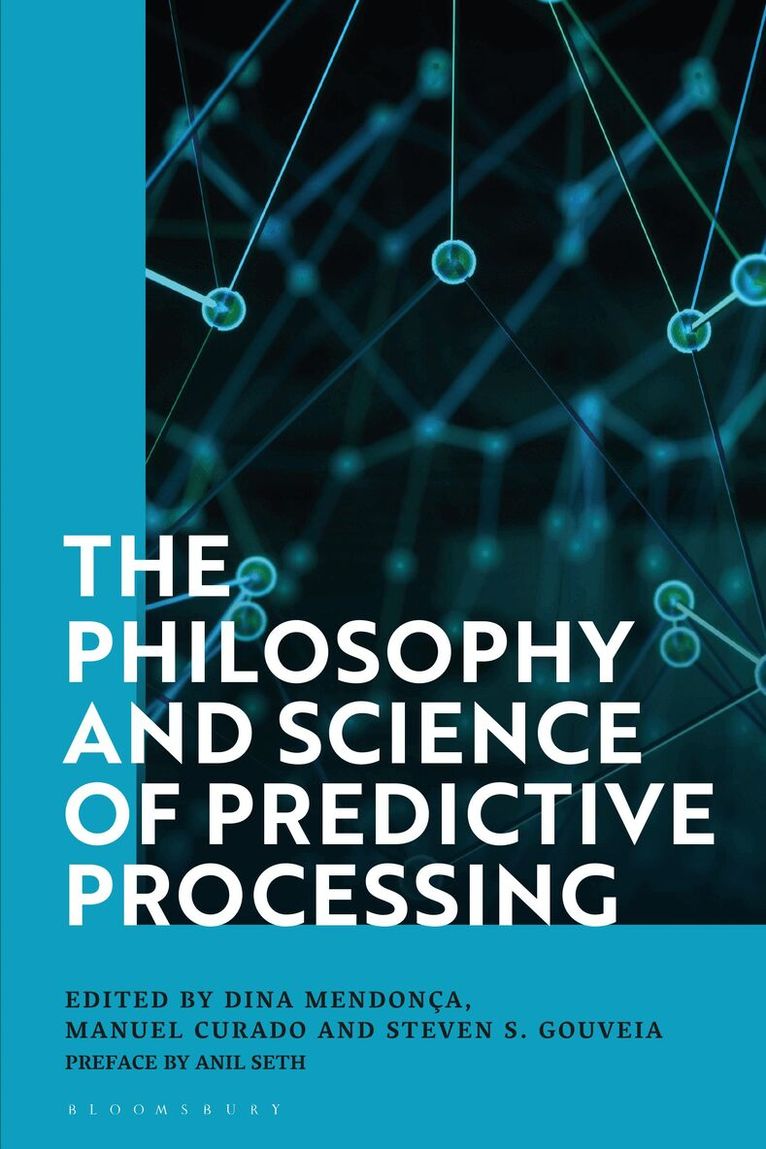
This book explores how predictive processing, which argues that our brains are constantly generating and updating hypotheses about our external conditions, sheds new light on the nature of the mind. It shows how it is similar to and expands other theoretical approaches that emphasize the active role of the mind and its dynamic function.Offering a complete guide to the philosophical and empirical implications of predictive processing, contributors bring perspectives from philosophy, neuroscience, and psychology. Together, they explore the many philosophical applications of predictive processing and its exciting potential across mental health, cognitive science, neuroscience, and robotics.Presenting an extensive and balanced overview of the subject, The Philosophy and Science of Predictive Processing is a landmark volume within philosophy of mind.
422 kr
Skickas inom 10-15 vardagar
This book explores how predictive processing, which argues that our brains are constantly generating and updating hypotheses about our external conditions, sheds new light on the nature of the mind. It shows how it is similar to and expands other theoretical approaches that emphasize the active role of the mind and its dynamic function.Offering a complete guide to the philosophical and empirical implications of predictive processing, contributors bring perspectives from philosophy, neuroscience, and psychology. Together, they explore the many philosophical applications of predictive processing and its exciting potential across mental health, cognitive science, neuroscience, and robotics.Presenting an extensive and balanced overview of the subject, The Philosophy and Science of Predictive Processing is a landmark volume within philosophy of mind.
1 406 kr
Kommande
Combining theory with practical perspectives from diverse disciplines, this volume provides a wide-ranging exploration of AI ethics across healthcare, education, military operations, and more. As AI technology advances rapidly, ethical dilemmas become increasingly complex and multifaceted. This book uniquely addresses these challenges by bringing together cutting-edge research from philosophy, law, computer science, sociology, and psychology to offer a holistic understanding of AI ethics. Divided into five parts, Part I, focused on moral reasoning, sets the stage by delving into the philosophical foundations necessary for understanding AI ethics. Chapters on recalibrating AI ethics, deskilling moral reasoning, and principles of care provide a robust theoretical framework. Parts II to IV address the practical applications of AI ethics in healthcare; wider societal contexts, from art to warfare; and education and business. The diverse expertise brought by an international team of leading and emerging scholars provides a rich and nuanced examination of timely issues including AI and mental health and algorithmic injustices. The final part then attends to AI safety, assessing the infeasibility of accurately monitoring advanced AI systems and the urgent safety, and ethical, considerations this necessitates. Using real-word case studies throughout, such as prompt tests for algorithmic racism in ChatGBT 3.5, AI Ethics Explored is essential reading for anyone seeking a better understanding of the complicated ethical issues we all face and will continue to face as artificial technology evolves.
909 kr
Skickas inom 5-8 vardagar
812 kr
Skickas inom 5-8 vardagar
763 kr
Skickas inom 5-8 vardagar
1 300 kr
Skickas inom 5-8 vardagar
1 166 kr
Skickas inom 10-15 vardagar
Gouveia argues for an approach that conceives the interdisciplinarity of both philosophy and neuroscience, in a particular and sound methodology, offering empirical examples of the explanatory power of this methodology over the others.
1 166 kr
Skickas inom 10-15 vardagar
Gouveia argues for an approach that conceives the interdisciplinarity of both philosophy and neuroscience, in a particular and sound methodology, offering empirical examples of the explanatory power of this methodology over the others.
2 601 kr
Kommande
This Handbook explores the ethical dimensions of Artificial Intelligence (AI) across philosophical, legal, and applied perspectives. Bringing together leading scholars and practitioners, the handbook examines key issues in this field, including algorithmic bias, privacy, responsibility, and AI’s impact on human rights and democracy. It also explores sector-specific challenges in healthcare, law, finance, art and many more, offering a multidisciplinary approach to AI Ethics. With a balance of theoretical insights and practical studies and with a diversity of authorship, this handbook serves as an essential resource for academics, policymakers, and technology professionals navigating the ethical challenges of AI in the 21st century.