Steven T. Wereley – författare
Visar alla böcker från författaren Steven T. Wereley. Handla med fri frakt och snabb leverans.
7 produkter
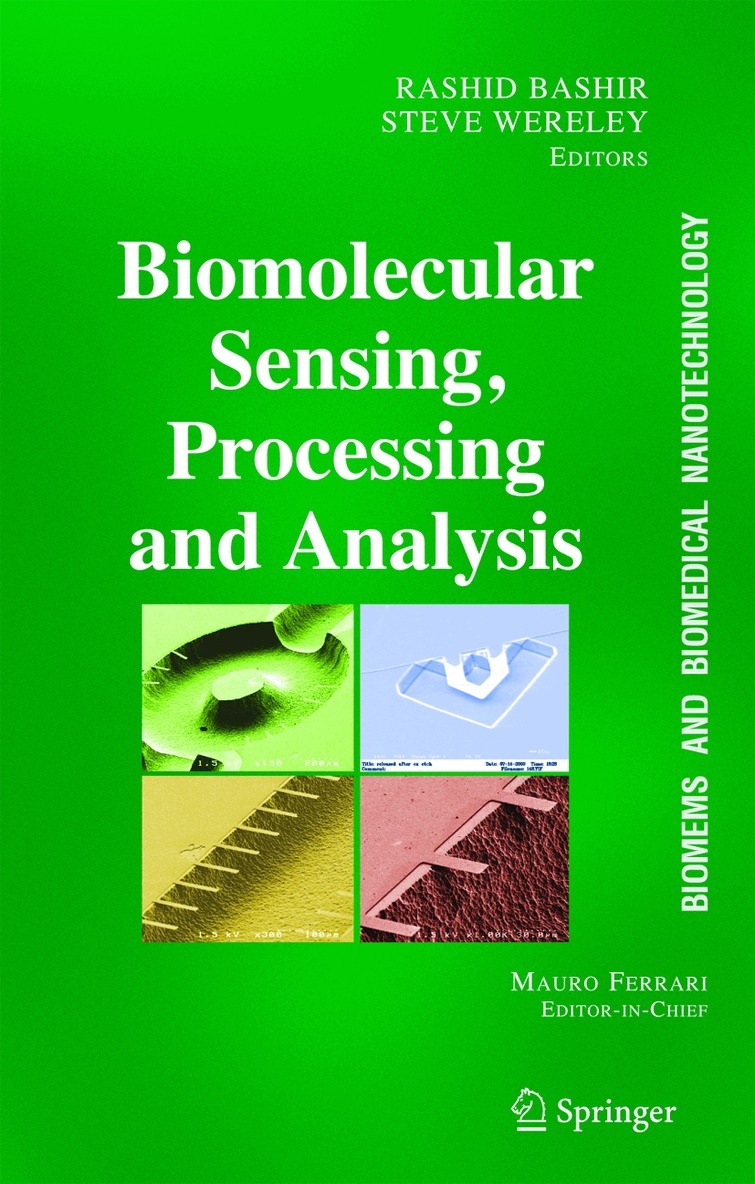
BioMEMS and Biomedical Nanotechnology
Volume IV: Biomolecular Sensing, Processing and Analysis
Av Rashid Bashir, Steven T. Wereley
Inbunden, 2006
1687 kr
Lägg i varukorg
Less than twenty years ago photolithography and medicine were total strangers to one another. They had not yet met, and not even looking each other up in the classi?eds. And then, nucleic acid chips, micro?uidics and microarrays entered the scene, and rapidly these strangers became indispensable …
BioMEMS and Biomedical Nanotechnology
Volume IV: Biomolecular Sensing, Processing and Analysis
Av Steven T. Wereley, Rashid Bashir
E-bok, 2007
2174 kr
Lägg i varukorg
BioMEMS and Biomedical Nanotechnology
Volume IV: Biomolecular Sensing, Processing and Analysis
Av Rashid Bashir, Steven T. Wereley
Häftad, 2016
1690 kr
Lägg i varukorg
Fundamentals and Applications of Microfluidics
Av Nam-Trung Nguyen, Steven T. Wereley
Inbunden, 2006
2084 kr
Lägg i varukorg
Updating the Artech House bestseller, "Fundamentals and Applications of Microfluidics", this newly revised second edition provides electrical and mechanical engineers with complete and current coverage of microfluidics - an emerging field involving fluid flow and devices in microscale and …
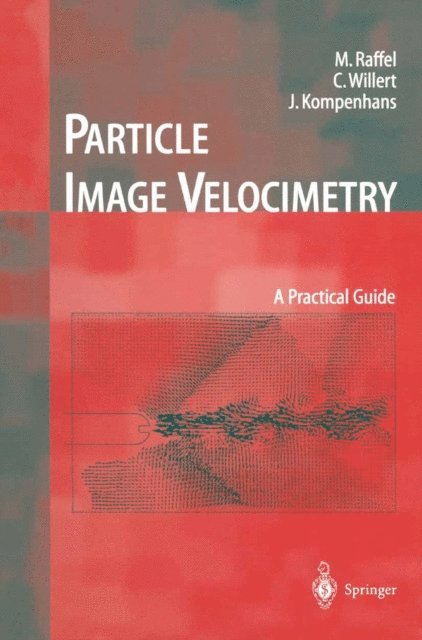
Particle Image Velocimetry
A Practical Guide
Av Jurgen Kompenhans, Steven T. Wereley m. fl.
E-bok, 2007
1459 kr
Lägg i varukorg
The development of Particle Image Velocimetry (PIV), a measurement technique, which allows for capturing velocity information of whole ?ow ?elds in fractions of a second, has begun in the eighties of the last century. In 1998, when this book has been published ?rstly, the PIV technique emerged from …
Particle Image Velocimetry
A Practical Guide
Av Jurgen Kompenhans, Steven T. Wereley m. fl.
E-bok, 2013
1148 kr
Lägg i varukorg
Results from several applications of particle image velocimetry (PIV) to unsteady flows at a laboratory scale have been published, and commercial products are now available for more general laboratory use, but for certain industrially important applications, reliable equipment is often available …
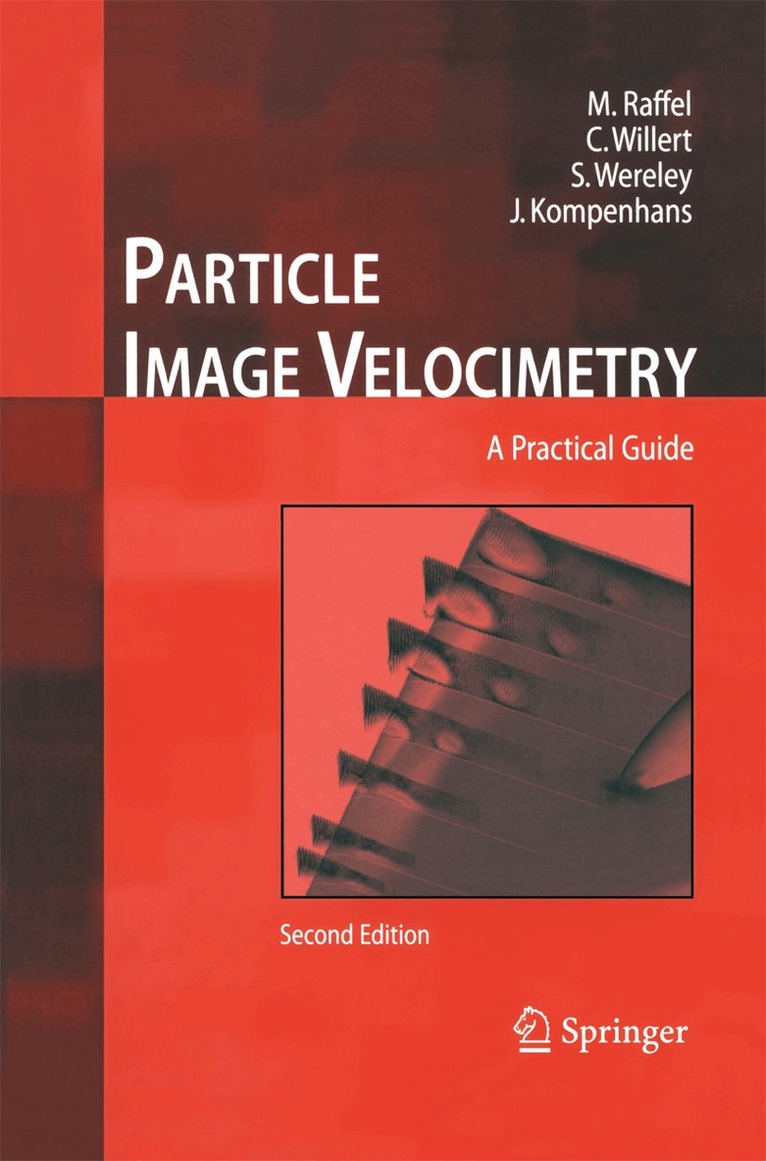
Particle Image Velocimetry
A Practical Guide
Av Markus Raffel, Christian E. Willert m. fl.
Häftad, 2014
1439 kr
Tillfälligt slut
The development of Particle Image Velocimetry (PIV), a measurement technique, which allows for capturing velocity information of whole ?ow ?elds in fractions of a second, has begun in the eighties of the last century. In 1998, when this book has been published ?rstly, the PIV technique emerged from …