Sturt Fraser Sturt – författare
Visar alla böcker från författaren . Handla med fri frakt och snabb leverans.
3 produkter
3 produkter
E-bok
PDF, Engelska, 2015328 kr
Läs direkt efter köp
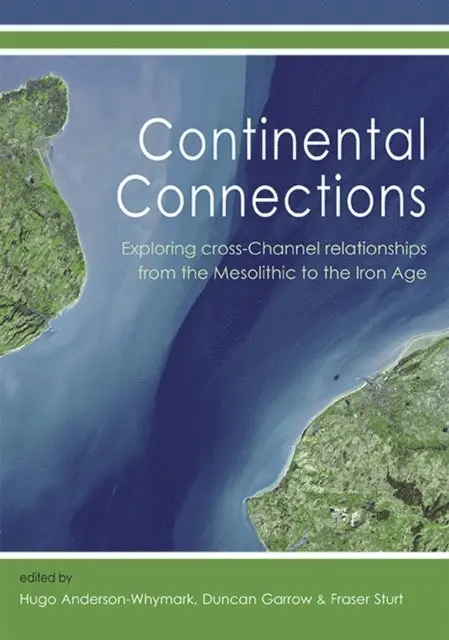
The prehistories of Britain and Ireland are inescapably entwined with continental European narratives. The central aim here is to explore ‘cross-channel’ relationships throughout later prehistory, investigating the archaeological links (material, social, cultural) between the areas we now call Britain and Ireland, and continental Europe, from the Mesolithic through to the end of the Iron Age. Since the separation from the European mainland of Ireland (c. 16,000 BC) and Britain (c. 6000 BC), their island nature has been seen as central to many aspects of life within them, helping to define their senses of identity, and forming a crucial part of their neighbourly relationship with continental Europe and with each other. However, it is important to remember that the surrounding seaways have often served to connect as well as to separate these islands from the continent. In approaching the subject of ‘continental connections’ in the long-term, and by bringing a variety of different archaeological perspectives (associated with different periods) to bear on it, this volume provides a new a new synthesis of the ebbs and flows of the cross-channel relationship over the course of 15,000 years of later prehistory, enabling fresh understandings and new insights to emerge about the intimately linked trajectories of change in both regions.
E-bok
Engelska, 2017352 kr
Läs direkt efter köp
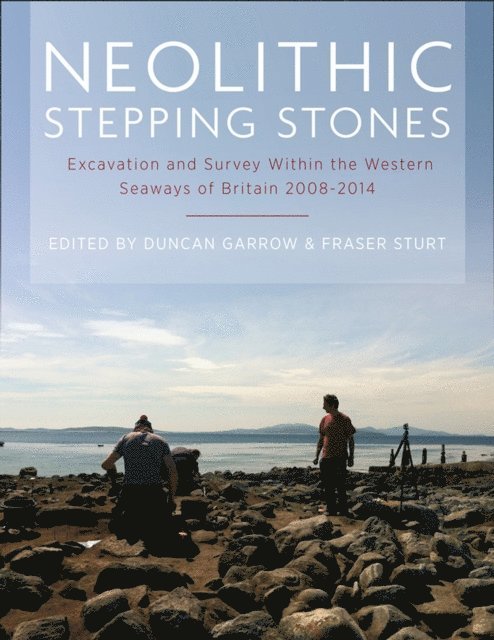
The ‘western seaways’ are an arc of sea extending from the Channel Islands in the south, through the Isles of Scilly around to Orkney in the north. This maritime zone has long been seen as a crucial corridor of interaction during later prehistory. Connections across it potentially led, for example, to the eventual arrival of the Neolithic in Britain, almost 1000 years after it arrived on the near continent. This book’s primary focus is Early Neolithic settlement on islands within the ‘western seaways’ – sites that offer significant insight into the character of the Mesolithic–Neolithic transition in this particular maritime zone. It also explores a series of directly related, wider themes: the nature and effects of ‘island-ness’ in later prehistory; the visibility of material connections across the sea; the extent of Neolithic settlement variability across Britain; and the consequences of geographical biases in research for our understanding of the prehistoric past. At the heart of the book lie the results of three substantial excavations at L’Erée, Guernsey; Old Quay, St Martin’s (Isles of Scilly); and An Doirlinn, South Uist. Key findings include: the first major Mesolithic flint assemblage recovered from Scilly; one of the most extensively excavated and long-lasting Neolithic/Bronze Age occupation sites in the Channel Islands; the first substantial Neolithic settlement on Scilly; and the longest sequence of Neolithic/Early Bronze Age occupation on a single site from the Outer Hebrides. In order to contextualise the significance of these findings, we also present an extended discussion and broad synthesis of Mesolithic, Neolithic and Bronze Age archaeology on each island group.
E-bok
PDF, Engelska, 2017351 kr
Läs direkt efter köp
The ‘western seaways’ are an arc of sea extending from the Channel Islands in the south, through the Isles of Scilly around to Orkney in the north. This maritime zone has long been seen as a crucial corridor of interaction during later prehistory. Connections across it potentially led, for example, to the eventual arrival of the Neolithic in Britain, almost 1000 years after it arrived on the near continent. This book’s primary focus is Early Neolithic settlement on islands within the ‘western seaways’ – sites that offer significant insight into the character of the Mesolithic–Neolithic transition in this particular maritime zone. It also explores a series of directly related, wider themes: the nature and effects of ‘island-ness’ in later prehistory; the visibility of material connections across the sea; the extent of Neolithic settlement variability across Britain; and the consequences of geographical biases in research for our understanding of the prehistoric past. At the heart of the book lie the results of three substantial excavations at L’Erée, Guernsey; Old Quay, St Martin’s (Isles of Scilly); and An Doirlinn, South Uist. Key findings include: the first major Mesolithic flint assemblage recovered from Scilly; one of the most extensively excavated and long-lasting Neolithic/Bronze Age occupation sites in the Channel Islands; the first substantial Neolithic settlement on Scilly; and the longest sequence of Neolithic/Early Bronze Age occupation on a single site from the Outer Hebrides. In order to contextualise the significance of these findings, we also present an extended discussion and broad synthesis of Mesolithic, Neolithic and Bronze Age archaeology on each island group.