Subhaswaraj Pattnaik – författare
Visar alla böcker från författaren . Handla med fri frakt och snabb leverans.
3 produkter
3 produkter
Inbunden, Engelska, 2027
3 429 kr
Kommande
Targeting bacterial efflux pumps and secretion systems to combat resistance Antimicrobial resistance driven by bacterial efflux pumps and secretion systems demands integrated molecular and therapeutic understanding. Bacterial Efflux Pumps and Secretion Systems: Molecular Mechanisms, Challenges, and Inhibitors, 2 Volume Set provides a detailed examination of these two mechanisms, covering their molecular architecture, functional dynamics, roles in biofilm formation and chronic infections, and strategies for therapeutic targeting across pathogenic bacteria. Volume One addresses the structural and functional diversity of all major efflux pump families, their contributions to multidrug resistance, and inhibition strategies using natural products, omics technologies, and computational approaches. Volume Two examines the six major secretion systems, T1SS through T6SS, detailing their molecular mechanisms, virulence contributions, interplay with efflux systems, and next-generation inhibitor development targeting secretion-mediated pathogenesis. Key topics also include: Biofilm-associated chronic infection mechanisms and how efflux pumps and secretion systems cooperate to sustain resistant bacterial communitiesComputational drug design approaches for identifying and developing novel efflux pump inhibitors with restored antimicrobial efficacy against pathogensTranslational clinical strategies connecting molecular-level bacterial defense mechanisms with actionable therapeutic interventions for infectious disease managementNatural product-based antimicrobial discovery pipelines targeting quorum sensing regulatory networks and biofilm-associated infections in resistant organismsIntegrated coverage linking basic microbiology research with pharmaceutical and public health applications across both clinical and laboratory settingsDesigned for academic researchers in microbiology, molecular biology, and infectious diseases, as well as clinical microbiologists, pharmaceutical professionals, and graduate scholars, this two-volume reference connects molecular mechanisms with translational clinical approaches to address antimicrobial resistance as a critical global health challenge.
Inbunden, Engelska, 2025
2 224 kr
Skickas inom 5-8 vardagar
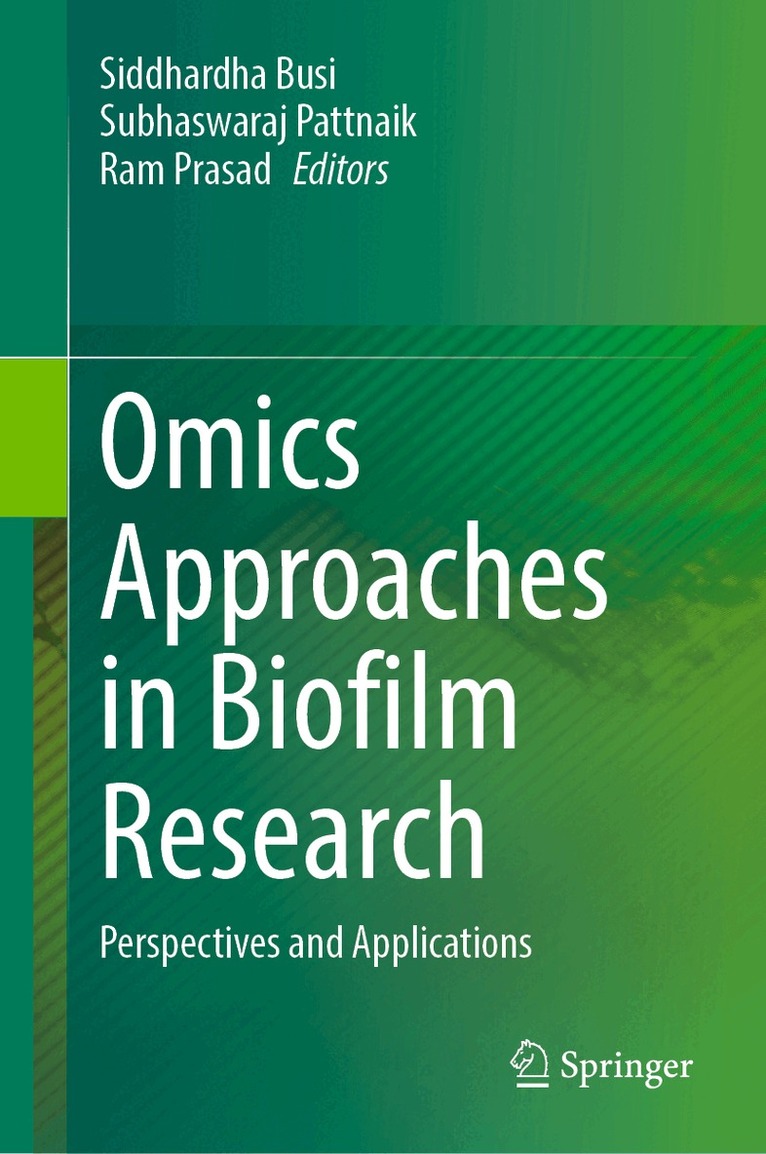
The increased incidence of microorganisms' selective pressure to traditional antibiotics has led to the emergence of multi-drug resistance (MDR) phenomena and has become a global health issue with a catastrophic influence on millions of lives, as well as the global economy. The inherent tendency of pathogenic microorganisms to infer MDR could be attributed to their ability to form recalcitrant biofilm matrices. The biofilm matrix not only advocates chronic nosocomial infections, but also critically provides protection against environmental stress including antibiotic therapies. Biofilm-mediated MDR has posed a serious challenge to human well-being. Henceforth, it is important to understand the pathophysiology of biofilms and the concomitant development of diagnostic & therapeutic modalities to counteract biofilm-mediated chronic infections.The lack of understanding on biofilm biology has a critical negative influence on diagnostic and therapeutic efforts. Therefore, it is imperative to discover the right course of action to understand biofilm mechanics. The advent of Omics-based approaches has provided a holistic realization to understand biofilm ecology with special reference to the pathophysiological interactions of antibiotic-resistant genes, protein-protein interactions, and response-based interactions with therapeutic agents upon infection. The inherent ability of several Omics-based approaches has provided a comprehensive understanding of biofilm dynamics at various levels of organization such as genes, mRNA, proteins, and their regulation. Omics-based tools such as metagenomics, transcriptomics, proteomics, metabolomics, etc. have provided a new horizon to understand and tackle the biofilm-mediated antibiotic resistance. The integrated approach to consider multi-Omics tools (e.g. genomics, transcriptomics, proteomics, lipidomics, metabolomics, etc.) has further improved our understanding of the mechanisms associated with biofilm resistome profile. The applications of transcriptomics, proteomics, and metabolomics profiles of biofilm matrices could provide new dimensions in relation to the characteristic properties of different ARGs, their relative expression profiles, and their metabolic intervention in biofilm mechanics. Also, advanced integrated Phenomics, Lipidomics, and Culturomics approaches could provide novel avenues to understand the diverse range of biofilm phenotypes, their macromolecular reorganization profiles, and molecular tools for identification of microbial species in the complex biofilm microenvironment.Based on the advancement in omics-based tools, “Omics Approaches in Biofilm Research: Perspectives and Applications” integrates the current knowledge of biofilm microenvironment and innovative strategies to address biofilm mediated drug resistance. This work provides a comprehensive platform to enhance our knowledge, diagnosis and strategies to mitigate biofilms and associated diseases.
E-bok
Engelska, 20252 925 kr
Läs direkt efter köp
The increased incidence of microorganisms' selective pressure to traditional antibiotics has led to the emergence of multi-drug resistance (MDR) phenomena and has become a global health issue with a catastrophic influence on millions of lives, as well as the global economy. The inherent tendency of pathogenic microorganisms to infer MDR could be attributed to their ability to form recalcitrant biofilm matrices. The biofilm matrix not only advocates chronic nosocomial infections, but also critically provides protection against environmental stress including antibiotic therapies. Biofilm-mediated MDR has posed a serious challenge to human well-being. Henceforth, it is important to understand the pathophysiology of biofilms and the concomitant development of diagnostic & therapeutic modalities to counteract biofilm-mediated chronic infections.The lack of understanding on biofilm biology has a critical negative influence on diagnostic and therapeutic efforts. Therefore, it is imperative to discover the right course of action to understand biofilm mechanics. The advent of Omics-based approaches has provided a holistic realization to understand biofilm ecology with special reference to the pathophysiological interactions of antibiotic-resistant genes, protein-protein interactions, and response-based interactions with therapeutic agents upon infection. The inherent ability of several Omics-based approaches has provided a comprehensive understanding of biofilm dynamics at various levels of organization such as genes, mRNA, proteins, and their regulation. Omics-based tools such as metagenomics, transcriptomics, proteomics, metabolomics, etc. have provided a new horizon to understand and tackle the biofilm-mediated antibiotic resistance. The integrated approach to consider multi-Omics tools (e.g. genomics, transcriptomics, proteomics, lipidomics, metabolomics, etc.) has further improved our understanding of the mechanisms associated with biofilm resistome profile. The applications of transcriptomics, proteomics, and metabolomics profiles of biofilm matrices could provide new dimensions in relation to the characteristic properties of different ARGs, their relative expression profiles, and their metabolic intervention in biofilm mechanics. Also, advanced integrated Phenomics, Lipidomics, and Culturomics approaches could provide novel avenues to understand the diverse range of biofilm phenotypes, their macromolecular reorganization profiles, and molecular tools for identification of microbial species in the complex biofilm microenvironment.Based on the advancement in omics-based tools, “Omics Approaches in Biofilm Research: Perspectives and Applications” integrates the current knowledge of biofilm microenvironment and innovative strategies to address biofilm mediated drug resistance. This work provides a comprehensive platform to enhance our knowledge, diagnosis and strategies to mitigate biofilms and associated diseases.