Sudhir K. Sastry - Böcker
Visar alla böcker från författaren Sudhir K. Sastry. Handla med fri frakt och snabb leverans.
3 produkter
3 produkter
2 920 kr
Skickas inom 11-20 vardagar
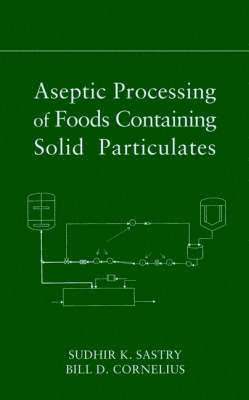
The emerging technology of aseptic processing of particulate foodspromises lower packaging costs and higher food quality and safety.The process, however, has yet to be regulated, and the majority ofthe innovative research performed in the past decade remainsuncollected. Aseptic Processing of Foods Containing SolidParticulates fills this void, providing students and industryprofessionals a reference on how the continuous sterilization ofparticulate foods may be accomplished. The fundamental challenge of the method is simple: how todetermine the temperature within a freely flowing solid piece(particle) entrained in a viscous fluid stream, considering thatthe fluid and solid must achieve uniform composition at outlet, andthat the solid is of significant size. Aseptic Processingthoroughly incorporates the three disciplines intimately involvedwith this question: engineering, microbiology, and statistics.Drawing on a pair of landmark conferences, the text detailscritical experiments conducted with an eye toward developinguniform parameters for operation. Specific topics coveredinclude: -Flow and residence time distributions of solid-liquidmixtures-Fluid-solid convective heat transfer-Statistical design and analysis and microbiologicalvalidation-Hazard analysis and critical control point evaluation of amultiphase food product aseptic system-The filing process for FDA approval An indispensable companion to the work and studies of engineersand university personnel, Aseptic Processing of Foods ContainingSolid Particulates brings the level of scholarship equal to thelevel of enthusiasm for this potentially groundbreaking system.
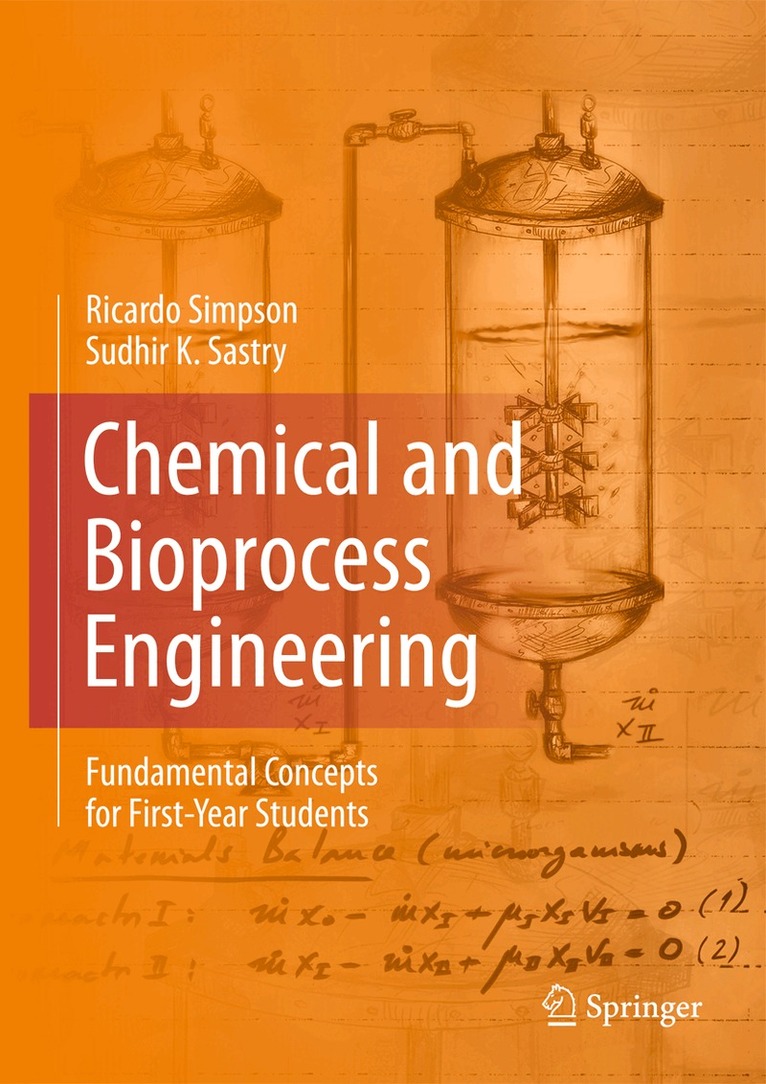
Chemical and Bioprocess Engineering
Fundamental Concepts for First-Year Students
Inbunden, Engelska, 2013
853 kr
Skickas inom 10-15 vardagar
The goal of this textbook is to provide first-year engineering students with a firm grounding in the fundamentals of chemical and bioprocess engineering. However, instead of being a general overview of the two topics, Fundamentals of Chemical and Bioprocess Engineering will identify and focus on specific areas in which attaining a solid competency is desired. This strategy is the direct result of studies showing that broad-based courses at the freshman level often leave students grappling with a lot of material, which results in a low rate of retention. Specifically, strong emphasis will be placed on the topic of material balances, with the intent that students exiting a course based upon this textbook will be significantly higher on Bloom’s Taxonomy (knowledge, comprehension, application, analysis and synthesis, evaluation, creation) relating to material balances. In addition, this book also provides students with a highly developed ability toanalyze problems from the material balances perspective, which leaves them with important skills for the future. The textbook consists of numerous exercises and their solutions. Problems are classified by their level of difficulty. Each chapter has references and selected web pages to vividly illustrate each example. In addition, to engage students and increase their comprehension and rate of retention, many examples involve real-world situations.
Chemical and Bioprocess Engineering
Fundamental Concepts for First-Year Students
Häftad, Engelska, 2016
610 kr
Skickas inom 10-15 vardagar
The goal of this textbook is to provide first-year engineering students with a firm grounding in the fundamentals of chemical and bioprocess engineering. However, instead of being a general overview of the two topics, Fundamentals of Chemical and Bioprocess Engineering will identify and focus on specific areas in which attaining a solid competency is desired. This strategy is the direct result of studies showing that broad-based courses at the freshman level often leave students grappling with a lot of material, which results in a low rate of retention. Specifically, strong emphasis will be placed on the topic of material balances, with the intent that students exiting a course based upon this textbook will be significantly higher on Bloom’s Taxonomy (knowledge, comprehension, application, analysis and synthesis, evaluation, creation) relating to material balances. In addition, this book also provides students with a highly developed ability toanalyze problems from the material balances perspective, which leaves them with important skills for the future. The textbook consists of numerous exercises and their solutions. Problems are classified by their level of difficulty. Each chapter has references and selected web pages to vividly illustrate each example. In addition, to engage students and increase their comprehension and rate of retention, many examples involve real-world situations.