Sue Spielman – författare
Visar alla böcker från författaren Sue Spielman. Handla med fri frakt och snabb leverans.
6 produkter
6 produkter
E-bok
PDF, Engelska, 2003278 kr
Läs direkt efter köp
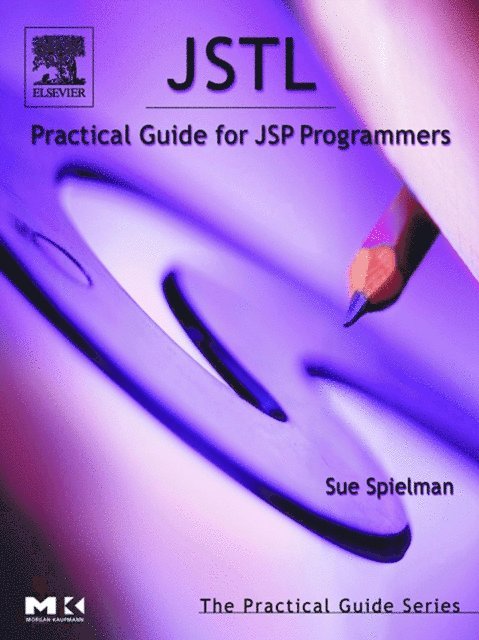
Web developers and page authors who use JavaServer Pages (JSP) know that it is much easier and efficient to implement web pages without reinventing the wheel each time. In order to shave valuable time from their development schedules, those who work with JSP have created, debugged, and used custom tags—a set of programmable actions that provide dynamic behavior to static pages—paving the way towards a more common, standard approach to using Java technology for web development. The biggest boost to this effort however has only recently arrived in the form of a standard set of tag libraries, known as the JSTL, which now provides a wide range of functionality and gives web page authors a much more simplified approach to implementing dynamic, Java-based web sites. JSTL: Practical Guide for JSP Programmers is a timely resource for anyone interested in doing large-scale J2EE application development. It sticks to the main features of the JSTL so that developers don''t have to sift through unnecessary details to begin using the tags and working with the expression language. Sue Spielman''s straight-forward, practical approach is enhanced with numerous code samples and insightful descriptions to make learning the JSTL a quickly and easily accomplished task.- Written by a best-selling author with a wealth of development experience and recognition in the Java community.- Covers the core elements of the JSTL including the four standard tag libraries (core, internationalization/format, XML, and SQL) and expression language.- Includes a reference section for all of the tabs and attributes contained in the JSTL.
E-bok
PDF, Engelska, 2002358 kr
Läs direkt efter köp
Struts is an open-source framework that integrates with standard Java technologies and lets developers build web applications quickly and effectively. In much the same way that Java has overtaken C++, Struts is well poised to become the framework for web application development because of its ability to address the types of issues engineers face when building large-scale web applications. The Struts Framework: Practical Guide for Java Programmers meets the needs of this large audience--estimated today at 2.5 million Java programmers and growing. It provides the systematic exploration required by newcomers as well as the step-by-step instruction for more experienced readers eager to exploit Struts to the fullest. Devoted to the latest version of the framework (v. 1.1) and vividly illustrated with a thorough sample application throughout, this book is an essential resource for all programmers who want to be part of the next stage in the evolution of the web.- Hard-to-find, practical coverage from a highly visible figure in the Java development world.- Among the first books to cover the latest release of Struts, version 1.1.- Reviews all the technologies comprising Struts, including JavaServer Pages, Servlets, XML, Custom Tags, and web and application servers.- Teaches readers the development practices-including design, debugging, internationalization, and implementation-essential to Struts development.
Häftad, Engelska, 2003
290 kr
Skickas inom 10-15 vardagar
Web developers and page authors who use JavaServer Pages (JSP) know that it is much easier and efficient to implement web pages without reinventing the wheel each time. In order to shave valuable time from their development schedules, those who work with JSP have created, debugged, and used custom tags—a set of programmable actions that provide dynamic behavior to static pages—paving the way towards a more common, standard approach to using Java technology for web development. The biggest boost to this effort however has only recently arrived in the form of a standard set of tag libraries, known as the JSTL, which now provides a wide range of functionality and gives web page authors a much more simplified approach to implementing dynamic, Java-based web sites. JSTL: Practical Guide for JSP Programmers is a timely resource for anyone interested in doing large-scale J2EE application development. It sticks to the main features of the JSTL so that developers don't have to sift through unnecessary details to begin using the tags and working with the expression language. Sue Spielman's straight-forward, practical approach is enhanced with numerous code samples and insightful descriptions to make learning the JSTL a quickly and easily accomplished task.
E-bok
PDF, Engelska, 2004786 kr
Läs direkt efter köp
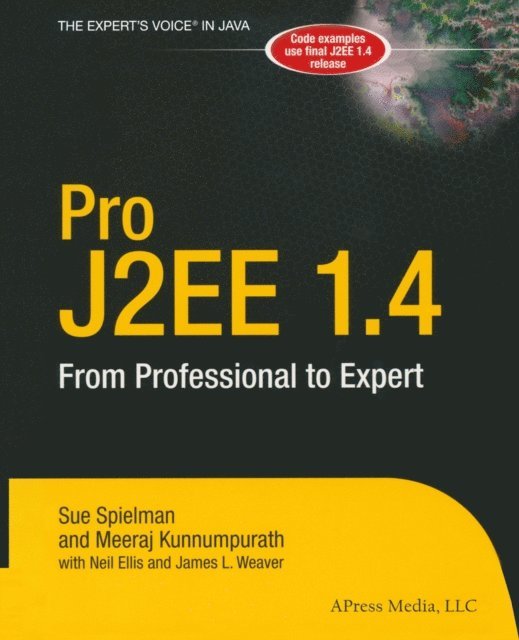
This chapter has covered a lot of ground. After reading it, you should have a thorough understanding of the new features available in the JSP 2.0 specification. We covered what you need to know to write your own custom actions, regardless of which imple mentation you choose. Custom actions are useful for creating reusable JSP compo nents. New in the JSP 2.0 specification are the notions of tag files and JSP fragments. These are simple ways to create custom actions without having to know how to write Java. They provide a mechanism for page authors to create their own custom tag libraries without the worry of having to write complicated Java code. Using tag files provides a mechanism for eliminating writing TLD files since the JSP container gener ates implicit TLD files for them. There''s also a flexible mechanism in place for packag ing and deploying tag libraries in JSP 2.0. It''s also possible to write classic actions using the various interfaces available. These include the following: • Tag • BodyTag • IterationTag Another feature introduced in this chapter was the new JSP 2.0 Simple Tag interface, which has a much simpler life cycle defined than the classic tag interfaces. Simple Tag allows for all of the power of cooperating and iteration tags with less hassle in the coding. Other new features include using dynamic attributes in actions that allow tag handlers to accept attributes that haven''t been declared in a TLD.
Häftad, Engelska, 2002
354 kr
Skickas inom 10-15 vardagar
Struts is an open-source framework that integrates with standard Java technologies and lets developers build web applications quickly and effectively. In much the same way that Java has overtaken C++, Struts is well poised to become the framework for web application development because of its ability to address the types of issues engineers face when building large-scale web applications. The Struts Framework: Practical Guide for Java Programmers meets the needs of this large audience--estimated today at 2.5 million Java programmers and growing. It provides the systematic exploration required by newcomers as well as the step-by-step instruction for more experienced readers eager to exploit Struts to the fullest. Devoted to the latest version of the framework (v. 1.1) and vividly illustrated with a thorough sample application throughout, this book is an essential resource for all programmers who want to be part of the next stage in the evolution of the web.
Häftad, Engelska, 2004
566 kr
Skickas inom 10-15 vardagar
This chapter has covered a lot of ground. After reading it, you should have a thorough understanding of the new features available in the JSP 2.0 specification. We covered what you need to know to write your own custom actions, regardless of which imple mentation you choose. Custom actions are useful for creating reusable JSP compo nents. New in the JSP 2.0 specification are the notions of tag files and JSP fragments. These are simple ways to create custom actions without having to know how to write Java. They provide a mechanism for page authors to create their own custom tag libraries without the worry of having to write complicated Java code. Using tag files provides a mechanism for eliminating writing TLD files since the JSP container gener ates implicit TLD files for them. There's also a flexible mechanism in place for packag ing and deploying tag libraries in JSP 2.0. It's also possible to write classic actions using the various interfaces available. These include the following: • Tag • BodyTag • IterationTag Another feature introduced in this chapter was the new JSP 2.0 Simple Tag interface, which has a much simpler life cycle defined than the classic tag interfaces. Simple Tag allows for all of the power of cooperating and iteration tags with less hassle in the coding. Other new features include using dynamic attributes in actions that allow tag handlers to accept attributes that haven't been declared in a TLD.