Sumit Sarkar - Böcker
Visar alla böcker från författaren Sumit Sarkar. Handla med fri frakt och snabb leverans.
5 produkter
5 produkter
373 kr
Skickas inom 7-10 vardagar
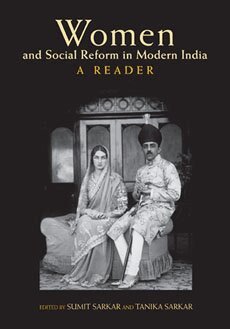
Social reforms aimed at changing the social, political, or economic status of women in India were important both to British colonial rule and to nascent nationalist movements. Debates over practices such as widow immolation, widow remarriage, and child marriage, as well as those governing marriage and property within different religious communities, continued to exert profound influence on Indian society and politics throughout the 20th century. In this collection, eminent historians Sumit Sarkar and Tanika Sarkar bring together some of the most important scholarly articles and primary source documents from the 19th and early 20th centuries.
433 kr
Skickas inom 10-15 vardagar
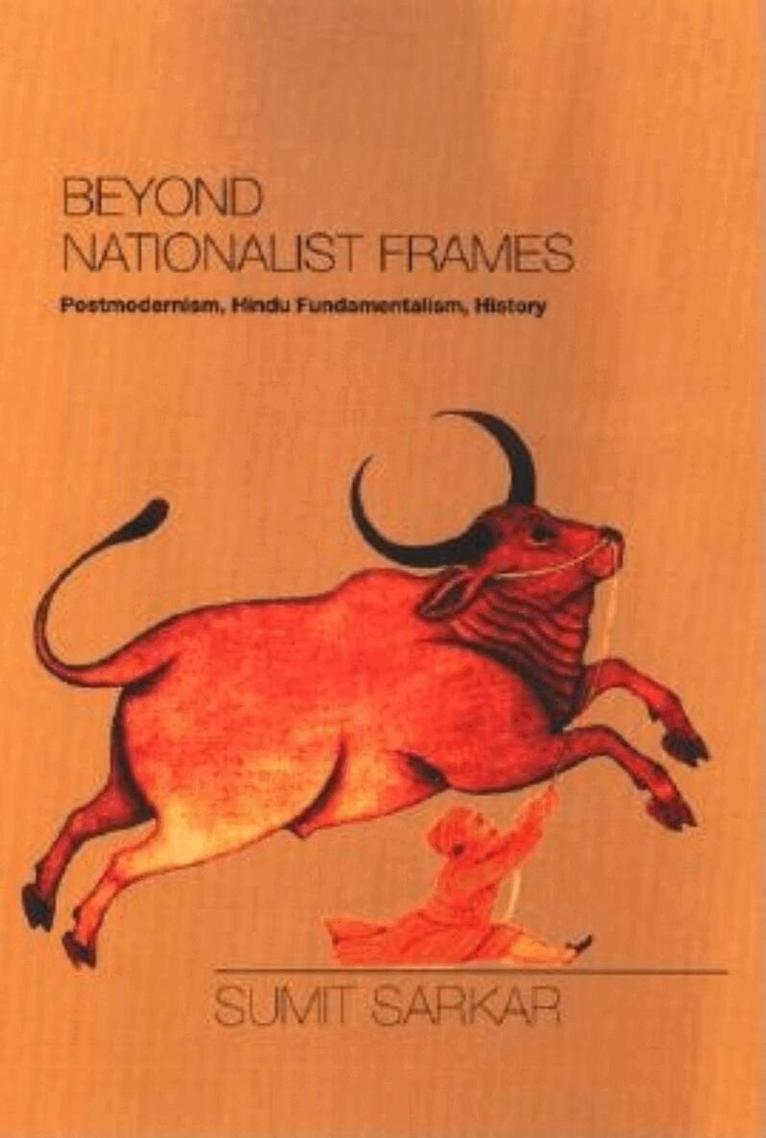
The political context in which historians of India find themselves today, says Sumit Sarkar, is dominated by the advance of the Hindu Right and globalized forms of capitalism, while the historian's intellectual context is dominated by the marginalization of all varieties of Marxism and an academic shift to cultural studies and postmodern critique. In Beyond Nationalist Frames, one of India's foremost contemporary historians offers his view of how the craft of history should be practiced in this complex conjuncture. In studies of colonial time-keeping, Rabindranath Tagore's fiction, and pre-Independence Bengal, Sarkar explores new approaches to the writing of history. Essays on contemporary politics consider the implications of the "Hindu Bomb," the rewriting of national history textbooks by Hindu fundamentalists, and the issue of conversion to Christianity. Scholars in all the fields touched by recent developments in South Asian historiography—anthropology, feminist theory, comparative literature, cultural studies—will find this a stimulating and provocative collection of essays, as will anyone interested in Indian politics.
366 kr
Skickas inom 7-10 vardagar
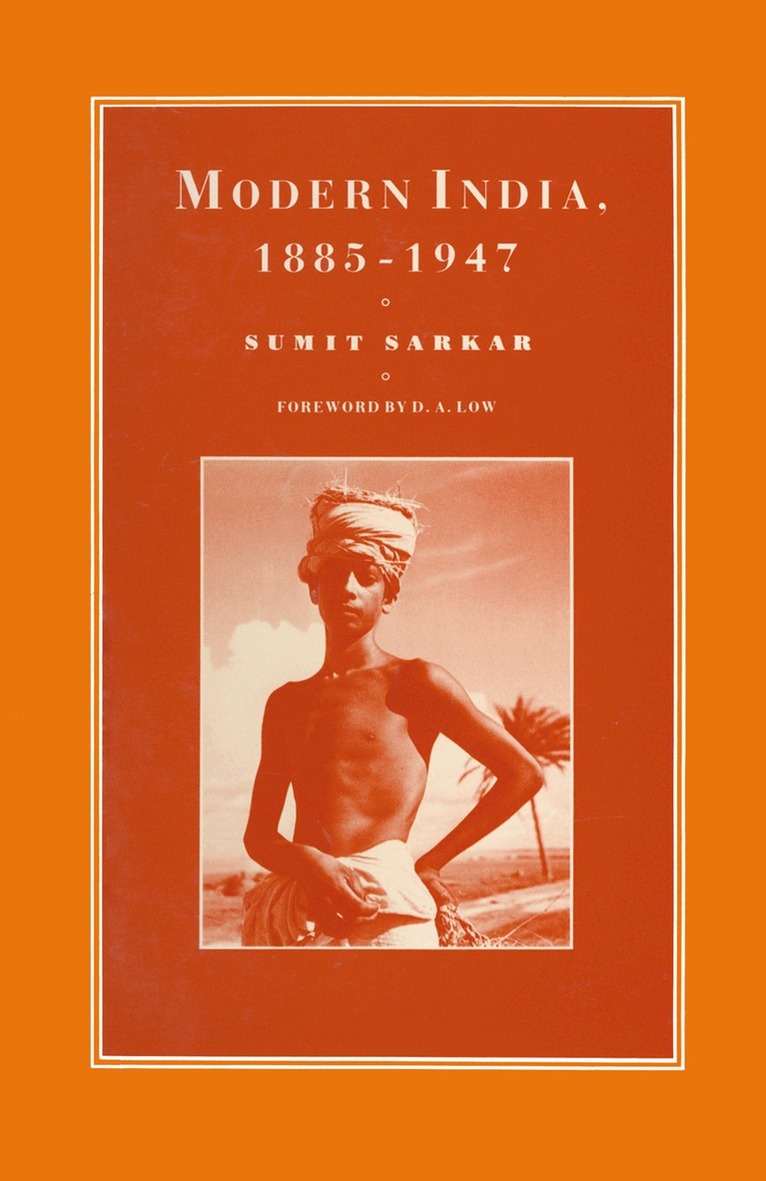
'...it is well written, balanced and comprehensive. It splendidly incorporates the new work of the last twenty years as no one else has and it will be the starting point for everyone doing any work, from sixth forms upwards, on modern India.' D.A.Low
1 088 kr
Tillfälligt slut
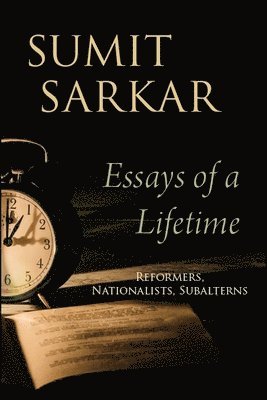
A distillation of the historian's finest writings on modern Indian historical themes.For the past forty years or more, the most influential, respected, and popular scholar of modern Indian history has been Sumit Sarkar. When his first monograph, The Swadeshi Movement in Bengal 1903–1908, appeared in 1973 it soon became obvious that the book represented a paradigm shift within its genre. As Dipesh Chakrabarty put it when the work was republished in 2010: "Very few monographs, if any, have ever rivalled the meticulous research and the thick description that characterized this book, or the lucidity of its exposition and the persuasive power of its overall argument."Ten years later, Sarkar published Modern India 1885–1947, a textbook for advanced students and teachers. Its synthesis and critique of everything significant that had been written about the period was seen as monumental, lucid, and the fashioning of a new way of looking at colonialism and nationalism.Sarkar, however, changed the face not only of modern Indian history monographs and textbooks, he also radically altered the capacity of the historical essay. As Beethoven stretched the sonata form beyond earlier conceivable limits, Sarkar can be said to have expanded the academic essay. In his hands, the shorter form becomes in miniature both monograph and textbook.The present collection, which reproduces many of Sarkar's finest writings, shows an intellectually scintillating, skeptical-Marxist mind at its sharpest.
769 kr
Skickas inom 3-6 vardagar
A distillation of the historian's finest writings on modern Indian historical themes.For the past forty years or more, the most influential, respected, and popular scholar of modern Indian history has been Sumit Sarkar. When his first monograph, The Swadeshi Movement in Bengal 1903–1908, appeared in 1973 it soon became obvious that the book represented a paradigm shift within its genre. As Dipesh Chakrabarty put it when the work was republished in 2010: "Very few monographs, if any, have ever rivalled the meticulous research and the thick description that characterized this book, or the lucidity of its exposition and the persuasive power of its overall argument."Ten years later, Sarkar published Modern India 1885–1947, a textbook for advanced students and teachers. Its synthesis and critique of everything significant that had been written about the period was seen as monumental, lucid, and the fashioning of a new way of looking at colonialism and nationalism.Sarkar, however, changed the face not only of modern Indian history monographs and textbooks, he also radically altered the capacity of the historical essay. As Beethoven stretched the sonata form beyond earlier conceivable limits, Sarkar can be said to have expanded the academic essay. In his hands, the shorter form becomes in miniature both monograph and textbook.The present collection, which reproduces many of Sarkar's finest writings, shows an intellectually scintillating, skeptical-Marxist mind at its sharpest.