Sumudu Atapattu – författare
2 240 kr
Skickas inom 10-15 vardagar
578 kr
Skickas inom 10-15 vardagar
2 240 kr
Skickas inom 10-15 vardagar
1 763 kr
Skickas inom 7-10 vardagar
669 kr
Skickas inom 10-15 vardagar
2 240 kr
Skickas inom 10-15 vardagar
669 kr
Skickas inom 10-15 vardagar
638 kr
Skickas inom 7-10 vardagar
758 kr
Läs direkt efter köp
Despite the clear link between climate change and human rights with the potential for virtually all protected rights to be undermined as a result of climate change, its catastrophic impact on human beings was not really understood as a human rights issue until recently.
This book examines the link between climate change and human rights in a comprehensive manner. It looks at human rights approaches to climate change, including the jurisprudential bases for human rights and the environment, the theoretical framework governing human rights and the environment, and the different approaches to this including benchmarks. In addition to a discussion of human rights implications of international environmental law principles in the climate change regime, the book explores how the human rights framework can be used in relation to mitigation, adaption, and adjudication. Other chapters examine how vulnerable groups –women, indigenous peoples and climate "refugees" – would be disproportionately affected by climate change. The book then goes on to discuss a new category of people created by climate change, those who will be rendered stateless as a result of states disappearing and displaced by climate change, and whether human rights law can adequately address these emerging issues.
758 kr
Läs direkt efter köp
Despite the clear link between climate change and human rights with the potential for virtually all protected rights to be undermined as a result of climate change, its catastrophic impact on human beings was not really understood as a human rights issue until recently.
This book examines the link between climate change and human rights in a comprehensive manner. It looks at human rights approaches to climate change, including the jurisprudential bases for human rights and the environment, the theoretical framework governing human rights and the environment, and the different approaches to this including benchmarks. In addition to a discussion of human rights implications of international environmental law principles in the climate change regime, the book explores how the human rights framework can be used in relation to mitigation, adaption, and adjudication. Other chapters examine how vulnerable groups –women, indigenous peoples and climate "refugees" – would be disproportionately affected by climate change. The book then goes on to discuss a new category of people created by climate change, those who will be rendered stateless as a result of states disappearing and displaced by climate change, and whether human rights law can adequately address these emerging issues.
758 kr
Läs direkt efter köp
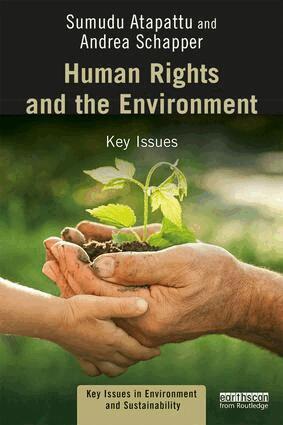
The field of human rights and the environment has grown phenomenally during the last few years and this textbook will be one of the first to encourage students to think critically about how many environmental issues lead to a violation of existing rights.
Taking a socio-legal approach, this book will provide a good understanding of both human rights and environmental issues, as well as the limitations of each regime, and will explore the ways in which human rights law and institutions can be used to obtain relief for the victims of environmental degradation or of adverse effects of environmental policies. In addition, it will place an emphasis on climate change and climate policies to highlight the pros and cons of using a human rights framework and to underscore its importance in the context of climate change. As well as identifying emerging issues and areas for further research, each chapter will be rich in pedagogical features, including web links to further research and discussion questions for beyond the classroom.
Combining their specialisms in law and politics, Atapattu and Schapper have developed a truly inter-disciplinary resource that will be essential for students of human rights, environmental studies, international law, international relations, politics, and philosophy.
758 kr
Läs direkt efter köp
The field of human rights and the environment has grown phenomenally during the last few years and this textbook will be one of the first to encourage students to think critically about how many environmental issues lead to a violation of existing rights.
Taking a socio-legal approach, this book will provide a good understanding of both human rights and environmental issues, as well as the limitations of each regime, and will explore the ways in which human rights law and institutions can be used to obtain relief for the victims of environmental degradation or of adverse effects of environmental policies. In addition, it will place an emphasis on climate change and climate policies to highlight the pros and cons of using a human rights framework and to underscore its importance in the context of climate change. As well as identifying emerging issues and areas for further research, each chapter will be rich in pedagogical features, including web links to further research and discussion questions for beyond the classroom.
Combining their specialisms in law and politics, Atapattu and Schapper have developed a truly inter-disciplinary resource that will be essential for students of human rights, environmental studies, international law, international relations, politics, and philosophy.