Surik Khudaverdyan - Böcker
Visar alla böcker från författaren Surik Khudaverdyan. Handla med fri frakt och snabb leverans.
3 produkter
3 produkter
920 kr
Skickas inom 3-6 vardagar
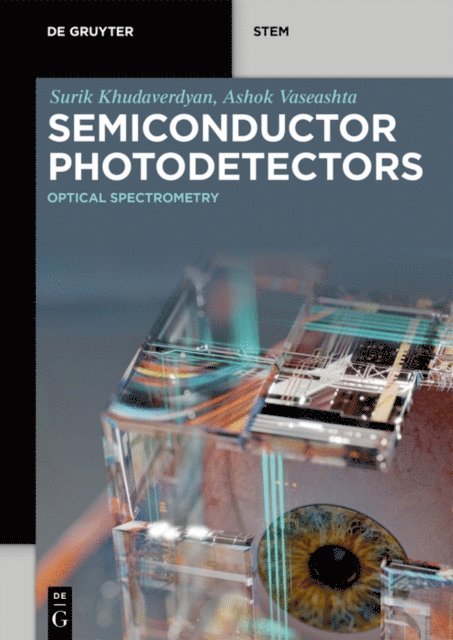
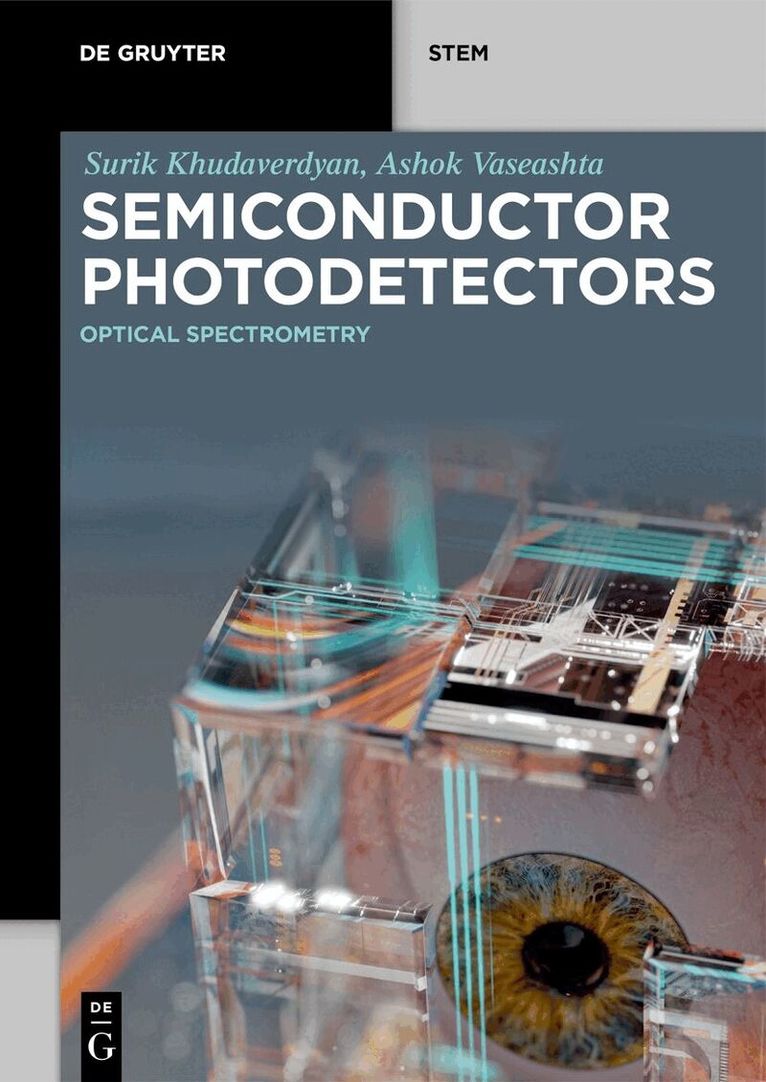
The exponential increase of the Internet of Things (IoTs) has revolutionized lives, but it has also resulted in massive resource consumption and environmental pollution. In conjunction with Green IoTs (GioTs), there is a parallel effort to create highly sensitive devices by device design to conserve power. Furthermore, numerous applications require deciphering information from very weak optical signals, such as from radiation, medical imaging, industrial non-destructive testing, quantum technologies, astronomy, and various other such routine measurements. It is necessary to design photodetectors with high photosensitivity using various technological innovations to reduce the noise level, such as with two inversely directed barriers, as proposed by the authors, in which the currents of devices mutually compensate each other and create low dark current with high photosensitivity thresholds. The implementation of internal amplification of photocurrents in them can provide high photosensitivity. The book presents the mechanism for the injection amplification of the photocurrent in devices based on cadmium telluride and silicon with a high-resistance sublayer, as well as the study of creating highly sensitive devices, that are resistant to radiation of optical and X-ray ranges of electromagnetic waves. Particular attention is drawn to the mutual compensation process for photocurrents arising in opposite potential barriers covering the layer during longitudinal absorption of radiation in the sublayer. Using structures on the base cadmium telluride and silicon, as an example, the phenomenon of a change in the sign of the spectral photocurrent and the possibilities of wave measurement is provided by this phenomenon. Photoelectronic processes occurring in these semiconductor structures are investigated, and expressions are obtained that relate the parameters of optical radiation and the structure. The algorithm developed using these expressions is based on a new spectral analysis mechanism, which is implemented to prepare inexpensive, reduced dimensions with the need for less materials, and energy-intensive devices. All this is considered in the context of solving urgent problems of quantitative remote identification of the components of an optically transparent medium. The global spectral analysis market is focused on the development of semiconductor photodetectors with spectral-selective sensitivity for spectral analysis. The use of such a photodetector in spectrometry will eliminate the use of opticalmechanical systems due to the new physical principle used in it and will ensure high resolution and reliability of spectrum recording. As environmental threats become increasingly unpredictable, there is also a growing need to develop remote spectral analysis, identification, and assessment of substances in air, water, and food, assessment of the effects of substances on humans, animals, and vegetation, and detection and elimination of pollution sources. Here, the spectral analysis of the electromagnetic radiation transmitting the information from the object with the help of primary sensors is essential.
2 100 kr
Skickas inom 10-15 vardagar
This book results from a NATO Advanced Research Workshop titled “Technological Innovations in CBRNE Sensing and Detection for Safety, Security, and Sustainability” held in Yerevan, Armenia in 2012. The objective was to discuss and exchange views as to how fusion of advanced technologies can lead to improved sensors/detectors in support of defense, security, and situational awareness. The chapters range from policy and implementation, advanced sensor platforms using stand-off (THz and optical) and point-contact methods for detection of chemical, nuclear, biological, nuclear and explosive agents and contaminants in water, to synthesis methods for several materials used for sensors. In view of asymmetric, kinetic, and distributed nature of threat vectors, an emphasis is placed to examine new generation of sensors/detectors that utilize an ecosystems of innovation and advanced sciences convergence in support of effective counter-measures against CBRNE threats. The book will be of considerable interest and value to those already pursuing or considering careers in the field of nanostructured materials, and sensing/detection of CBRNE agents and water-borne contaminants. For policy implementation and compliance standpoint, the book serves as a resource of several informative contributions. In general, it serves as a valuable source of information for those interested in how nanomaterials and nanotechnologies are advancing the field of sensing and detection using nexus of advanced technologies for scientists, technologists, policy makers, and soldiers and commanders.
2 100 kr
Skickas inom 10-15 vardagar
This book results from a NATO Advanced Research Workshop titled “Technological Innovations in CBRNE Sensing and Detection for Safety, Security, and Sustainability” held in Yerevan, Armenia in 2012. The objective was to discuss and exchange views as to how fusion of advanced technologies can lead to improved sensors/detectors in support of defense, security, and situational awareness. The chapters range from policy and implementation, advanced sensor platforms using stand-off (THz and optical) and point-contact methods for detection of chemical, nuclear, biological, nuclear and explosive agents and contaminants in water, to synthesis methods for several materials used for sensors. In view of asymmetric, kinetic, and distributed nature of threat vectors, an emphasis is placed to examine new generation of sensors/detectors that utilize an ecosystems of innovation and advanced sciences convergence in support of effective counter-measures against CBRNE threats. The book will be of considerable interest and value to those already pursuing or considering careers in the field of nanostructured materials, and sensing/detection of CBRNE agents and water-borne contaminants. For policy implementation and compliance standpoint, the book serves as a resource of several informative contributions. In general, it serves as a valuable source of information for those interested in how nanomaterials and nanotechnologies are advancing the field of sensing and detection using nexus of advanced technologies for scientists, technologists, policy makers, and soldiers and commanders.