Susan B. Van Hemel – författare
Visar alla böcker från författaren Susan B. Van Hemel. Handla med fri frakt och snabb leverans.
16 produkter
Behavioral Modeling and Simulation
From Individuals to Societies
Av Committee on Organizational Modeling: From Individuals to Societies, and Sensory Sciences Board on Behavioral, Cognitive m. fl.
E-bok, 2008
898 kr
Lägg i varukorg
Today’s military missions have shifted away from fighting nation states using conventional weapons toward combating insurgents and terrorist networks in a battlespace in which the attitudes and behaviors of civilian noncombatants may be the primary effects of military actions. To support these new …
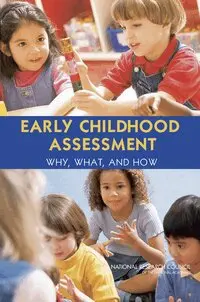
Early Childhood Assessment
Why, What, and How
Av Committee on Developmental Outcomes and Assessments for Young Children, and Families Board on Children, Youth m. fl.
E-bok, 2008
774 kr
Lägg i varukorg
The assessment of young children’s development and learning has recently taken on new importance. Private and government organizations are developing programs to enhance the school readiness of all young children, especially children from economically disadvantaged homes and communities and …
Behavioral Modeling and Simulation
From Individuals to Societies
Av Committee on Organizational Modeling: From Individuals to Societies, and Sensory Sciences Board on Behavioral, Cognitive m. fl.
E-bok, 2008
1039 kr
Lägg i varukorg
Today’s military missions have shifted away from fighting nation states using conventional weapons toward combating insurgents and terrorist networks in a battlespace in which the attitudes and behaviors of civilian noncombatants may be the primary effects of military actions. To support these new …
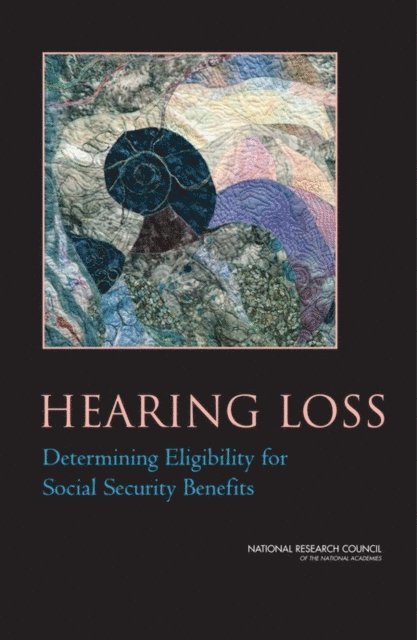
Hearing Loss
Determining Eligibility for Social Security Benefits
Av Committee on Disability Determination for Individuals with Hearing Impairments, and Sensory Sciences Board on Behavioral, Cognitive m. fl.
E-bok, 2004
953 kr
Lägg i varukorg
Millions of Americans experience some degree of hearing loss. The Social Security Administration (SSA) operates programs that provide cash disability benefits to people with permanent impairments like hearing loss, if they can show that their impairments meet stringent SSA criteria and their …
Technology for Adaptive Aging
Av Steering Committee for the Workshop on Technology for Adaptive Aging, and Sensory Sciences Board on Behavioral, Cognitive m. fl.
E-bok, 2004
960 kr
Lägg i varukorg
Emerging and currently available technologies offer great promise for helping older adults, even those without serious disabilities, to live healthy, comfortable, and productive lives. What technologies offer the most potential benefit? What challenges must be overcome, what problems must be …
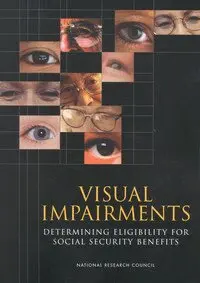
Visual Impairments
Determining Eligibility for Social Security Benefits
Av Committee on Disability Determination for Individuals with Visual Impairments, and Sensory Sciences Board on Behavioral, Cognitive m. fl.
E-bok, 2002
953 kr
Lägg i varukorg
When children and adults apply for disability benefits and claim that a visual impairment has limited their ability to function, the U.S. Social Security Administration (SSA) is required to determine their eligibility. To ensure that these determinations are made fairly and consistently, SSA has …
Staffing Standards for Aviation Safety Inspectors
Av Committee on Federal Aviation Administration Aviation Safety Inspector Staffing Standards, and Sensory Sciences Board on Behavioral, Cognitive m. fl.
E-bok, 2006
627 kr
Lägg i varukorg
A primary mission of the Federal Aviation Administration (FAA) is the assurance of safety in civil aviation, both private and commercial. To accomplish this mission, the FAA has promulgated a large number of regulations and has established a major division, the Office of Aviation Safety, to enforce …
Visual Impairments
Determining Eligibility for Social Security Benefits
Av Committee on Disability Determination for Individuals with Visual Impairments, and Sensory Sciences Board on Behavioral, Cognitive m. fl.
E-bok, 2002
650 kr
Lägg i varukorg
When children and adults apply for disability benefits and claim that a visual impairment has limited their ability to function, the U.S. Social Security Administration (SSA) is required to determine their eligibility. To ensure that these determinations are made fairly and consistently, SSA has …
Technology for Adaptive Aging
Av Steering Committee for the Workshop on Technology for Adaptive Aging, and Sensory Sciences Board on Behavioral, Cognitive m. fl.
E-bok, 2004
669 kr
Lägg i varukorg
Emerging and currently available technologies offer great promise for helping older adults, even those without serious disabilities, to live healthy, comfortable, and productive lives. What technologies offer the most potential benefit? What challenges must be overcome, what problems must be …
Hearing Loss
Determining Eligibility for Social Security Benefits
Av Committee on Disability Determination for Individuals with Hearing Impairments, and Sensory Sciences Board on Behavioral, Cognitive m. fl.
E-bok, 2004
650 kr
Lägg i varukorg
Millions of Americans experience some degree of hearing loss. The Social Security Administration (SSA) operates programs that provide cash disability benefits to people with permanent impairments like hearing loss, if they can show that their impairments meet stringent SSA criteria and their …
Staffing Standards for Aviation Safety Inspectors
Av Committee on Federal Aviation Administration Aviation Safety Inspector Staffing Standards, and Sensory Sciences Board on Behavioral, Cognitive m. fl.
E-bok, 2006
459 kr
Lägg i varukorg
A primary mission of the Federal Aviation Administration (FAA) is the assurance of safety in civil aviation, both private and commercial. To accomplish this mission, the FAA has promulgated a large number of regulations and has established a major division, the Office of Aviation Safety, to enforce …
Visual Impairments
Determining Eligibility for Social Security Benefits
Av National Research Council, Division of Behavioral and Social Sciences and Education m. fl.
Häftad, 2002
844 kr
Tillfälligt slut
When children and adults apply for disability benefits and claim that a visual impairment has limited their ability to function, the U.S. Social Security Administration (SSA) is required to determine their eligibility. To ensure that these determinations are made fairly and consistently, SSA has …
Technology for Adaptive Aging
Av National Research Council, Division of Behavioral and Social Sciences and Education m. fl.
Häftad, 2004
888 kr
Tillfälligt slut
Emerging and currently available technologies offer great promise for helping older adults, even those without serious disabilities, to live healthy, comfortable, and productive lives. What technologies offer the most potential benefit? What challenges must be overcome, what problems must be …
Hearing Loss
Determining Eligibility for Social Security Benefits
Av National Research Council, Division of Behavioral and Social Sciences and Education m. fl.
Häftad, 2004
863 kr
Tillfälligt slut
Millions of Americans experience some degree of hearing loss. The Social Security Administration (SSA) operates programs that provide cash disability benefits to people with permanent impairments like hearing loss, if they can show that their impairments meet stringent SSA criteria and their …
Staffing Standards for Aviation Safety Inspectors
Av National Research Council, Division of Behavioral and Social Sciences and Education m. fl.
Häftad, 2006
667 kr
Tillfälligt slut
A primary mission of the Federal Aviation Administration (FAA) is the assurance of safety in civil aviation, both private and commercial. To accomplish this mission, the FAA has promulgated a large number of regulations and has established a major division, the Office of Aviation Safety, to enforce …
Early Childhood Assessment
Why, What, and How
Av National Research Council, Division of Behavioral and Social Sciences and Education m. fl.
Inbunden, 2008
1088 kr
Tillfälligt slut
The assessment of young children's development and learning has recently taken on new importance. Private and government organizations are developing programs to enhance the school readiness of all young children, especially children from economically disadvantaged homes and communities and …