Susan C. Stokes - Böcker
Visar alla böcker från författaren Susan C. Stokes. Handla med fri frakt och snabb leverans.
16 produkter
16 produkter
3 066 kr
Skickas inom 7-10 vardagar
The Oxford Handbooks of Political Science is a ten-volume set of reference books offering authoritative and engaging critical overviews of the state of political science. Each volume focuses on a particular part of the discipline, with volumes on Public Policy, Political Theory, Political Economy, Contextual Political Analysis, Comparative Politics, International Relations, Law and Politics, Political Behavior, Political Institutions, and Political Methodology. The project as a whole is under the General Editorship of Robert E. Goodin, with each volume being edited by a distinguished international group of specialists in their respective fields. The books set out not just to report on the discipline, but to shape it. The series will be an indispensable point of reference for anyone working in political science and adjacent disciplines.The Oxford Handbook of Comparative Politics offers a critical survey of the field of empirical political science through the collection of a set of chapters written by 47 top scholars in the discipline of comparative politics. Part I includes chapters surveying the key research methodologies employed in comparative politics (the comparative method; the use of history; the practice and status of case-study research; the contributions of field research) and assessing the possibility of constructing a science of comparative politics. Parts II to IV examine the foundations of political order: the origins of states and the extent to which they relate to war and to economic development; the sources of compliance or political obligation among citizens; democratic transitions, the role of civic culture; authoritarianism; revolutions; civil wars and contentious politics. Parts V and VI explore the mobilization, representation and coordination of political demands. Part V considers why parties emerge, the forms they take and the ways in which voters choose parties. It then includes chapters on collective action, social movements and political participation. Part VI opens up with essays on the mechanisms through which political demands are aggregated and coordinated. This sets the agenda to the systematic exploration of the workings and effects of particular institutions: electoral systems, federalism, legislative-executive relationships, the judiciary and bureaucracy. Finally, Part VII is organized around the burgeoning literature on macropolitical economy of the last two decades.
544 kr
Skickas
The Oxford Handbook of Comparative Politics offers a critical survey of the field of empirical political science through the collection of a set of chapters written by 48 top scholars in the discipline of comparative politics. Part I includes chapters surveying the key research methodologies employed in comparative politics (the comparative method; the use of history; the practice and status of case-study research; the contributions of field research) and assessing the possibility of constructing a science of comparative politics. Parts II to IV examine the foundations of political order: the origins of states and the extent to which they relate to war and to economic development; the sources of compliance or political obligation among citizens; democratic transitions, the role of civic culture; authoritarianism; revolutions; civil wars and contentious politics. Parts V and VI explore the mobilization, representation and coordination of political demands. Part V considers why parties emerge, the forms they take and the ways in which voters choose parties. It then includes chapters on collective action, social movements and political participation. Part VI opens up with essays on the mechanisms through which political demands are aggregated and coordinated. This sets the agenda to the systematic exploration of the workings and effects of particular institutions: electoral systems, federalism, legislative-executive relationships, the judiciary and bureaucracy. Finally, Part VII is organized around the burgeoning literature on macropolitical economy of the last two decades.
548 kr
Skickas inom 3-6 vardagar
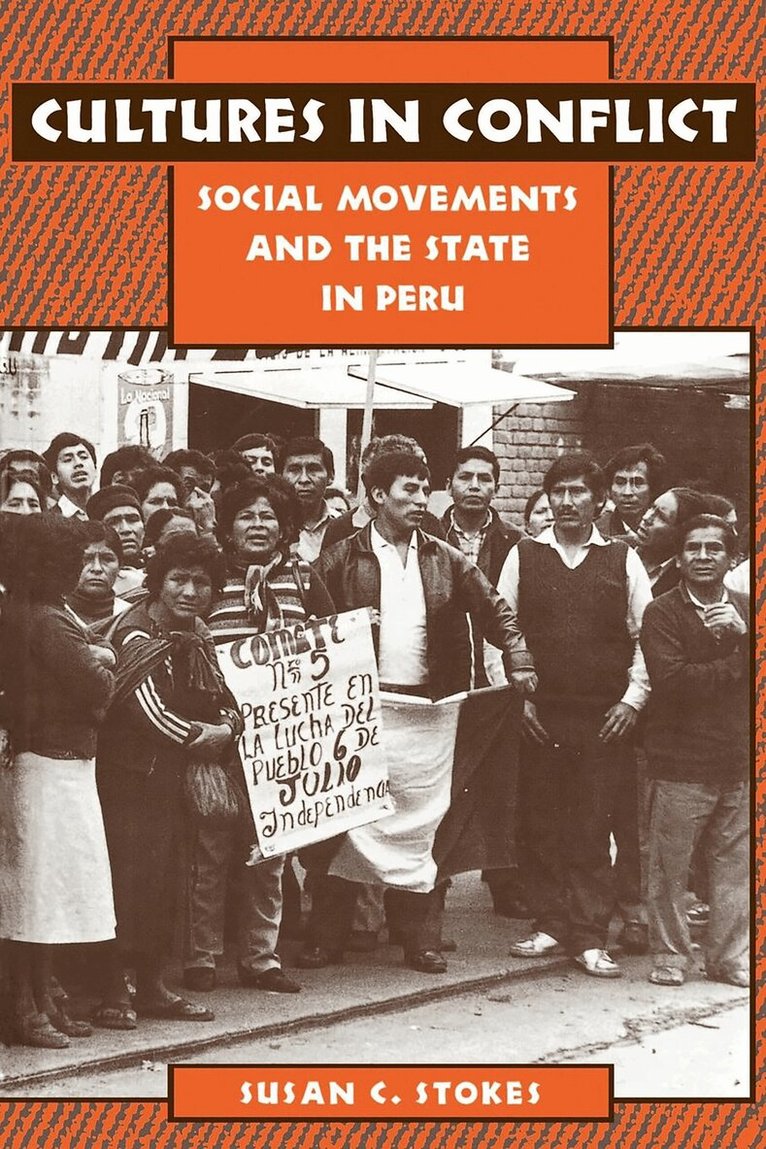
In this vivid ethnography set in contemporary Peru, Susan Stokes provides a compelling analysis of the making and unmaking of class consciousness among the urban poor. Her research strategy is multifaceted; through interviews, participant observation, and survey research she digs deeply into the popular culture of the social activists and shantytown residents she studies. The result is a penetrating look at how social movements evolve, how poor people construct independent political cultures, and how the ideological domination of oppressed classes can shatter. This work is a new and vital chapter in the growing literature on the formation of social movements. It chronicles the transformation of Peru's poor from a culture of deference and clientelism in the late 1960s to a population mobilized for radical political action today.
744 kr
Skickas inom 7-10 vardagar
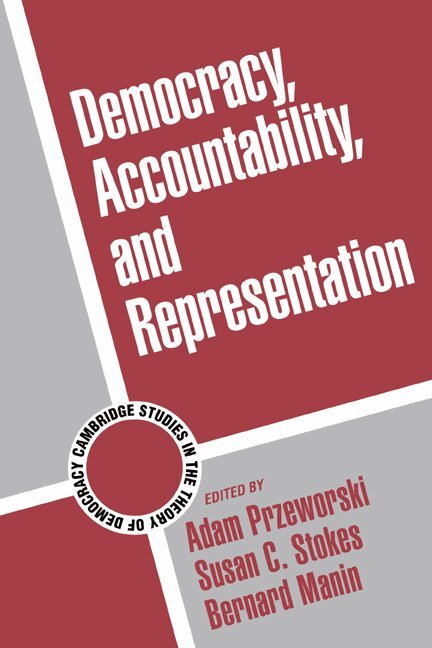
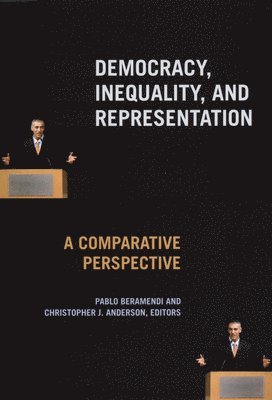
Political representation lies at the core of modern politics. Democracies, with their vast numbers of citizens, could not operate without representative institutions. Yet relations between the democratic ideal and the everyday practice of political representation have never been well defined and remain the subject of vigorous debate among historians, political theorists, lawyers, and citizens. In this volume, an eminent group of scholars move forward the debates about political representation on a number of fronts. Drawing on insights from political science, history, political theory, economics, and anthropology, the authors provide much-needed clarity to some of the most vexing questions about political representation. They also reveal new and enlightening perspectives on this fundamental political practice. Topics discussed include representation before democracy, political parties, minorities, electoral competition, and ideology. This volume is essential reading for anyone interested in the ideal and the reality of political representation.
410 kr
Skickas inom 7-10 vardagar
Political representation lies at the core of modern politics. Democracies, with their vast numbers of citizens, could not operate without representative institutions. Yet relations between the democratic ideal and the everyday practice of political representation have never been well defined and remain the subject of vigorous debate among historians, political theorists, lawyers, and citizens. In this volume, an eminent group of scholars move forward the debates about political representation on a number of fronts. Drawing on insights from political science, history, political theory, economics, and anthropology, the authors provide much-needed clarity to some of the most vexing questions about political representation. They also reveal new and enlightening perspectives on this fundamental political practice. Topics discussed include representation before democracy, political parties, minorities, electoral competition, and ideology. This volume is essential reading for anyone interested in the ideal and the reality of political representation.
Del 2 - Cambridge Studies in the Theory of Democracy
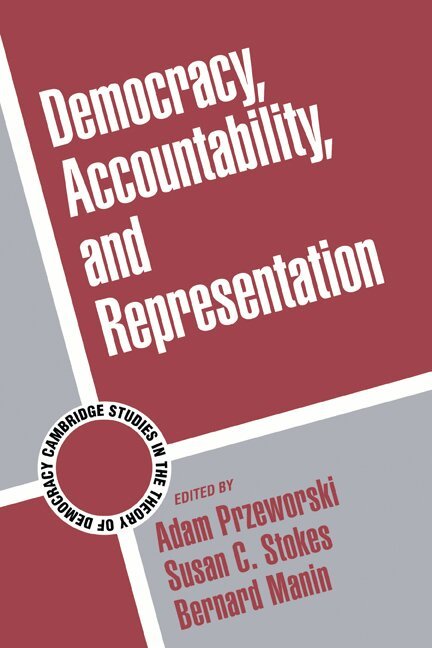
Democracy, Accountability, and Representation
Inbunden, Engelska, 1999
1 166 kr
Skickas inom 7-10 vardagar
This book examines whether the mechanisms of accountability characteristic of democratic systems are sufficient to induce the representatives to act in the best interest of the represented. The first part of the volume focuses on the role of elections, distinguishing different ways in which they may cause representation. The second part is devoted to the role of checks and balances, between the government and the parliament as well as between the government and the bureaucracy. The contributors of this volume, all leading scholars in the fields of American and comparative politics and political theory, address questions such as, whether elections induce governments to act in the interest of citizens. Are politicians in democracies accountable to voters in future elections? If so, does accountability induce politicians to represent citizens? Does accountability limit or enhance the scope of action of governments? Are governments that violate campaign mandates representative? Overall, the essays combine theoretical discussions, game-theoretic models, case studies, and statistical analyses, within a shared analytical approach and a standardized terminology. The empirical material is drawn from the well established democracies as well as from new democracies.
Del 2 - Cambridge Studies in the Theory of Democracy
Democracy, Accountability, and Representation
Häftad, Engelska, 1999
410 kr
Skickas inom 7-10 vardagar
This book examines whether the mechanisms of accountability characteristic of democratic systems are sufficient to induce the representatives to act in the best interest of the represented. The first part of the volume focuses on the role of elections, distinguishing different ways in which they may cause representation. The second part is devoted to the role of checks and balances, between the government and the parliament as well as between the government and the bureaucracy. The contributors of this volume, all leading scholars in the fields of American and comparative politics and political theory, address questions such as, whether elections induce governments to act in the interest of citizens. Are politicians in democracies accountable to voters in future elections? If so, does accountability induce politicians to represent citizens? Does accountability limit or enhance the scope of action of governments? Are governments that violate campaign mandates representative? Overall, the essays combine theoretical discussions, game-theoretic models, case studies, and statistical analyses, within a shared analytical approach and a standardized terminology. The empirical material is drawn from the well established democracies as well as from new democracies.
1 034 kr
Skickas inom 7-10 vardagar
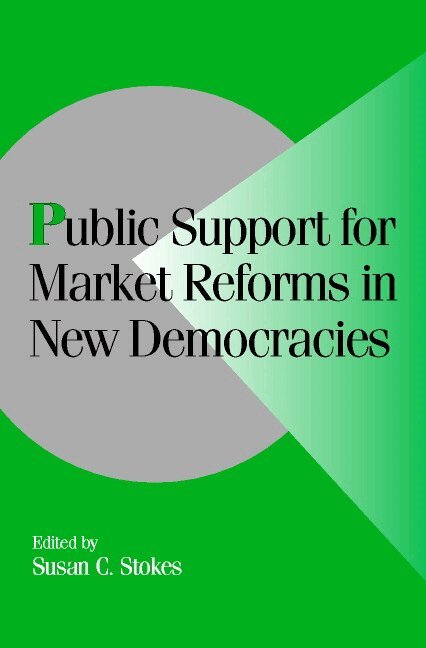
Do people in new democracies undergoing market reforms turn against these reforms when the economic adjustment is painful? The conventional wisdom is that they will. According to 'economic voting' models, citizens punish elected governments for bad economic performance. The contributors to this collection, in contrast, begin with the insight that citizens in new democracies have good reasons to depart from the predictions of economic voting. If they believe the prediction that, with the transition to a market economy, economic conditions must deteriorate before they improve, they may interpret short-term deterioration as signaling that the transition is on course and things will improve in the future. If they perceive that forces from the past are responsible for economic deterioration, they may exonerate the government. With similar data-sets from three new democracies in Europe and three in Latin America, the authors probe the support for governments and economic reforms under economic conditions.
322 kr
Skickas inom 7-10 vardagar
Do people in new democracies undergoing market reforms turn against these reforms when the economic adjustment is painful? The conventional wisdom is that they will. According to 'economic voting' models, citizens punish elected governments for bad economic performance. The contributors to this collection, in contrast, begin with the insight that citizens in new democracies have good reasons to depart from the predictions of economic voting. If they believe the prediction that, with the transition to a market economy, economic conditions must deteriorate before they improve, they may interpret short-term deterioration as signaling that the transition is on course and things will improve in the future. If they perceive that forces from the past are responsible for economic deterioration, they may exonerate the government. With similar data-sets from three new democracies in Europe and three in Latin America, the authors probe the support for governments and economic reforms under economic conditions.
995 kr
Skickas inom 7-10 vardagar
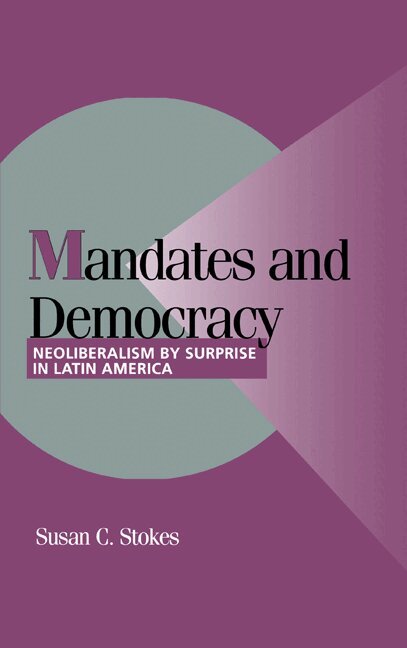
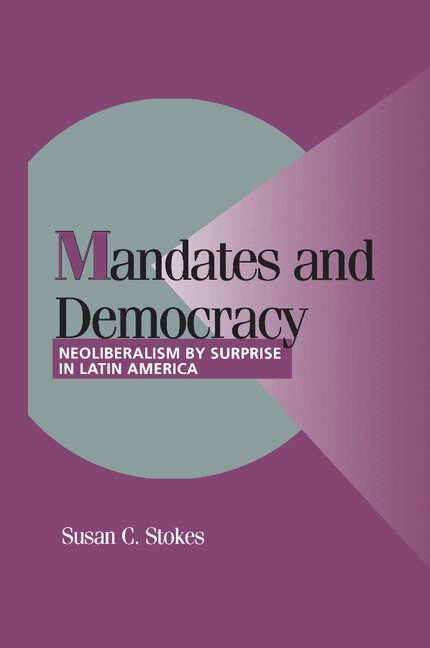
Sometimes politicians run for office promising one set of policies, and if they win, switch to very different ones. Latin American presidents in recent years have frequently run promising to avoid pro-market reforms and harsh economic adjustment, then win and transform immediately into enthusiastic market reformers. Does it matter when politicians ignore the promises they made and the preferences of their constituents? If politicians want to be reelected or see their party reelected at the end of their term, why would they impose unpopular policies? Susan Stokes develops a model of policy switches and tests it with statistical and qualitative data from Latin American elections over the last two decades. She concludes that politicians may change policies because unpopular policies are best for constituents and best serve their own political ambitions. Nevertheless, even though good representatives sometimes switch policies, abrupt change tends to erode the quality of democracy.
334 kr
Skickas inom 7-10 vardagar
Sometimes politicians run for office promising one set of policies, and if they win, switch to very different ones. Latin American presidents in recent years have frequently run promising to avoid pro-market reforms and harsh economic adjustment, then win and transform immediately into enthusiastic market reformers. Does it matter when politicians ignore the promises they made and the preferences of their constituents? If politicians want to be reelected or see their party reelected at the end of their term, why would they impose unpopular policies? Susan Stokes develops a model of policy switches and tests it with statistical and qualitative data from Latin American elections over the last two decades. She concludes that politicians may change policies because unpopular policies are best for constituents and best serve their own political ambitions. Nevertheless, even though good representatives sometimes switch policies, abrupt change tends to erode the quality of democracy.
292 kr
Skickas inom 7-10 vardagar
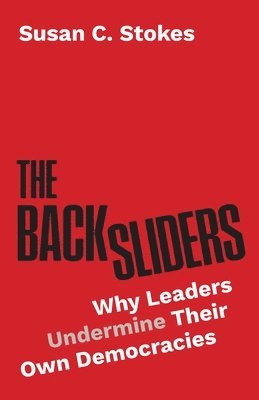
Why democracy is under assault across the globe by the leaders entrusted to preserve itDemocracies around the world are getting swept up in a wave of democratic erosion. Since the beginning of the twenty-first century, two dozen presidents and prime ministers have attacked their countries’ democratic institutions, violating political norms, aggrandizing their own powers, and often trying to overstay their terms in office.The Backsliders offers the first general explanation for this wave. Drawing on a wealth of original research, Susan Stokes shows that increasing income inequality, a legacy of late twentieth-century globalization, left some countries especially at risk of backsliding toward autocracy. Left-behind voters were drawn to right-wing ethnonationalist leaders in countries like the United States, India, and Brazil, and to left-wing populist ones in countries like Venezuela, Mexico, and South Africa.Unlike military leaders who abruptly kill democracies in coups, elected leaders who erode them gradually must maintain some level of public support. They do so by encouraging polarization among citizens and also by trash-talking their democracies: claiming that the institutions they attack are corrupt and incompetent. They tell voters that these institutions should be torn down and replaced by ones under the executive’s control. The Backsliders describes how journalists, judges, NGOs, and opposition leaders can put the brakes on democratic erosion, and how voters can do so through political engagement and the power of the ballot box.
1 034 kr
Skickas inom 7-10 vardagar
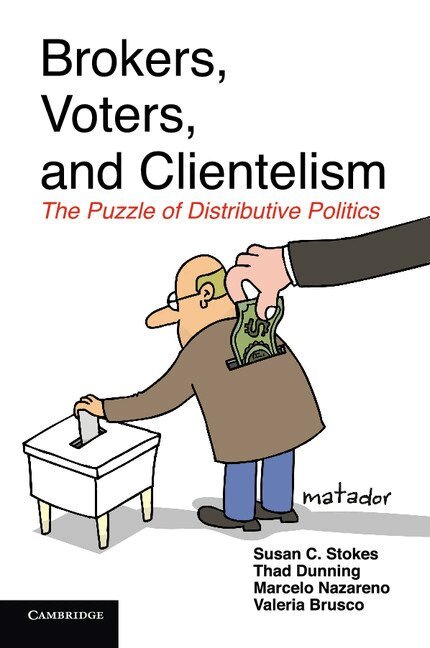
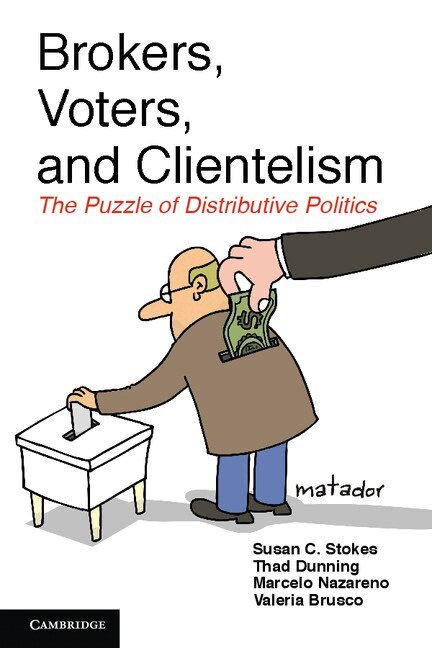
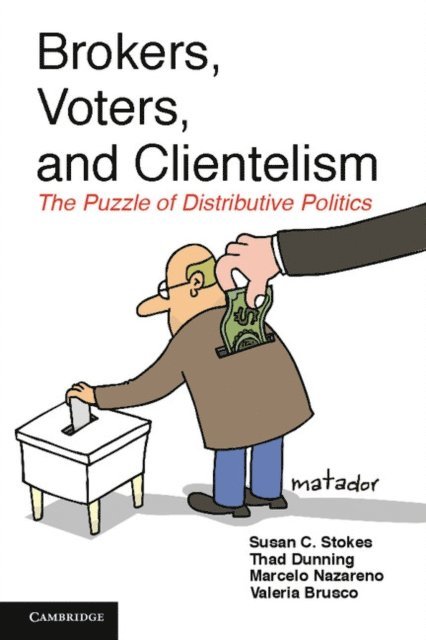
Brokers, Voters, and Clientelism addresses major questions in distributive politics. Why is it acceptable for parties to try to win elections by promising to make certain groups of people better off, but unacceptable - and illegal - to pay people for their votes? Why do parties often lavish benefits on loyal voters, whose support they can count on anyway, rather than on responsive swing voters? Why is vote buying and machine politics common in today's developing democracies but a thing of the past in most of today's advanced democracies? This book develops a theory of broker-mediated distribution to answer these questions, testing the theory with research from four developing democracies, and reviews a rich secondary literature on countries in all world regions. The authors deploy normative theory to evaluate whether clientelism, pork-barrel politics, and other non-programmatic distributive strategies can be justified on the grounds that they promote efficiency, redistribution, or voter participation.
410 kr
Skickas inom 7-10 vardagar
Brokers, Voters, and Clientelism addresses major questions in distributive politics. Why is it acceptable for parties to try to win elections by promising to make certain groups of people better off, but unacceptable - and illegal - to pay people for their votes? Why do parties often lavish benefits on loyal voters, whose support they can count on anyway, rather than on responsive swing voters? Why is vote buying and machine politics common in today's developing democracies but a thing of the past in most of today's advanced democracies? This book develops a theory of broker-mediated distribution to answer these questions, testing the theory with research from four developing democracies, and reviews a rich secondary literature on countries in all world regions. The authors deploy normative theory to evaluate whether clientelism, pork-barrel politics, and other non-programmatic distributive strategies can be justified on the grounds that they promote efficiency, redistribution, or voter participation.
309 kr
Skickas inom 7-10 vardagar
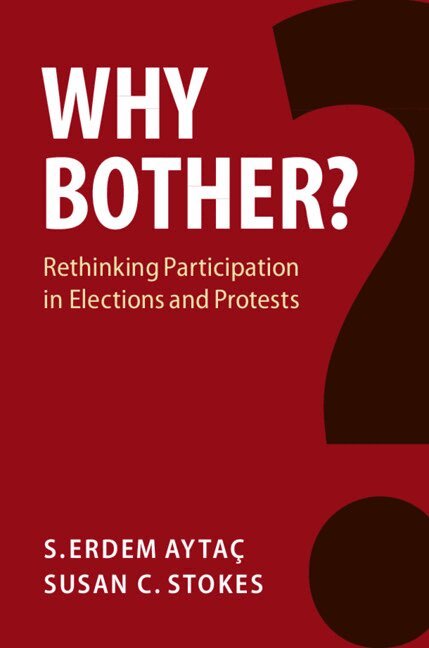
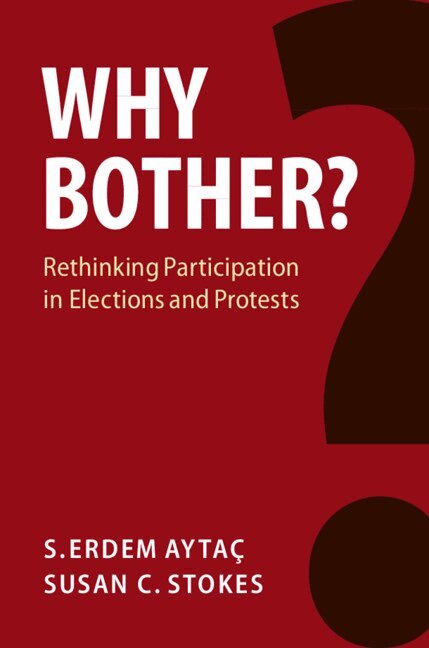
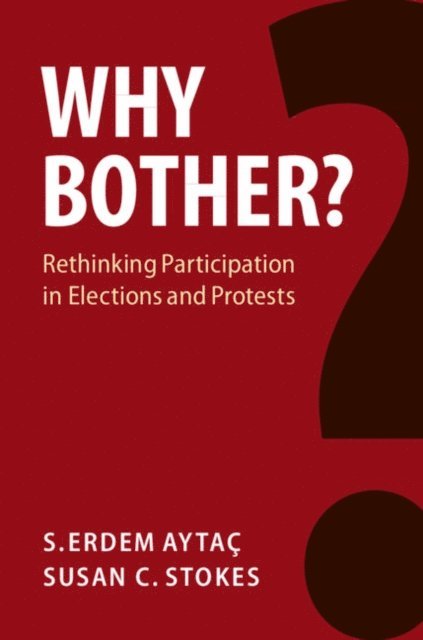
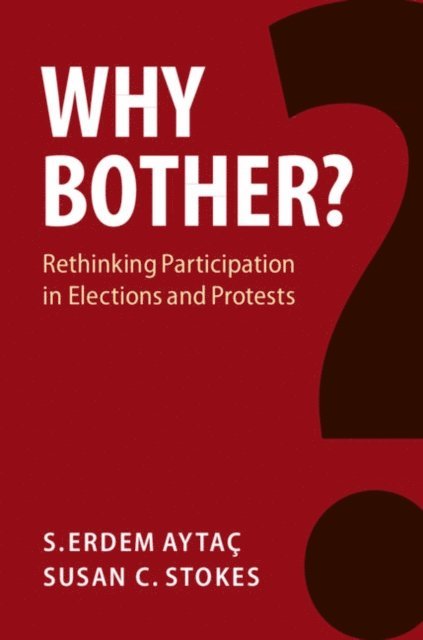
Why do vote-suppression efforts sometimes fail? Why does police repression of demonstrators sometimes turn localized protests into massive, national movements? How do politicians and activists manipulate people's emotions to get them involved? The authors of Why Bother? offer a new theory of why people take part in collective action in politics, and test it in the contexts of voting and protesting. They develop the idea that just as there are costs of participation in politics, there are also costs of abstention - intrinsic and psychological but no less real. That abstention can be psychically costly helps explain real-world patterns that are anomalies for existing theories, such as that sometimes increases in costs of participation are followed by more participation, not less. The book draws on a wealth of survey data, interviews, and experimental results from a range of countries, including the United States, Britain, Brazil, Sweden, and Turkey.
1 139 kr
Skickas inom 7-10 vardagar
Why do vote-suppression efforts sometimes fail? Why does police repression of demonstrators sometimes turn localized protests into massive, national movements? How do politicians and activists manipulate people's emotions to get them involved? The authors of Why Bother? offer a new theory of why people take part in collective action in politics, and test it in the contexts of voting and protesting. They develop the idea that just as there are costs of participation in politics, there are also costs of abstention - intrinsic and psychological but no less real. That abstention can be psychically costly helps explain real-world patterns that are anomalies for existing theories, such as that sometimes increases in costs of participation are followed by more participation, not less. The book draws on a wealth of survey data, interviews, and experimental results from a range of countries, including the United States, Britain, Brazil, Sweden, and Turkey.