Susan E. Reid - Böcker
Visar alla böcker från författaren Susan E. Reid. Handla med fri frakt och snabb leverans.
7 produkter
7 produkter
1 504 kr
Skickas inom 11-20 vardagar
Much has been written about the workings of communist governments in the USSR and the Soviet bloc, yet there is still a great deal to explore regarding their relationship to the everyday lives of the citizens living under them. This third volume builds on the editors’ Style and Socialism and Socialist Spaces, showing how the rise of consumer culture took a unique form in these countries. Essays from top scholars address topics ranging from fashion and game shows to smoking and camping. The authors of the essays in this collection investigate the ways in which pleasurable activities, like many other facets of daily life, were both a space in which these communist governments tried to insinuate themselves and thereby further expand the reach of their authority, and also an opportunity for people to assert their individuality.
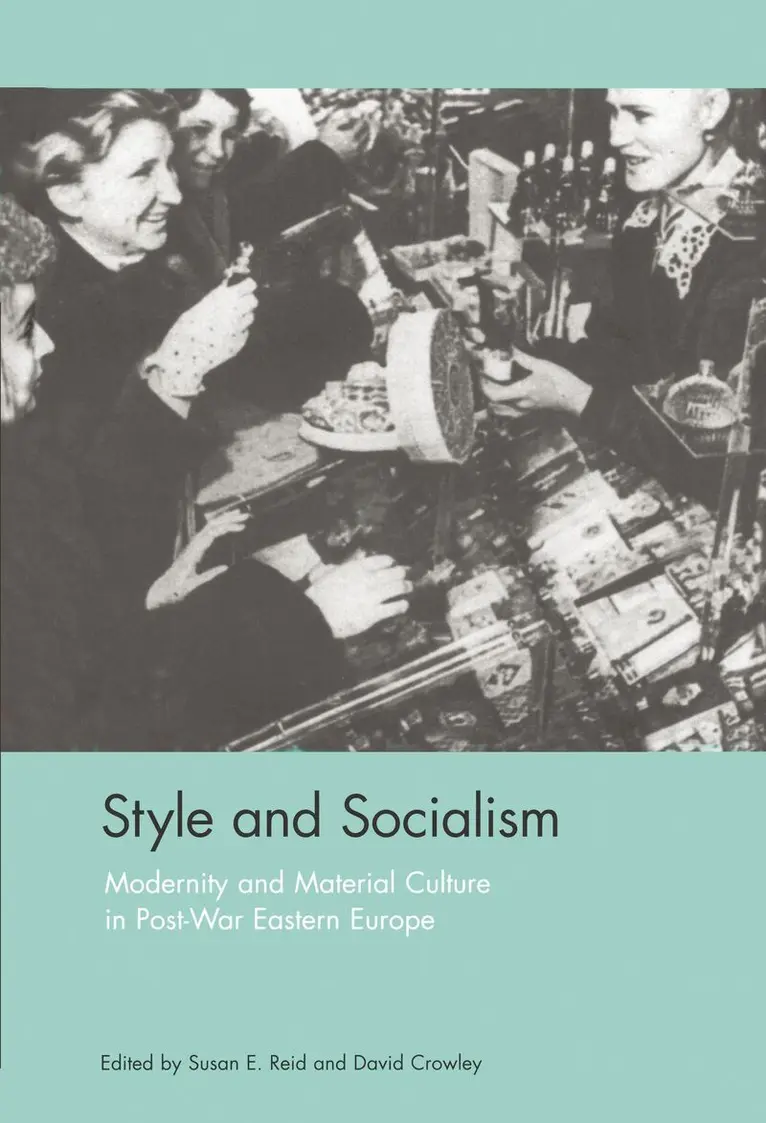
Style and Socialism
Modernity and Material Culture in Post-War Eastern Europe
Inbunden, Engelska, 2000
1 754 kr
Skickas inom 10-15 vardagar
This book explores the material and visual world of the socialist Bloc from the late 1940s to the late 1960s. The essays, by authors from a range of disciplines, examine the forms and uses of material objects that made up the environment of life behind the 'Iron Curtain', and investigates the particular ways in which these objects came to represent the often divergent aspirations of regimes and peoples in the Soviet Union and Eastern Europe.The two decades after the end of the Second World War considered here constitute two contrasting periods: that of post-war Stalinism and the 'sovietization' or 'stalinization' of Eastern Europe; and, from the mid-1950s, the period of destalinization and relative cultural liberalization known as the Thaw. During the Thaw, consumerism and a moderate fashion consciousness began to be tolerated or even encouraged to varying degrees in different parts of the Bloc. Style, regarded as a suspect notion under Stalin, became a legitimate and even urgent issue.What forms of dress, home furnishings and housing, as well as of fine art, would provide a stimulating environment that could meet the physical and ideological needs of -- and give shape to -- modern, socialist life? Challenging the assumption that all cultural norms were generated and effectively imposed by Moscow, essays in this anthology investigate the interactions and exchanges between the countries of the Eastern Bloc and and ask how, even in socialist economies, the consumption of material objects -- or the refusal to consume -- could project personal and collective identities and even articulate resistance.Anyone who seeks to understand the effects of state socialism on life in the Soviet Union and Eastern Europe, or who is interested in the intersection of politics with art, design and material culture will find this book absorbing and illuminating.
557 kr
Skickas inom 10-15 vardagar
This book explores the material and visual world of the socialist Bloc from the late 1940s to the late 1960s. The essays, by authors from a range of disciplines, examine the forms and uses of material objects that made up the environment of life behind the 'Iron Curtain', and investigates the particular ways in which these objects came to represent the often divergent aspirations of regimes and peoples in the Soviet Union and Eastern Europe.The two decades after the end of the Second World War considered here constitute two contrasting periods: that of post-war Stalinism and the 'sovietization' or 'stalinization' of Eastern Europe; and, from the mid-1950s, the period of destalinization and relative cultural liberalization known as the Thaw. During the Thaw, consumerism and a moderate fashion consciousness began to be tolerated or even encouraged to varying degrees in different parts of the Bloc. Style, regarded as a suspect notion under Stalin, became a legitimate and even urgent issue.What forms of dress, home furnishings and housing, as well as of fine art, would provide a stimulating environment that could meet the physical and ideological needs of -- and give shape to -- modern, socialist life? Challenging the assumption that all cultural norms were generated and effectively imposed by Moscow, essays in this anthology investigate the interactions and exchanges between the countries of the Eastern Bloc and and ask how, even in socialist economies, the consumption of material objects -- or the refusal to consume -- could project personal and collective identities and even articulate resistance.Anyone who seeks to understand the effects of state socialism on life in the Soviet Union and Eastern Europe, or who is interested in the intersection of politics with art, design and material culture will find this book absorbing and illuminating.
1 754 kr
Skickas inom 10-15 vardagar
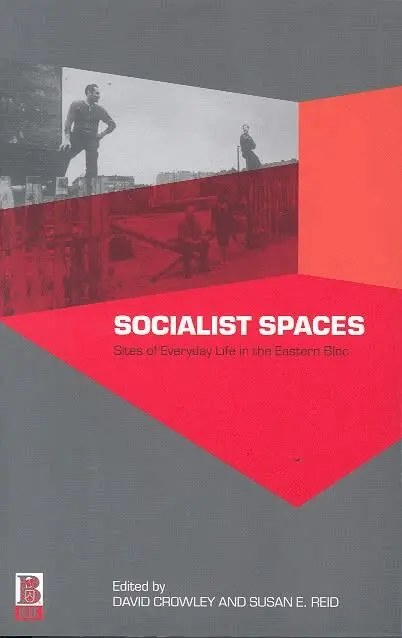
What were Socialist Spaces? The Eastern Bloc produced distinctive spaces, some of which were fashioned from ideological templates, such as the monumental parade grounds and Red Squares where communist leaders could receive tributes, or new factory cities with towering chimneys and glittering palaces of culture. But what of the grimy toilet in the communal apartment or the forlorn ruins left after the Second World War?This book explores the representation, meanings and uses of space in the socialist countries of Eastern Europe and the Soviet Union between 1947 and 1991. The essays - written from different disciplinary perspectives - investigate the extent to which actual spaces conformed to the dominant political order in the region. Should, for instance, the creation of private spaces, such as the Russian dacha and the Czech chata, be understood as acts of appropriation in which lives were fashioned against the collective or, alternatively, as 'gifts' given by the State in return for quiescence?Whilst monuments and public spaces were designed to relay official ideology, one of the most notable features of the events that marked the end of the Bloc was the way that they became sites of dissent. Examining the myriad ways in which space was used and conceived within socialist society, this book makes an essential contribution to Eastern European and Soviet Studies and provides significant new angles on the factors that underpinned socialism's eventual downfall.
489 kr
Skickas inom 10-15 vardagar
What were Socialist Spaces? The Eastern Bloc produced distinctive spaces, some of which were fashioned from ideological templates, such as the monumental parade grounds and Red Squares where communist leaders could receive tributes, or new factory cities with towering chimneys and glittering palaces of culture. But what of the grimy toilet in the communal apartment or the forlorn ruins left after the Second World War?This book explores the representation, meanings and uses of space in the socialist countries of Eastern Europe and the Soviet Union between 1947 and 1991. The essays - written from different disciplinary perspectives - investigate the extent to which actual spaces conformed to the dominant political order in the region. Should, for instance, the creation of private spaces, such as the Russian dacha and the Czech chata, be understood as acts of appropriation in which lives were fashioned against the collective or, alternatively, as 'gifts' given by the State in return for quiescence?Whilst monuments and public spaces were designed to relay official ideology, one of the most notable features of the events that marked the end of the Bloc was the way that they became sites of dissent. Examining the myriad ways in which space was used and conceived within socialist society, this book makes an essential contribution to Eastern European and Soviet Studies and provides significant new angles on the factors that underpinned socialism's eventual downfall.
Entrepreneurial Vision
A Guide for Charting and Implementing the Visioning Process
Inbunden, Engelska, 2022
994 kr
Skickas
While many texts on entrepreneurship and biographies of great entrepreneurs and leaders talk about vision and its importance, few delve into what vision is, how it comes to be, and, how it can be more successfully developed.
Entrepreneurial Vision
A Guide for Charting and Implementing the Visioning Process
Häftad, Engelska, 2023
940 kr
Skickas inom 10-15 vardagar
While many texts on entrepreneurship and biographies of great entrepreneurs and leaders talk about vision and its importance, few delve into what vision is, how it comes to be, and, how it can be more successfully developed.