Susan Engi Raiford – författare
579 kr
Läs direkt efter köp
639 kr
Skickas inom 10-15 vardagar
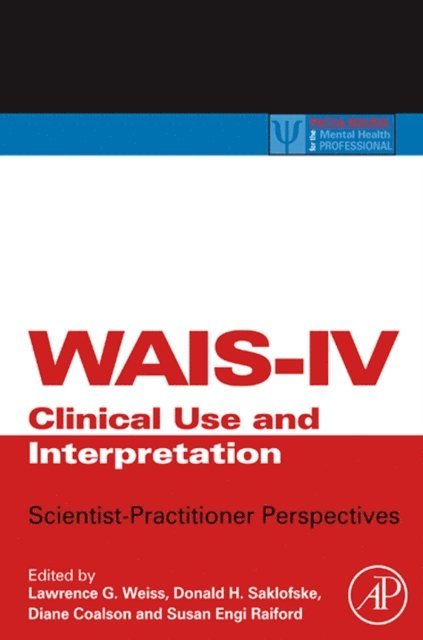
Published in August of 2008, WAIS-IV is the most widely used intelligence test for adults in the world. Substantive changes were made to the WAIS-IV from the WAIS-III leaving clinicians with questions as to how to use and interpret the measure effectively. Written by the creators of the new test, this book serves as the ultimate insider's guide to the new test, providing users with the kind of access to norms and data that would be unavailable to any subsequent book on clinical use of this measure.
The book discusses the changes made between 3rd and 4th editions along with an FAQ and answers about use and interpretation. The reader is instructed how to interpret composite scores, and everything needed to use and interpret two entirely new composite scores: the General Ability Index (GAI), and the Cognitive Proficiency Index (CPI). This information does NOT appear in the manual accompanying the test.
The second section of the book focuses on WAIS-IV use and interpretation with special clinical applications and populations, including with multicultural clients, in neuropsychological settings, with individuals experiencing psychological disorders, and with older adults. The editors and chapter authors have exclusive access to proprietary WAIS-IV data to run advanced analyses and provide information beyond what is offered in the WAIS-IV manual.
Provides practical advice on scoring and administration Facilitates understanding WAIS-IV use with special populations Describes use of the WAIS-IV with WMS-II437 kr
Skickas inom 5-8 vardagar
980 kr
Skickas inom 5-8 vardagar
742 kr
Läs direkt efter köp
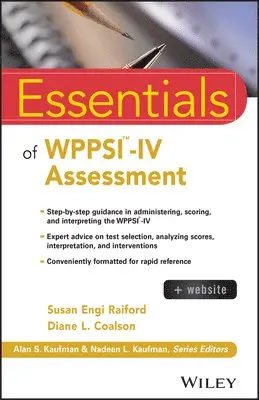
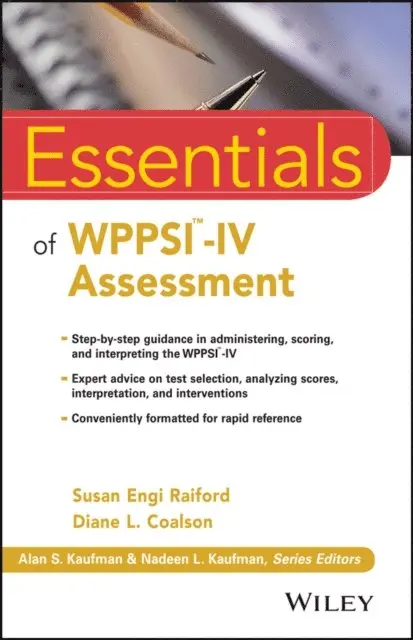
Quickly acquire the knowledge and skills necessary to expertly administer, score, and interpret the WPPSI™-IV
Anyone who assesses young children is familiar with the challenges of obtaining accurate and adequate test data. In Essentials of WPPSI™-IV Assessment, the research directors who developed the Wechsler Preschool and Primary Scale of Intelligence™-Fourth Edition offer an insider’s perspective on its conceptualization, development, administration, and scoring. The authors’ flexible interpretive approach describes performance in both normative and intrapersonal contexts and enables interpretive case formulations from multiple theoretical and clinical perspectives.
Designed to help busy practitioners and school psychologists quickly acquire the expertise they need to make optimal use of the WPPSI™-IV, each concise chapter features end-of-chapter test questions and Rapid Reference, Caution, and Don’t Forget boxes that are hallmark features of the Essentials series. The authors also include new “Behind the Scenes” boxes that provide unprecedented insight into the test development process.
The website provides helpful tools to enhance WPPSI™-IV administration and report writing, interpretive tables, and normative data for a number of index scores not available within the published test. The website also includes the WPPSI™-IV Interpretive Assistant 1.0, a scoring software that calculates norms for the additional index scores and walks the practitioner through the authors’ interpretive approach.
Other titles in the Essentials of Psychological Assessment series:
Essentials of School Neuropsychological Assessment, Second Edition
Essentials of WIAT®-III and KTEA-II Assessment
Essentials of Processing Assessment, Second Edition
Essentials of ADHD Assessment for Children and Adolescents
Essentials of Cross-Battery Assessment, Third Edition
Visit us on the Web at: www.wiley.com/psychology
742 kr
Läs direkt efter köp
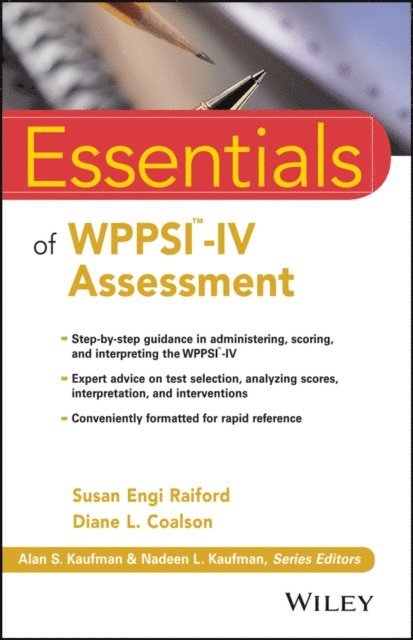
Quickly acquire the knowledge and skills necessary to expertly administer, score, and interpret the WPPSI™-IV
Anyone who assesses young children is familiar with the challenges of obtaining accurate and adequate test data. In Essentials of WPPSI™-IV Assessment, the research directors who developed the Wechsler Preschool and Primary Scale of Intelligence™-Fourth Edition offer an insider’s perspective on its conceptualization, development, administration, and scoring. The authors’ flexible interpretive approach describes performance in both normative and intrapersonal contexts and enables interpretive case formulations from multiple theoretical and clinical perspectives.
Designed to help busy practitioners and school psychologists quickly acquire the expertise they need to make optimal use of the WPPSI™-IV, each concise chapter features end-of-chapter test questions and Rapid Reference, Caution, and Don’t Forget boxes that are hallmark features of the Essentials series. The authors also include new “Behind the Scenes” boxes that provide unprecedented insight into the test development process.
The website provides helpful tools to enhance WPPSI™-IV administration and report writing, interpretive tables, and normative data for a number of index scores not available within the published test. The website also includes the WPPSI™-IV Interpretive Assistant 1.0, a scoring software that calculates norms for the additional index scores and walks the practitioner through the authors’ interpretive approach.
Other titles in the Essentials of Psychological Assessment series:
Essentials of School Neuropsychological Assessment, Second Edition
Essentials of WIAT®-III and KTEA-II Assessment
Essentials of Processing Assessment, Second Edition
Essentials of ADHD Assessment for Children and Adolescents
Essentials of Cross-Battery Assessment, Third Edition
Visit us on the Web at: www.wiley.com/psychology
1 029 kr
Läs direkt efter köp
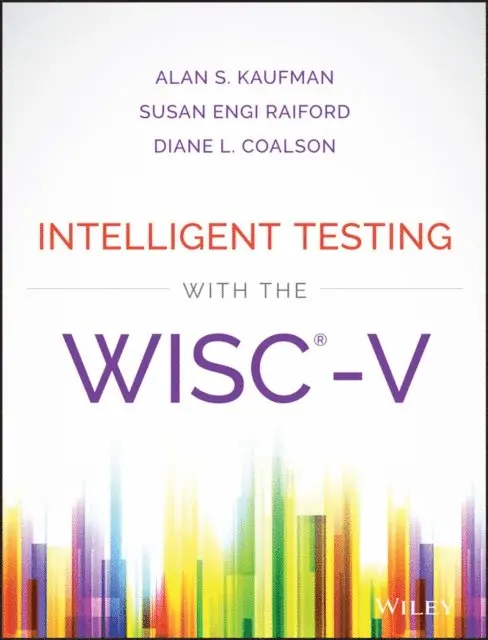
The Wechsler Intelligence Scale for Children—Fifth Edition (WISC–V) is a valuable tool for assessing children and adolescents with learning disorders—and Intelligent Testing with the WISC–V offers the comprehensive guidance you need to administer, score, and interpret WISC–V profiles for informing diagnoses and making meaningful educational recommendations. This essential resource provides you with cutting-edge expertise on how to interpret the WISC–V, which has an expanded test structure, additional subtests, and an array of new composites. Intelligent Testing offers valuable advice from experienced professionals with regard to clinically applying the WISC–V in an effort to understand a child''s strengths and weaknesses—and to create a targeted, appropriate intervention plan. Ultimately, this book equips you with the information you need to identify the best theory-based methods for interpreting each child''s profile of test scores within the context of his or her background and behaviors. Intelligent Testing provides a strong theoretical basis for interpreting the WISC–V from several vantage points, such as neuropsychological processing theory and the Cattell-Horn-Carroll (CHC) model, yet it permits you to interpret children''s profiles using simple, straightforward steps.
The most frequently used IQ test in the world, the WISC–V (like previous versions of the WISC) plays an integral role in evaluating children for learning and intellectual disabilities, developmental and language delays, and gifted and talented classifications. As such, understanding how to use the latest version of WISC is extremely important when assessing children and adolescents ages 6 to 16 years.
Explore all aspects of both the conventional WISC–V and WISC–V Digital Read objective, independent test reviews of the WISC–V from independent, highly-respected expert sources Review 17 clinical case reports that spotlight experiences of children and adolescents referred to psychologists for diverse reasons such as reading problems, specific learning disabilities, ADHD, intellectual giftedness, and autistic spectrum disorders Learn how a broad-based, multi-faceted approach to interpretation that calls upon several scientific concepts from the fields of cognitive neuroscience, clinical and school neuropsychology, neuropsychological processing, and the CHC model, can benefit children by providing meaningful recommendations to parents, teachers, and often to the children and adolescents themselves Use the results of WISC–V as a helping agent to assist in creating the best intervention plan, rather than allowing test results to dictate placement or labelingIntelligent Testing with the WISC–V is an indispensable resource for professionals who work with the WISC–V, including school psychologists, clinical psychologists, educational diagnosticians, and more.
1 043 kr
Läs direkt efter köp
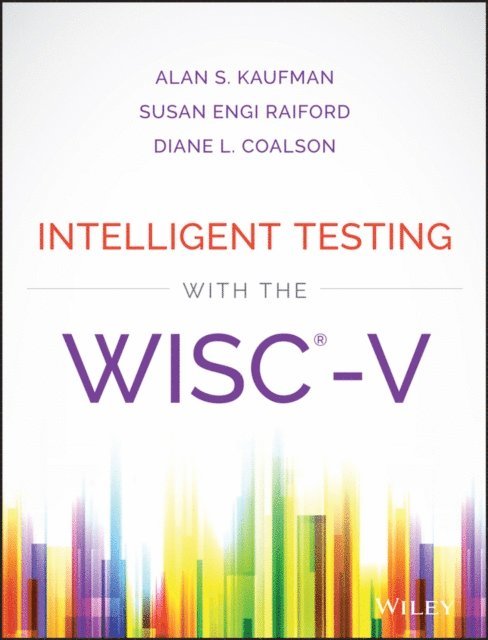
The Wechsler Intelligence Scale for Children—Fifth Edition (WISC–V) is a valuable tool for assessing children and adolescents with learning disorders—and Intelligent Testing with the WISC–V offers the comprehensive guidance you need to administer, score, and interpret WISC–V profiles for informing diagnoses and making meaningful educational recommendations. This essential resource provides you with cutting-edge expertise on how to interpret the WISC–V, which has an expanded test structure, additional subtests, and an array of new composites. Intelligent Testing offers valuable advice from experienced professionals with regard to clinically applying the WISC–V in an effort to understand a child''s strengths and weaknesses—and to create a targeted, appropriate intervention plan. Ultimately, this book equips you with the information you need to identify the best theory-based methods for interpreting each child''s profile of test scores within the context of his or her background and behaviors. Intelligent Testing provides a strong theoretical basis for interpreting the WISC–V from several vantage points, such as neuropsychological processing theory and the Cattell-Horn-Carroll (CHC) model, yet it permits you to interpret children''s profiles using simple, straightforward steps.
The most frequently used IQ test in the world, the WISC–V (like previous versions of the WISC) plays an integral role in evaluating children for learning and intellectual disabilities, developmental and language delays, and gifted and talented classifications. As such, understanding how to use the latest version of WISC is extremely important when assessing children and adolescents ages 6 to 16 years.
Explore all aspects of both the conventional WISC–V and WISC–V Digital Read objective, independent test reviews of the WISC–V from independent, highly-respected expert sources Review 17 clinical case reports that spotlight experiences of children and adolescents referred to psychologists for diverse reasons such as reading problems, specific learning disabilities, ADHD, intellectual giftedness, and autistic spectrum disorders Learn how a broad-based, multi-faceted approach to interpretation that calls upon several scientific concepts from the fields of cognitive neuroscience, clinical and school neuropsychology, neuropsychological processing, and the CHC model, can benefit children by providing meaningful recommendations to parents, teachers, and often to the children and adolescents themselves Use the results of WISC–V as a helping agent to assist in creating the best intervention plan, rather than allowing test results to dictate placement or labelingIntelligent Testing with the WISC–V is an indispensable resource for professionals who work with the WISC–V, including school psychologists, clinical psychologists, educational diagnosticians, and more.
628 kr
Skickas inom 5-8 vardagar
697 kr
Läs direkt efter köp
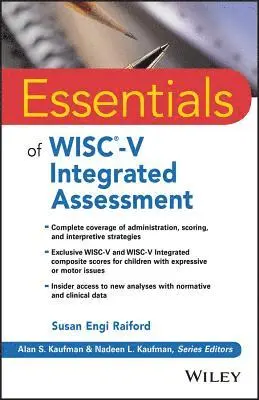
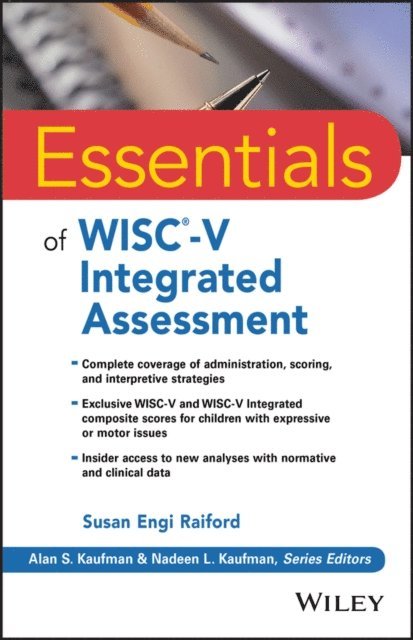
Essentials of WISC-V Integrated Assessment is the ideal companion for psychologists and other assessment professionals seeking helpful interpretive and practical information beyond the WISC-V and WISC-V Integrated published manuals. Beginning with an overview of the test and its application to educational intervention, this book provides in-depth information on new administrative, scoring, and interpretation procedures specific to the WISC-V and the WISC-V Integrated.
Insider access to the WISC-V and WISC-V Integrated standardization data allows the reader to derive new WISC-V composite scores unavailable from other resources. Readers of this book are the first to receive access to these new composite scores, which are designed to be more appropriate for children with expressive language difficulties and motor impairments. The reader also receives exclusive access to four new WISC-V expanded index scores that provide broader measures of visual spatial ability, working memory, auditory working memory, and processing speed.
Significant advances in working memory research demand more comprehensive assessment of children with a broader range of abilities and limitations. The reader will learn how to perform a highly comprehensive assessment of working memory with the WISC-V and the WISC-V Integrated.
A digital interpretive tool automatically calculates the new composite scores, completes the relevant comparisons, and generates interpretive information for new comparisons to streamline the reporting process.
The WISC-V Integrated serves to expand and clarify WISC-V results by helping practitioners better understand a child''s cognitive processes and the reasons for low or discrepant performance. This book helps practitioners get more out of the WISC-V and the WISC-V Integrated, with indispensable guidance and practical tools.
Understand the WISC-V Integrated and its proper application to the development of educational interventions Learn how administration, scoring, and interpretation has changed for retained subtests, how to administer and score new subtests, and how to obtain the first-ever composite scores Discover how to use the WISC-V and WISC-V Integrated to assess both auditory and visual working memory, and how to obtain an unparalleled and in-depth picture of working memory along a continuum of cognitive complexity Learn how to adjust WISC-V use for children with expressive or motor difficulties Explore alternative composite scoring based on the WISC-V and WISC-V Integrated standardization data to increase utility for specific populationsThe WISC-V Integrated is an essential component of the WISC-V assessment process, and Essentials of WISC-V Integrated Assessment is the ideal guide for practitioners.
703 kr
Läs direkt efter köp
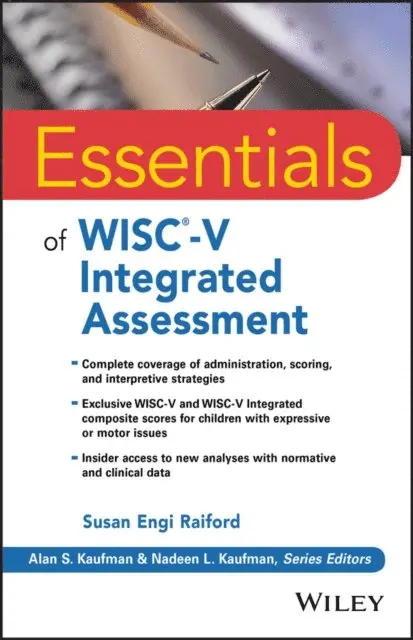
Essentials of WISC-V Integrated Assessment is the ideal companion for psychologists and other assessment professionals seeking helpful interpretive and practical information beyond the WISC-V and WISC-V Integrated published manuals. Beginning with an overview of the test and its application to educational intervention, this book provides in-depth information on new administrative, scoring, and interpretation procedures specific to the WISC-V and the WISC-V Integrated.
Insider access to the WISC-V and WISC-V Integrated standardization data allows the reader to derive new WISC-V composite scores unavailable from other resources. Readers of this book are the first to receive access to these new composite scores, which are designed to be more appropriate for children with expressive language difficulties and motor impairments. The reader also receives exclusive access to four new WISC-V expanded index scores that provide broader measures of visual spatial ability, working memory, auditory working memory, and processing speed.
Significant advances in working memory research demand more comprehensive assessment of children with a broader range of abilities and limitations. The reader will learn how to perform a highly comprehensive assessment of working memory with the WISC-V and the WISC-V Integrated.
A digital interpretive tool automatically calculates the new composite scores, completes the relevant comparisons, and generates interpretive information for new comparisons to streamline the reporting process.
The WISC-V Integrated serves to expand and clarify WISC-V results by helping practitioners better understand a child''s cognitive processes and the reasons for low or discrepant performance. This book helps practitioners get more out of the WISC-V and the WISC-V Integrated, with indispensable guidance and practical tools.
Understand the WISC-V Integrated and its proper application to the development of educational interventions Learn how administration, scoring, and interpretation has changed for retained subtests, how to administer and score new subtests, and how to obtain the first-ever composite scores Discover how to use the WISC-V and WISC-V Integrated to assess both auditory and visual working memory, and how to obtain an unparalleled and in-depth picture of working memory along a continuum of cognitive complexity Learn how to adjust WISC-V use for children with expressive or motor difficulties Explore alternative composite scoring based on the WISC-V and WISC-V Integrated standardization data to increase utility for specific populationsThe WISC-V Integrated is an essential component of the WISC-V assessment process, and Essentials of WISC-V Integrated Assessment is the ideal guide for practitioners.
763 kr
Skickas inom 3-6 vardagar
712 kr
Läs direkt efter köp
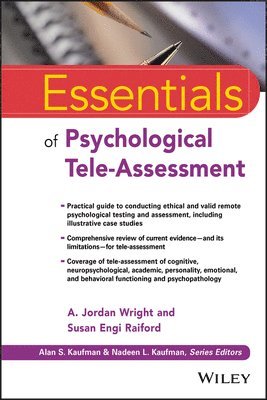
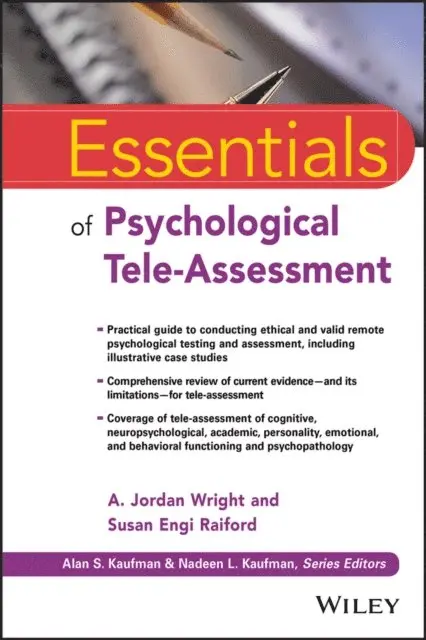
Discover a comprehensive and practical guide to the use of tele-assessments in psychological testing from two leading voices in psychology.
Essentials of Psychological Tele-Assessment delivers a primer on the current state of professional knowledge related to psychological tele-assessment, ranging from the ethical and empirical considerations to the practical applications of tele-assessment procedures. The overarching framework encourages the balancing of the limitations of the current state of the research literature with the very real needs for assessment services to continue, even when in-person procedures are not feasible.
This book includes discussion on a broad range of tests and measures, with information related to both the state of the empirical support for tele-tests and measures, with information related to both the state of the empirical support for tele-assessment utilizing them and the practical ''how-to'' for administering, scoring and interpreting data that emerge from them. Additionally, frameworks for integrating the data that emerge from tele-assessment procedures are discussed.
The book is applicable to those transitioning to tele-assessment practice and those training in a wide variety of training programs. Readers will also benefit from the inclusion of:
Practical checklists and information about specific tests must be adapted to the realities of the tele-health environment. Information about how the results of tests should be interpreted differently to account for the tele-health environment. Case examples and studies to illustrate many of the challenges of working in tele-assessment Guidance on how to balance the limitations of the state of the empirical literature on the validity of tele-assessment with the real-world needs of clients.Perfect for psychologists and trainees in a variety of health services, including clinical, counseling, school and forensic psychology, Essentials of Psychological Tele-Assessment will also earn a place in the libraries of anyone utilizing or training in cognitive, developmental, neuropsychological, psychoanalytic, psychodynamic, and interpersonal models of psychological assessment.
712 kr
Läs direkt efter köp
Discover a comprehensive and practical guide to the use of tele-assessments in psychological testing from two leading voices in psychology.
Essentials of Psychological Tele-Assessment delivers a primer on the current state of professional knowledge related to psychological tele-assessment, ranging from the ethical and empirical considerations to the practical applications of tele-assessment procedures. The overarching framework encourages the balancing of the limitations of the current state of the research literature with the very real needs for assessment services to continue, even when in-person procedures are not feasible.
This book includes discussion on a broad range of tests and measures, with information related to both the state of the empirical support for tele-tests and measures, with information related to both the state of the empirical support for tele-assessment utilizing them and the practical ''how-to'' for administering, scoring and interpreting data that emerge from them. Additionally, frameworks for integrating the data that emerge from tele-assessment procedures are discussed.
The book is applicable to those transitioning to tele-assessment practice and those training in a wide variety of training programs. Readers will also benefit from the inclusion of:
Practical checklists and information about specific tests must be adapted to the realities of the tele-health environment. Information about how the results of tests should be interpreted differently to account for the tele-health environment. Case examples and studies to illustrate many of the challenges of working in tele-assessment Guidance on how to balance the limitations of the state of the empirical literature on the validity of tele-assessment with the real-world needs of clients.Perfect for psychologists and trainees in a variety of health services, including clinical, counseling, school and forensic psychology, Essentials of Psychological Tele-Assessment will also earn a place in the libraries of anyone utilizing or training in cognitive, developmental, neuropsychological, psychoanalytic, psychodynamic, and interpersonal models of psychological assessment.