Susan Pickford - Böcker
Visar alla böcker från författaren Susan Pickford. Handla med fri frakt och snabb leverans.
8 produkter
8 produkter
2 478 kr
Skickas inom 10-15 vardagar
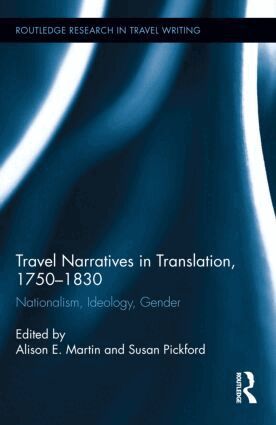
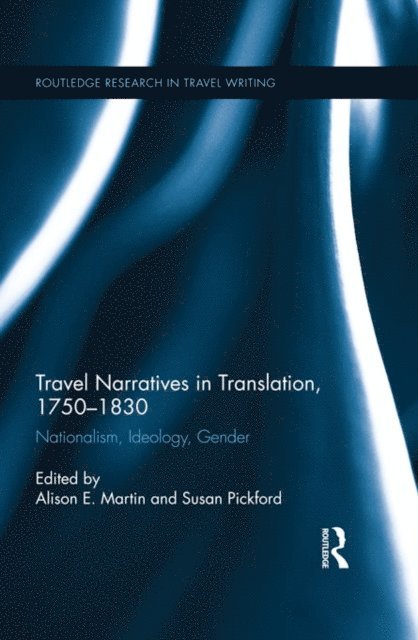
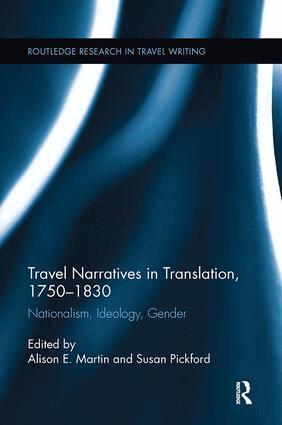
This book examines how non-fictional travel accounts were rewritten, reshaped, and reoriented in translation between 1750 and 1850, a period that saw a sudden surge in the genre's popularity. It explores how these translations played a vital role in the transmission and circulation of knowledge about foreign peoples, lands, and customs in the Enlightenment and Romantic periods. The collection makes an important contribution to travel writing studies by looking beyond metaphors of mobility and cultural transfer to focus specifically on what happens to travelogues in translation. Chapters range from discussing essential differences between the original and translated text to relations between authors and translators, from intra-European narratives of Grand Tour travel to scientific voyages round the world, and from established male travellers and translators to their historically less visible female counterparts. Drawing on European travel writing in English, French, German, Spanish, and Portuguese, the book charts how travelogues were selected for translation; how they were reworked to acquire new aesthetic, political, or gendered identities; and how they sometimes acquired a radically different character and content to meet the needs and expectations of an emergent international readership. The contributors address aesthetic, political, and gendered aspects of travel writing in translation, drawing productively on other disciplines and research areas that encompass aesthetics, the history of science, literary geography, and the history of the book.
2 246 kr
Skickas inom 10-15 vardagar
This book shines a light on the practices and professional identities of translators in nineteenth-century France, speaking to the translatorial turn in translation studies which spotlights translators as active agents in the international circulation of texts.The volume charts the sociocultural, legal, and economic developments which paved the way for the development of the professional translation industry in France in the period following the French Revolution through to the First World War. Drawing on archival material from French publishers, institutional archives, and translators’ own discourses, and applying historiographical methodologies, Pickford explores the working conditions of professional translators during this time and the subsequent professional identities which emerged from the collective practice of translation across publishing, business, and government. In its diachronic approach to translators’ practices and identities, the book aims to recover the collective contributions of these translators and, in turn, paves the way for a new approach to “translator history from below”.The volume will appeal to students and scholars in translation studies, particularly those with an interest in literary translation, translation history, and translator practices.
695 kr
Kommande
This book shines a light on the practices and professional identities of translators in nineteenth-century France, speaking to the translatorial turn in translation studies which spotlights translators as active agents in the international circulation of texts.The volume charts the sociocultural, legal, and economic developments which paved the way for the development of the professional translation industry in France in the period following the French Revolution through to the First World War. Drawing on archival material from French publishers, institutional archives, and translators’ own discourses, and applying historiographical methodologies, Pickford explores the working conditions of professional translators during this time and the subsequent professional identities which emerged from the collective practice of translation across publishing, business, and government. In its diachronic approach to translators’ practices and identities, the book aims to recover the collective contributions of these translators and, in turn, paves the way for a new approach to “translator history from below”.The volume will appeal to students and scholars in translation studies, particularly those with an interest in literary translation, translation history, and translator practices.
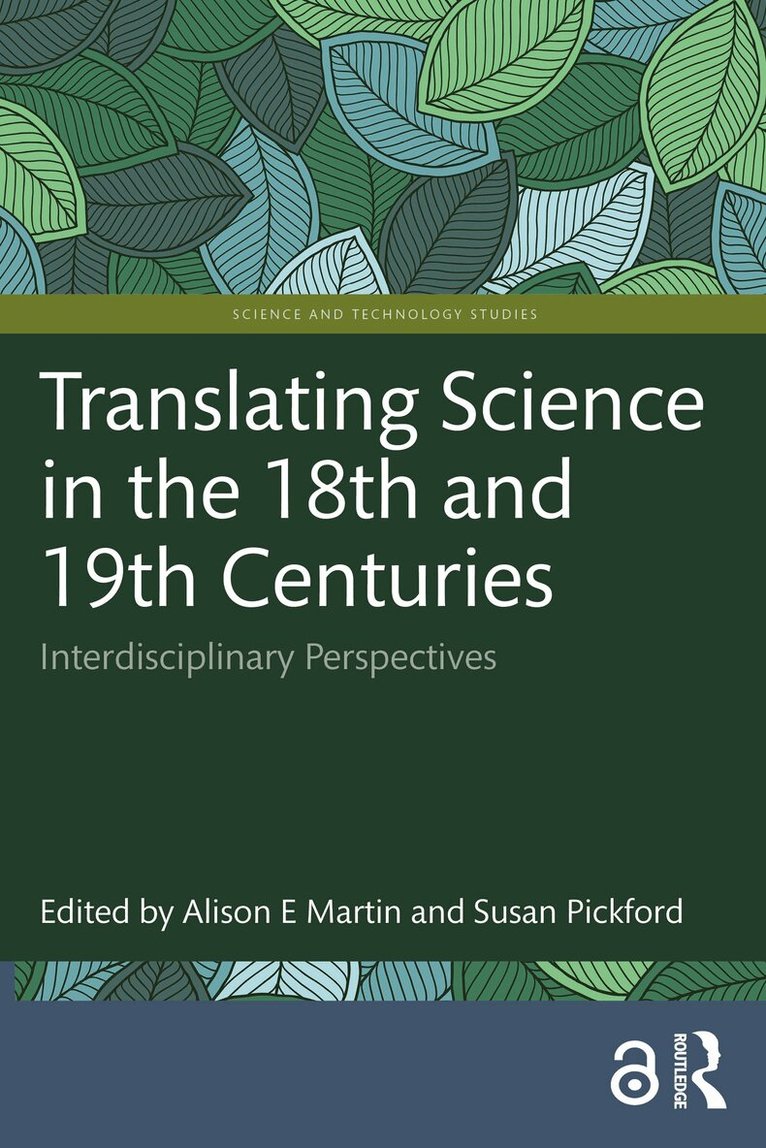
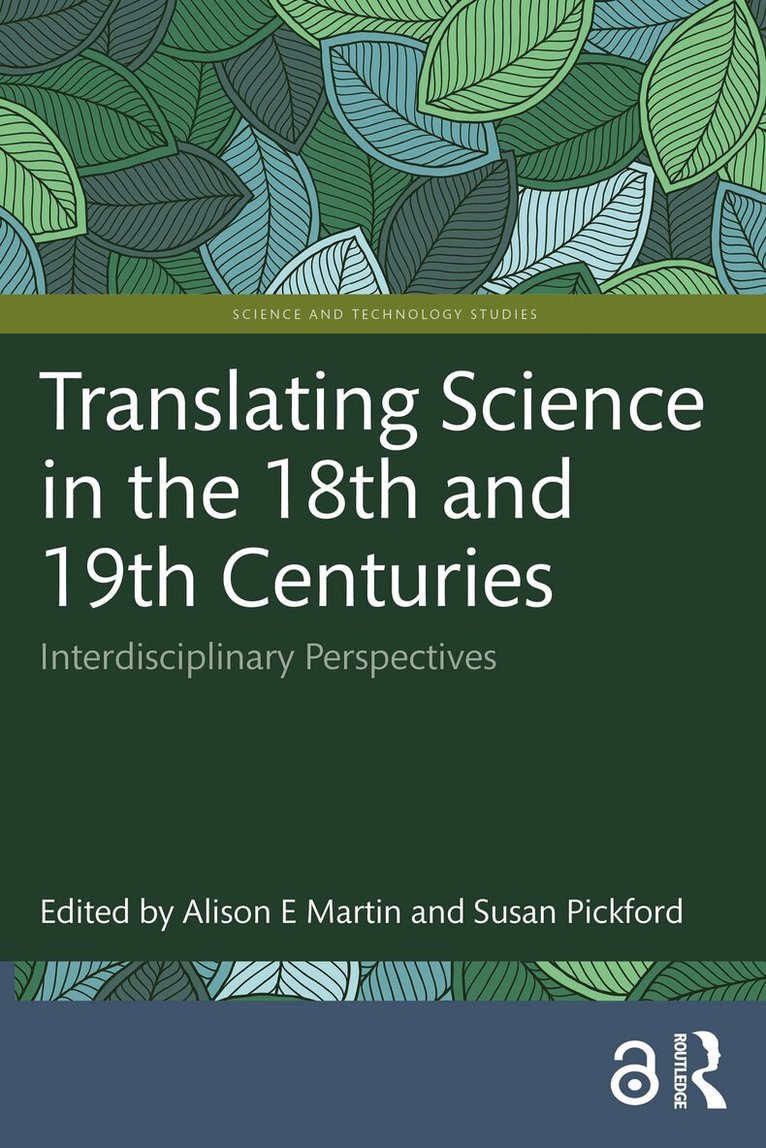
Translating Science in the 18th and 19th Centuries
Interdisciplinary Perspectives
Inbunden, Engelska, 2025
2 401 kr
Skickas inom 10-15 vardagar
This book explores the role of translation in shaping the knowledge-sharing processes that were and are seminal to scientific endeavour. It considers the mechanisms by which eighteenth- and nineteenth-century European science writing travelled within and beyond its home continent and non- European science was taken up in a colonial context. Using insights from fields of research including book history and textual studies to investigate the paratextual framing, stylistic choices, rhetorical devices, and modes of expression deployed by scientific writers – key to shaping a work’s credibility and its author’s integrity –it argues that translators are central, yet largely overlooked, mediators in this creative process.Encompassing West Africa, China, the Middle East, India, South America, Europe, and the Ottoman Empire, this volume comprises case studies working with around a dozen different languages to gain a sense of how scientific narratives were evolving both within and across an increasingly global intellectual commons in a key period in the development of the natural sciences, medicine, and technology.Part of the Science and Technology Studies series, the volume will be indispensable for scholars and researchers of science and technology studies, philosophy of science, translation studies, gender studies, English literature, and philosophy in general.
709 kr
Kommande
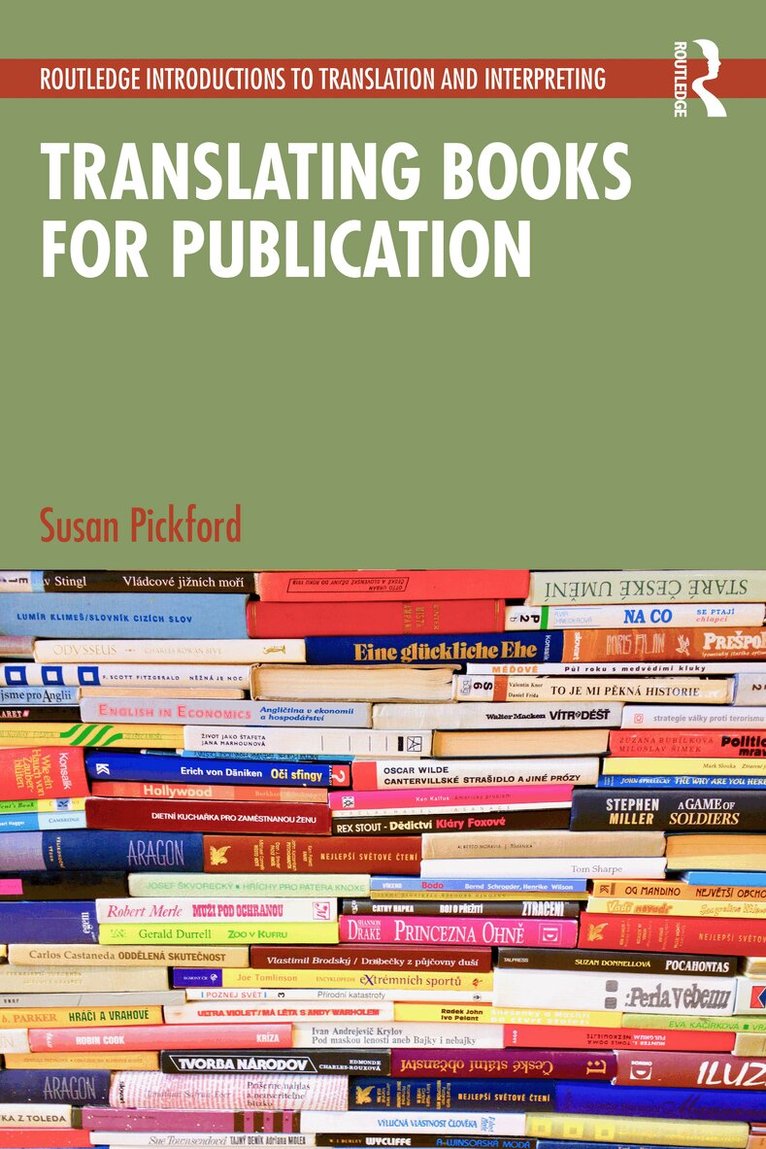
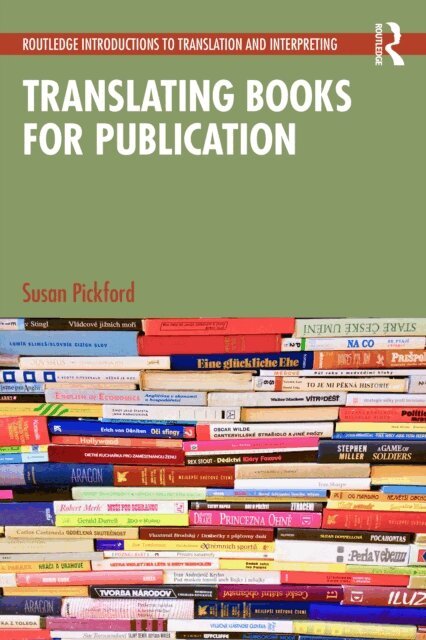
Translating Books for Publication offers readers an introductory guide to translating for the publishing sector, designed for aspiring translators and translation-adjacent professionals entering the field. It addresses the critical gap in understanding how translation operates within the broader publishing industry ecosystem. Taking a resolutely non-language-specific, business-focused approach, the book examines the practice of translating books across diverse sectors, including often-overlooked areas such as academic and institutional publishing.The book incorporates an array of real-world case studies and practical exercises from a wide range of published text types, inviting readers to explore, analyze, and engage with translation for publishing as a professional marketplace. Unlike other introductions to literary translation, it applies an avowedly professional lens to contemporary translation for publishing, construing the practice broadly to incorporate genre fiction, non-fiction, and institutional and academic publishing. The book reframes literary translation—traditionally viewed narrowly as fiction—within the contemporary publishing market, positioning it as a viable freelance business proposition. Through practical exercises and real-world insights, readers explore translation for publishing not merely as creative practice, but as professional labour within a competitive marketplace. The methodology incorporates innovative perspectives from workplace happiness research, cultural economics, and network theory, encouraging holistic thinking about translation as professional practice.The text takes an innovative approach by framing literary translation as commercial business practice within contemporary publishing markets, supported by highly analytical, evidence-based examination of the translation sector. This indispensable textbook serves students and instructors of Translation Studies, translation professionals, newcomers seeking industry entry, and established professionals looking to optimize their translation careers within the evolving publishing landscape.
2 596 kr
Kommande
Translating Books for Publication offers readers an introductory guide to translating for the publishing sector, designed for aspiring translators and translation-adjacent professionals entering the field. It addresses the critical gap in understanding how translation operates within the broader publishing industry ecosystem. Taking a resolutely non-language-specific, business-focused approach, the book examines the practice of translating books across diverse sectors, including often-overlooked areas such as academic and institutional publishing.The book incorporates an array of real-world case studies and practical exercises from a wide range of published text types, inviting readers to explore, analyze, and engage with translation for publishing as a professional marketplace. Unlike other introductions to literary translation, it applies an avowedly professional lens to contemporary translation for publishing, construing the practice broadly to incorporate genre fiction, non-fiction, and institutional and academic publishing. The book reframes literary translation—traditionally viewed narrowly as fiction—within the contemporary publishing market, positioning it as a viable freelance business proposition. Through practical exercises and real-world insights, readers explore translation for publishing not merely as creative practice, but as professional labour within a competitive marketplace. The methodology incorporates innovative perspectives from workplace happiness research, cultural economics, and network theory, encouraging holistic thinking about translation as professional practice.The text takes an innovative approach by framing literary translation as commercial business practice within contemporary publishing markets, supported by highly analytical, evidence-based examination of the translation sector. This indispensable textbook serves students and instructors of Translation Studies, translation professionals, newcomers seeking industry entry, and established professionals looking to optimize their translation careers within the evolving publishing landscape.
Translating Science in the 18th and 19th Centuries
Interdisciplinary Perspectives
Häftad, Engelska, 2025
662 kr
Skickas inom 10-15 vardagar
This book explores the role of translation in shaping the knowledge-sharing processes that were and are seminal to scientific endeavour. It considers the mechanisms by which eighteenth- and nineteenth-century European science writing travelled within and beyond its home continent and non- European science was taken up in a colonial context. Using insights from fields of research including book history and textual studies to investigate the paratextual framing, stylistic choices, rhetorical devices, and modes of expression deployed by scientific writers – key to shaping a work’s credibility and its author’s integrity –it argues that translators are central, yet largely overlooked, mediators in this creative process.Encompassing West Africa, China, the Middle East, India, South America, Europe, and the Ottoman Empire, this volume comprises case studies working with around a dozen different languages to gain a sense of how scientific narratives were evolving both within and across an increasingly global intellectual commons in a key period in the development of the natural sciences, medicine, and technology.Part of the Science and Technology Studies series, the volume will be indispensable for scholars and researchers of science and technology studies, philosophy of science, translation studies, gender studies, English literature, and philosophy in general.
787 kr
Skickas inom 10-15 vardagar
This book examines how non-fictional travel accounts were rewritten, reshaped, and reoriented in translation between 1750 and 1850, a period that saw a sudden surge in the genre's popularity. It explores how these translations played a vital role in the transmission and circulation of knowledge about foreign peoples, lands, and customs in the Enlightenment and Romantic periods. The collection makes an important contribution to travel writing studies by looking beyond metaphors of mobility and cultural transfer to focus specifically on what happens to travelogues in translation. Chapters range from discussing essential differences between the original and translated text to relations between authors and translators, from intra-European narratives of Grand Tour travel to scientific voyages round the world, and from established male travellers and translators to their historically less visible female counterparts. Drawing on European travel writing in English, French, German, Spanish, and Portuguese, the book charts how travelogues were selected for translation; how they were reworked to acquire new aesthetic, political, or gendered identities; and how they sometimes acquired a radically different character and content to meet the needs and expectations of an emergent international readership. The contributors address aesthetic, political, and gendered aspects of travel writing in translation, drawing productively on other disciplines and research areas that encompass aesthetics, the history of science, literary geography, and the history of the book.