Susanne Schech – författare
Visar alla böcker från författaren Susanne Schech. Handla med fri frakt och snabb leverans.
6 produkter
Development Perspectives from the Antipodes
Inbunden, 2013
1524 kr
Lägg i varukorg
Development discourses and academic development knowledge reflect to a large extent the interests of the ‘North’. The Antipodes – Australia and New Zealand - share an ambivalent location as countries of the ‘North' in wealth, development and dominant intellectual genealogies but ‘South' in latitude …
Culture and Development
A Critical Introduction
Av Susanne Schech, Jane Haggis
Häftad, 2000
483 kr
Lägg i varukorg
This book introduces students to new ways of thinking about development. It integrates the recent scholarship of cultural studies within the existing frameworks of development studies, which have primarily focused on issues of political economy and structural transformation.
Development
A Cultural Studies Reader
Av Susanne Schech, Jane Haggis
Inbunden, 2002
1898 kr
Lägg i varukorg
This book of readings gathers together some of the most influential contributions that reflect on the relationship between culture and development.
Development
A Cultural Studies Reader
Häftad, 2002
609 kr
Lägg i varukorg
This book of readings gathers together some of the most influential contributions that reflect on the relationship between culture and development.
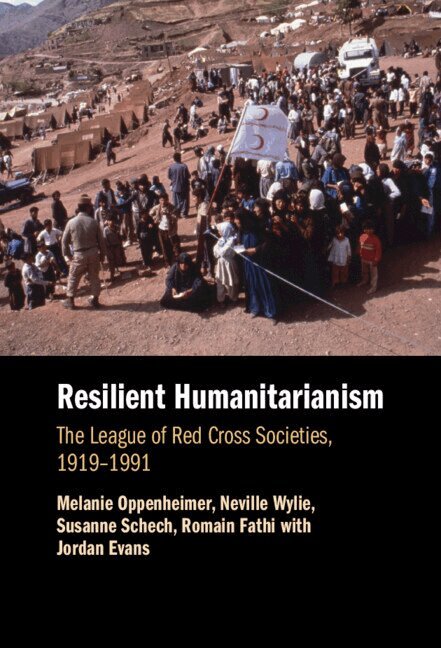
Resilient Humanitarianism
The League of Red Cross Societies, 1919-1991
Av Melanie Oppenheimer, Neville Wylie m. fl.
Inbunden, 2026
1861 kr
Lägg i varukorg
In the first independent study of the League of Red Cross Societies, an interdisciplinary team of leading scholars examine its history, and how it influenced twentieth-century humanitarianism. They explore how the League evolved from 1919 to 1991 as a peacetime organisation of the Red Cross in …
Development Perspectives from the Antipodes
Häftad, 2015
488 kr
Lägg i varukorg
Development discourses and academic development knowledge reflect to a large extent the interests of the ‘North’. The Antipodes – Australia and New Zealand - share an ambivalent location as countries of the ‘North' in wealth, development and dominant intellectual genealogies but ‘South' in latitude …