Suzanne E. Hiller – författare
Visar alla böcker från författaren Suzanne E. Hiller. Handla med fri frakt och snabb leverans.
3 produkter
3 produkter
Häftad, Engelska, 2024
1 514 kr
Skickas inom 5-8 vardagar
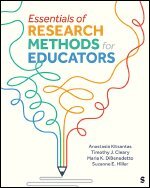
Essentials of Research Methods for Educators provides future teachers, specialists, administrators and educational leaders with a textbook and a resource that goes beyond the classroom to use in your career. With a focus on the wide variety of data available to educators and the importance of data literacy for all those involved in education, this book presents research methods in a relatable educational context with a variety of concrete examples. The authors use their expertise in educational psychology to optimize learning. The structure of the book breaks down research into discrete steps with the "Let's See It," "Let's Do It," and "You Do It" steps for each chapter so students feel motivated to complete their research projects. By covering qualitative, quantitative, and mixed methods research, with additional chapters on action research and program evaluation, students get a complete picture of the current research methods landscape. This highly scaffolded book supports future educational leaders in incorporating research and methods into their work and life.
E-bok
PDF, Engelska, 20204 080 kr
Läs direkt efter köp
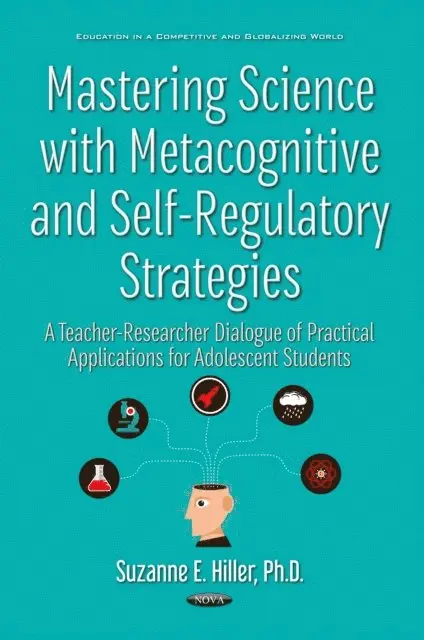
In pedagogical fields, there has been increased attention in helping students flourish in science-related occupations. This book centers on metacognitive and self-regulatory practices as predictors of academic achievement. The purpose of Mastering Science with Metacognitive and Self-Regulatory Strategies: A Teacher-Researcher Dialogue of Practical Applications for Adolescents is to provide information on both theoretical and practical understandings of the connection between metacognition, self-regulation, and academic performance. Self-regulation centers on an individual’s behavior to accomplish a specific task through planning, monitoring, and self-reflecting in academic tasks. Based on social cognitive theory, there are three main aspects of self-regulation: a) the triadic social cognitive model, b) the multilevel training model, and c) the cyclical self-regulatory feedback loop model. In addition, metacognitive awareness is essential in these processes with the end goal of heightening academic performance. This book outlines how to integrate metacognitive and self-regulatory strategies within a scientific context. In particular, the work emphasizes transitioning students from novice skill levels to more advanced cognitive development through metacognitive and self-regulatory practices. In addition, relevant context specific strategies and examples are described to promote high levels of science performance in both formal and informal learning contexts, including citizen science activities. Practical examples appear throughout the work in conjunction with theoretical explanations including guidelines related to lesson plan designs, scaffolding, and math integration. Furthermore, these strategies are extended in discussions of advancing at-risk students and promoting STEM career motivation. The overarching aim of Mastering Science with Metacognitive and Self-Regulatory Strategies: A Teacher-Researcher Dialogue of Practical Applications for Adolescents is to highlight the interdependence between motivation, self-regulation, and achievement within a scientific context from a teacher-researcher perspective. This work may be of interest to researchers and college students interested in metacognitive and self-regulatory functions, as well as administrators, practitioners, and parents focused on encouraging student science achievement, and ultimately, STEM career motivation.
E-bok
PDF, Engelska, 20193 443 kr
Läs direkt efter köp
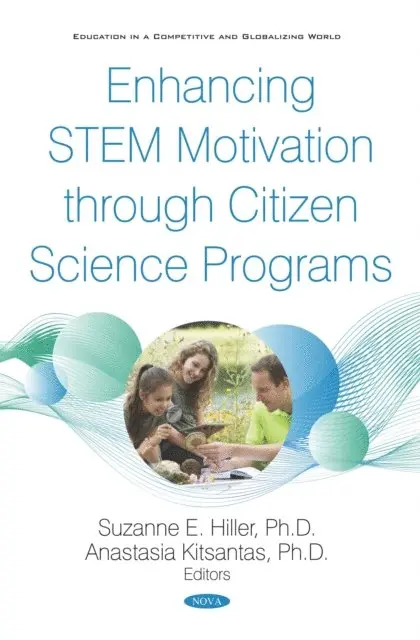
Citizen science programs encourage the general public to help professional scientists to collect data for research studies through training protocol. Most recently, there has been an increase in adolescent student participation in citizen science programs. With the advent of citizen science as an educational platform, researchers have studied the ways this type of initiative influences interest in science, technology, engineering, and mathematics (STEM). This interdisciplinary edited book entitled Enhancing STEM Motivation through Citizen Science Programs merges research findings, theoretical understandings, and practical applications from the fields of citizen science and educational psychology. The work outlines effective components of citizen science initiatives for both formal and informal educational settings, which promote STEM motivation among youth. Specifically, the chapters describe effective components of citizen science programs, curricula guidelines for K-12 and post-secondary courses, research findings on the impact of citizen science programs for student self-motivational beliefs, achievement, and STEM motivation, as well as guidelines for evaluating citizen science programs. The overarching goal of this work is to encourage partnerships between educators, administrators, students, scientists, naturalists, and stakeholders interested in fostering student motivation in STEM areas through citizen science programs. This edited book is suitable for educators interested in providing students with opportunities to participate in citizen science as well as researchers of education, science, and educational psychology.