Svein S. Andersen - Böcker
Visar alla böcker från författaren Svein S. Andersen. Handla med fri frakt och snabb leverans.
6 produkter
6 produkter
634 kr
Skickas inom 10-15 vardagar
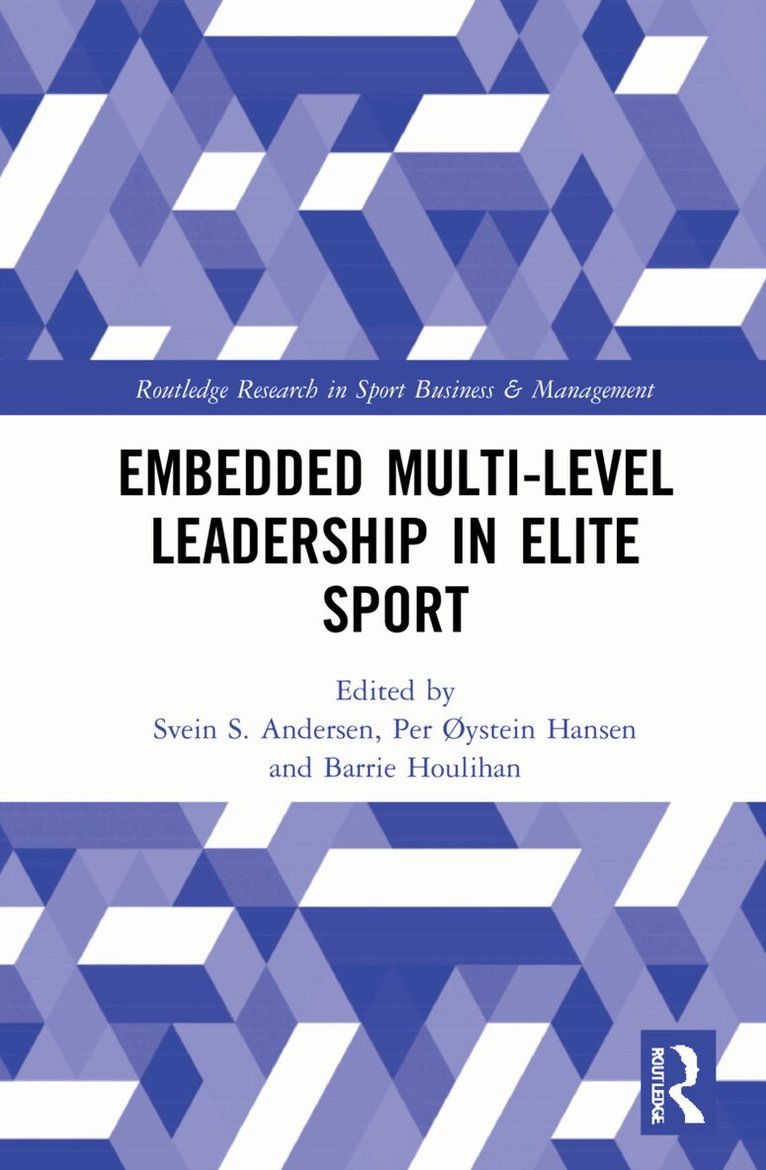
This book represents an alternative perspective on international elite sport systems. It focusses on the embedded multi-level nature of leadership, and the scope that this might give for degrees of leadership autonomy and discretion.The chapters show how mechanisms of leadership on different levels interact. The nature and mix of leadership mechanisms reflect values and expectations related to specific political, normative and commercial sport contexts. Three introductory chapters outline key elements of these dimensions of elite sport contexts. Seven empirical cases illustrate how national contexts facilitate and constrain leadership practices, related to specific sports across Russia, China, Ghana, Germany, Switzerland, Denmark, Norway and the US. The final chapter discusses embedded multi-level leadership from a comparative perspective. Based on the countries covered, the book distinguishes between three groups: state-dominated systems, state-elite sport partnership and countries with a passive state, with no state intervention.This book is important reading for researchers and students with an interest in sport management, sport development, sport policy and sport governance, as well as for policy-makers, performance directors and managers working in elite sport.
2 166 kr
Skickas inom 10-15 vardagar
This book represents an alternative perspective on international elite sport systems. It focusses on the embedded multi-level nature of leadership, and the scope that this might give for degrees of leadership autonomy and discretion.The chapters show how mechanisms of leadership on different levels interact. The nature and mix of leadership mechanisms reflect values and expectations related to specific political, normative and commercial sport contexts. Three introductory chapters outline key elements of these dimensions of elite sport contexts. Seven empirical cases illustrate how national contexts facilitate and constrain leadership practices, related to specific sports across Russia, China, Ghana, Germany, Switzerland, Denmark, Norway and the US. The final chapter discusses embedded multi-level leadership from a comparative perspective. Based on the countries covered, the book distinguishes between three groups: state-dominated systems, state-elite sport partnership and countries with a passive state, with no state intervention.This book is important reading for researchers and students with an interest in sport management, sport development, sport policy and sport governance, as well as for policy-makers, performance directors and managers working in elite sport.
1 064 kr
Skickas inom 10-15 vardagar
Investigating whether the Energy Union amounts to a fundamental shift towards Europe's new 'Liberal Mercantilism', it gathers high-level contributors from academia and the policy world to shed light on the changing nature of the EU's use of power in one of its most crucial policy fields.
829 kr
Skickas inom 10-15 vardagar
Over the last twenty years or so there has been a sharp increase in interest from national sports federations and governments in the development of effective elite sport systems, particularly focused on achieving success in the summer and winter Olympic Games. Many countries now have publicly funded elite sports strategies which provide specialist facilities and support staff and often provide direct financial support for athletes. These developments have stimulated academic interest in describing the elite sport systems, analysing the processes by which policy is established and evaluating the impact of these policies on elite athlete success. Far less attention has been placed on the operation of the elite sports systems and on how the system interfaces with the athlete. The aim of this book is to refocus attention on the management and operation of systems designed to deliver elite success. The book draws on the theoretical literature in implementation, organisation theory, leadership and complexity. This provides an initial context for analysis and a stimulus for theory development around key questions such as: How do coaches manage their relationship with athletes? How does talent identification operate in practice? Do coaches fulfil the role of gatekeeper between the athlete and other elements of the sports system e.g. sports science support? How do managers, support staff and athletes interpret the expectations placed on them?The first part of the book focuses on aspects of the effectiveness of elite sports systems and the second explores aspects of systems operation focused on the interface between the athlete and the sport development system, and cross-cutting themes within the book include the management of talent identification and coach development. This is illuminating reading for any student, researcher or practitioner working in sport development, sport management or sports coaching.
2 236 kr
Skickas inom 10-15 vardagar
Over the last twenty years or so there has been a sharp increase in interest from national sports federations and governments in the development of effective elite sport systems, particularly focused on achieving success in the summer and winter Olympic Games. Many countries now have publicly funded elite sports strategies which provide specialist facilities and support staff and often provide direct financial support for athletes. These developments have stimulated academic interest in describing the elite sport systems, analysing the processes by which policy is established and evaluating the impact of these policies on elite athlete success. Far less attention has been placed on the operation of the elite sports systems and on how the system interfaces with the athlete. The aim of this book is to refocus attention on the management and operation of systems designed to deliver elite success. The book draws on the theoretical literature in implementation, organisation theory, leadership and complexity. This provides an initial context for analysis and a stimulus for theory development around key questions such as: How do coaches manage their relationship with athletes? How does talent identification operate in practice? Do coaches fulfil the role of gatekeeper between the athlete and other elements of the sports system e.g. sports science support? How do managers, support staff and athletes interpret the expectations placed on them?The first part of the book focuses on aspects of the effectiveness of elite sports systems and the second explores aspects of systems operation focused on the interface between the athlete and the sport development system, and cross-cutting themes within the book include the management of talent identification and coach development. This is illuminating reading for any student, researcher or practitioner working in sport development, sport management or sports coaching.
1 064 kr
Skickas inom 10-15 vardagar
Investigating whether the Energy Union amounts to a fundamental shift towards Europe's new 'Liberal Mercantilism', it gathers high-level contributors from academia and the policy world to shed light on the changing nature of the EU's use of power in one of its most crucial policy fields.