T. Alexander Aleinikoff – författare
Visar alla böcker från författaren T. Alexander Aleinikoff. Handla med fri frakt och snabb leverans.
10 produkter
Semblances of Sovereignty
The Constitution, the State, and American Citizenship
Inbunden, 2002
804 kr
Lägg i varukorg
In a set of cases decided at the end of the nineteenth century, the Supreme Court declared that Congress had "plenary power" to regulate immigration, Indian tribes, and newly acquired territories. Not coincidentally, the groups subject to Congress' plenary power were primarily nonwhite and …
Semblances of Sovereignty
The Constitution, the State, and American Citizenship
E-bok, 2009
890 kr
Lägg i varukorg
In a set of cases decided at the end of the nineteenth century, the Supreme Court declared that Congress had "plenary power" to regulate immigration, Indian tribes, and newly acquired territories. Not coincidentally, the groups subject to Congress'' plenary power were primarily nonwhite and …
Citizenship Today
Global Perspectives and Practices
Av T. Alexander Aleinikoff, Douglas Klusmeyer
Häftad, 2001
253 kr
Lägg i varukorg
New Narratives on the Peopling of America
Immigration, Race, and Dispossession
Av T. Alexander Aleinikoff, Alexandra Délano Alonso
Häftad, 2024
428 kr
Lägg i varukorg
Why an account of "the peopling" of the United States must include the stories of indigenous people, enslaved persons, and those living in territories and foreign nations taken and acquired by the United States.In New Narratives on the Peopling of America, editors T. Alexander Aleinikoff and …
Arc of Protection
Reforming the International Refugee Regime
Av T. Alexander Aleinikoff, Leah Zamore
Häftad, 2019
177 kr
Lägg i varukorg
The international refugee regime is fundamentally broken. Designed in the wake of World War II to provide protection and assistance, the system is unable to address the record numbers of persons displaced by conflict and violence today. States have put up fences and adopted policies to deny, deter, …
Arc of Protection
Reforming the International Refugee Regime
Av T. Alexander Aleinikoff, Leah Zamore
E-bok, 2019
223 kr
Lägg i varukorg
The international refugee regime is fundamentally broken. Designed in the wake of World War II to provide protection and assistance, the system is unable to address the record numbers of persons displaced by conflict and violence today. States have put up fences and adopted policies to deny, deter, …
Czechoslovakia's Cold War Refugee Children
Contemporary Resonance
Av Miriam Potocky Rafaidus, T Alexander Aleinikoff m. fl.
Häftad, 2025
331 kr
Lägg i varukorg
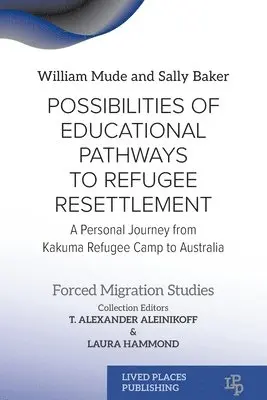
Possibilities of Educational Pathways to Refugee Resettlement
A Personal Journey from Kakuma Refugee Camp to Australia
Av William Mude, Sally Baker m. fl.
Häftad, 2025
328 kr
Lägg i varukorg
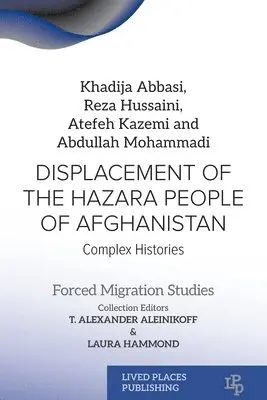
Displacement of the Hazara People of Afghanistan
Complex Histories
Av Khadija Abbasi, T Alexander Aleinikoff m. fl.
Häftad, 2025
318 kr
Lägg i varukorg
Migration and International Legal Norms
Av T. Alexander Aleinikoff, Vincent Chetail
Inbunden, 2003
1512 kr
Lägg i varukorg
This volume provides a comprehensive and up-to-date analysis of the source and scope of international law on migration. It explores international norms on state authority to regulate migration, freedom of movement, forced migration, human rights, family unification, trafficking and smuggling of …