T. L. Kunii – författare
Visar alla böcker från författaren T. L. Kunii. Handla med fri frakt och snabb leverans.
7 produkter
Data Structures, Computer Graphics, and Pattern Recognition
Av T. L. Kunii, K. S. Fu m. fl.
E-bok, 2014
1045 kr
Lägg i varukorg
Data Structures, Computer Graphics, and Pattern Recognition focuses on the computer graphics and pattern recognition applications of data structures methodology. This book presents design related principles and research aspects of the computer graphics, system design, data management, and pattern …
Data Base Design Techniques I
Requirements and Logical Structures. NYU Symposium, New York, May 1978
Av S. B. Yao, S. B. Navathe m. fl.
Häftad, 1982
265 kr
Lägg i varukorg
Data Base Design Techniques II
Physical Structures and Applications. Proceedings, Tokyo, November 1979
Av S. B. Yao, T. L. Kunii
Häftad, 1982
231 kr
Lägg i varukorg
COMPUTER GRAPHICS AND APPLICATIONS - PROCEEDINGS OF THE FIRST PACIFIC CONFERENCE ON COMPUTER GRAPHICS AND APPLICATIONS, PACIFIC GRAPHICS '93
Av T L KUNII S Y SHIN, S Y Shin m. fl.
Inbunden, 1993
2536 kr
Tillfälligt slut
This volume of proceedings contains papers by computer graphics researchers, developers and practitioners. The papers report on the latest advances and new ideas in computer graphics. They also discuss future directions in the field. The volume reflects the aim of the conference to promote computer …
COMPUTER GRAPHICS AND APPLICATIONS - PROCEEDINGS OF THE THIRD PACIFIC CONFERENCE ON COMPUTER GRAPHICS AND APPLICATIONS, PACIFIC GRAPHICS'95
Av T L KUNII S Y SHIN, S Y Shin m. fl.
Inbunden, 1995
3189 kr
Tillfälligt slut
Pacific Graphics is an international conference on computer graphics and applications. The conference will provide a forum for researchers, developers, and practitioners to exchange ideas and discuss future directions of computer graphics. The past two conferences were held in Korea (1993) and …
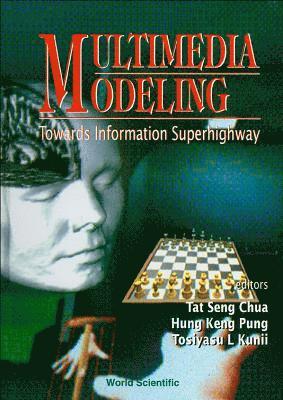
MULTIMEDIA MODELING: TOWARDS INFORMATION SUPERHIGHWAY
Av CHUA K PUNG S CHUA CHUA T L KUNII, T S Chua m. fl.
Inbunden, 1995
2629 kr
Tillfälligt slut
The process of integrating multiple senses and media into computer systems accelerated recently. This has broaden the applications of multimedia from the traditional areas of information organization, presentation and learning, to the new fields of simulation and virtual reality. Applications that …
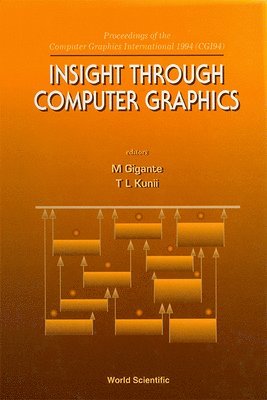
INSIGHT THROUGH COMPUTER GRAPHICS - PROCEEDINGS OF THE COMPUTER GRAPHICS INTERNATIONAL 1994 (CG194)
Av T L KUNII MICHAEL GIGANTE, M Gigante m. fl.
Inbunden, 1997
2162 kr
Tillfälligt slut
Computer graphics has been advancing to the level of creating completely new worlds inside computers. Through such computer graphics worlds, we human beings now have far improved insight into wide varieties of real worlds starting from fairly simple but exact worlds of curves and surfaces and …