Tabassum Abbasi – författare
1 477 kr
Skickas inom 10-15 vardagar
2 047 kr
Läs direkt efter köp
2 040 kr
Skickas inom 10-15 vardagar
2 306 kr
Kommande
1 250 kr
Läs direkt efter köp
989 kr
Skickas inom 10-15 vardagar
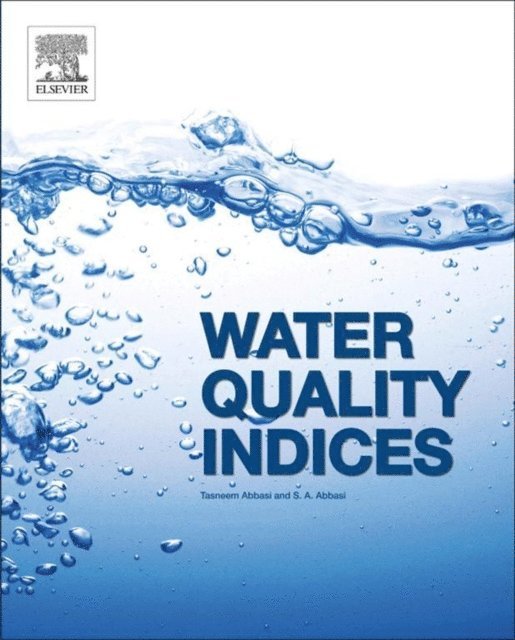
This book covers water quality indices (WQI) in depth - it describes what purpose they serve, how they are generated, what are their strengths and weaknesses, and how to make the best use of them. It is a concise and unique guide to WQIs for chemists, chemical/environmental engineers and government officials.
Whereas it is easy to express the quantity of water, it is very difficult to express its quality because a large number of variables determine the water quality. WQIs seek to resolve the difficulty by translating a set of a large number of variables to a one-digit or a two-digit numeral. They are essential in communicating the status of different water resources in terms of water quality and the impact of various factors on it to policy makers, service personnel, and the lay public. Further they are exceedingly useful in the monitoring and management of water quality.
With the importance of water and water quality increasing exponentially, the importance of this topic is also set to increase enormously because only with the use of indices is it possible to assess, express, communicate, and monitor the overall quality of any water source.
Provides a concise guide to WQIs: their purpose and generation Compares existing methods and WQIs and outlines strengths and weaknesses Makes recommendations on how the indices should be used and under what circumstances they apply2 286 kr
Läs direkt efter köp
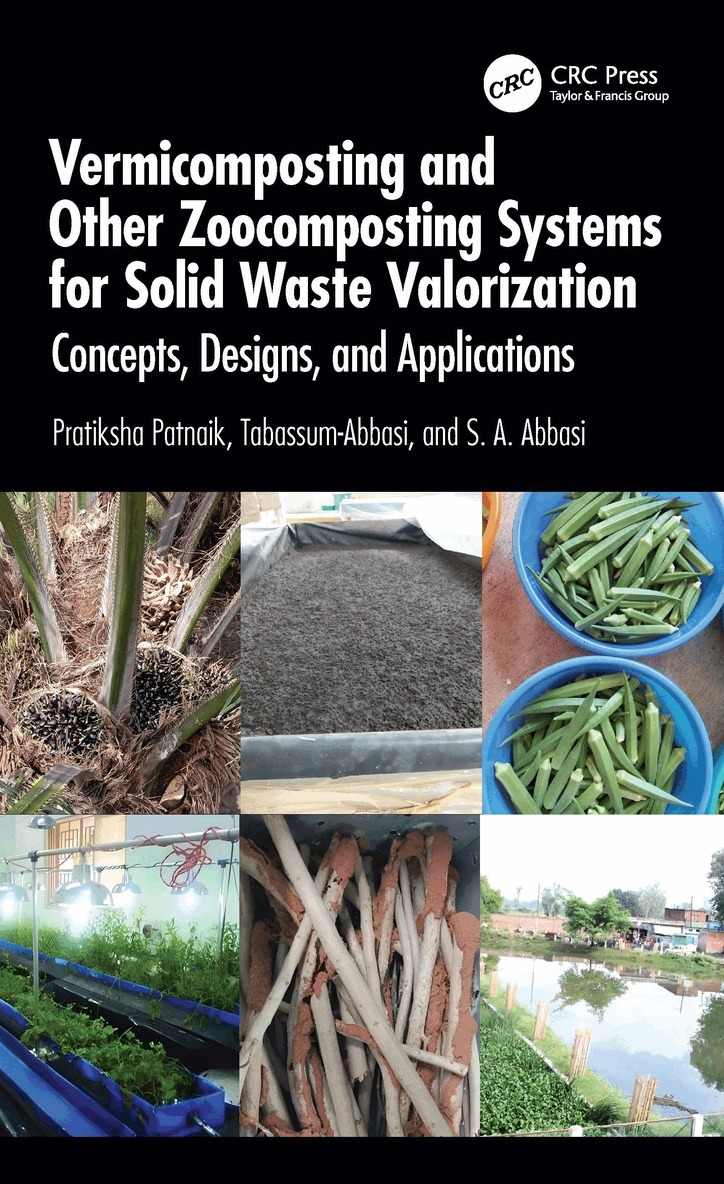
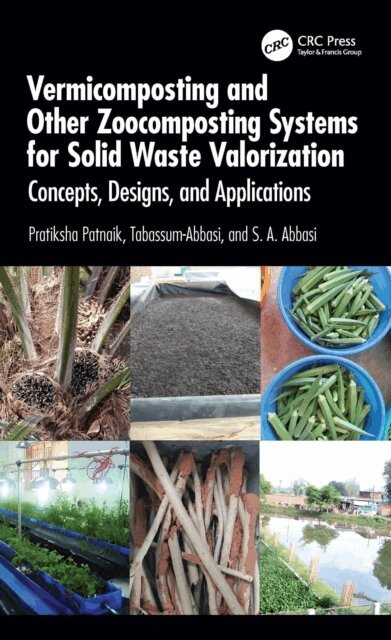
This groundbreaking book explores the science and innovation behind zoocomposting – composting facilitated by animals such as earthworms, black soldier flies (BSF), and termites. It presents the high‑rate vermicomposting (HRVC) paradigm, a revolutionary approach that enables the rapid conversion of phytowaste, even toxic and recalcitrant plant materials, into potent organic fertilizers without the need for pre‑composting or manure supplementation. It details the design and performance of advanced vermireactors, the transformative effects of vermicomposting on plant growth, and the potential of BSF and termites in waste degradation. By tracing the history and mechanisms of both microbial and animal‑assisted composting, this book offers valuable insights into sustainable waste management and soil fertility enhancement, making it an essential resource for researchers, environmentalists, and agricultural innovators. It serves as a practical guide for professionals and researchers working in agriculture, soil science and sustainability in general.
Key Features:
Explores HRVC, BSF composting, and termite‑assisted waste degradation for efficient organic waste recycling Presents cutting‑edge reactor systems that accelerate the decomposition of phytowaste, including toxic and recalcitrant plant materials, without pre‑composting or manure supplementation Highlights the benefits of zoocompost products in improving soil fertility, enhancing plant growth, and supporting eco‑friendly waste management practices2 286 kr
Läs direkt efter köp
This groundbreaking book explores the science and innovation behind zoocomposting – composting facilitated by animals such as earthworms, black soldier flies (BSF), and termites. It presents the high‑rate vermicomposting (HRVC) paradigm, a revolutionary approach that enables the rapid conversion of phytowaste, even toxic and recalcitrant plant materials, into potent organic fertilizers without the need for pre‑composting or manure supplementation. It details the design and performance of advanced vermireactors, the transformative effects of vermicomposting on plant growth, and the potential of BSF and termites in waste degradation. By tracing the history and mechanisms of both microbial and animal‑assisted composting, this book offers valuable insights into sustainable waste management and soil fertility enhancement, making it an essential resource for researchers, environmentalists, and agricultural innovators. It serves as a practical guide for professionals and researchers working in agriculture, soil science and sustainability in general.
Key Features:
Explores HRVC, BSF composting, and termite‑assisted waste degradation for efficient organic waste recycling Presents cutting‑edge reactor systems that accelerate the decomposition of phytowaste, including toxic and recalcitrant plant materials, without pre‑composting or manure supplementation Highlights the benefits of zoocompost products in improving soil fertility, enhancing plant growth, and supporting eco‑friendly waste management practices