Takayuki Sakamoto - Böcker
Visar alla böcker från författaren Takayuki Sakamoto. Handla med fri frakt och snabb leverans.
4 produkter
4 produkter
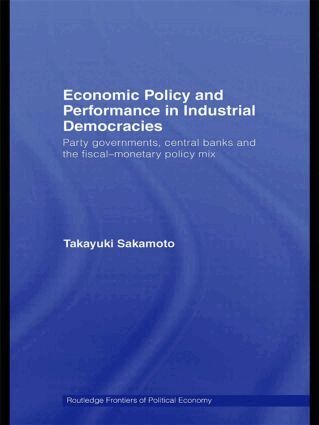
Economic Policy and Performance in Industrial Democracies
Party Governments, Central Banks and the Fiscal-Monetary Policy Mix
Häftad, Engelska, 2009
691 kr
Skickas inom 10-15 vardagar
This book is the first systematic study of how the interdependence of fiscal and monetary policies and the interaction of party governments and central banks affect the fiscal-policy mix in eighteen industrial democracies in North America, Western Europe, Japan and Oceania. Sakamoto argues that central banks’ influence on economic policy is far more extensive than has been conventionally believed. He demonstrates that central banks systematically affect fiscal policy that is conducted by party governments, and that independent central banks restrain the latter’s fiscal policy. Sakamoto also demonstrates that the economic policy of industrial democracies did really change from the 1960s-1970s to the 1980s-1990s and became conservative as a result of the globalization of the economy and governments’ response to it. But he argues that despite the neo-liberal policy shift, globalization has not diminished the role of domestic politics in economic policy.
Economic Policy and Performance in Industrial Democracies
Party Governments, Central Banks and the Fiscal-Monetary Policy Mix
Inbunden, Engelska, 2008
2 357 kr
Skickas inom 10-15 vardagar
This book is the first systematic study of how the interdependence of fiscal and monetary policies and the interaction of party governments and central banks affect the fiscal-policy mix in eighteen industrial democracies in North America, Western Europe, Japan and Oceania. Sakamoto argues that central banks’ influence on economic policy is far more extensive than has been conventionally believed. He demonstrates that central banks systematically affect fiscal policy that is conducted by party governments, and that independent central banks restrain the latter’s fiscal policy. Sakamoto also demonstrates that the economic policy of industrial democracies did really change from the 1960s-1970s to the 1980s-1990s and became conservative as a result of the globalization of the economy and governments’ response to it. But he argues that despite the neo-liberal policy shift, globalization has not diminished the role of domestic politics in economic policy.
360 kr
Skickas inom 7-10 vardagar
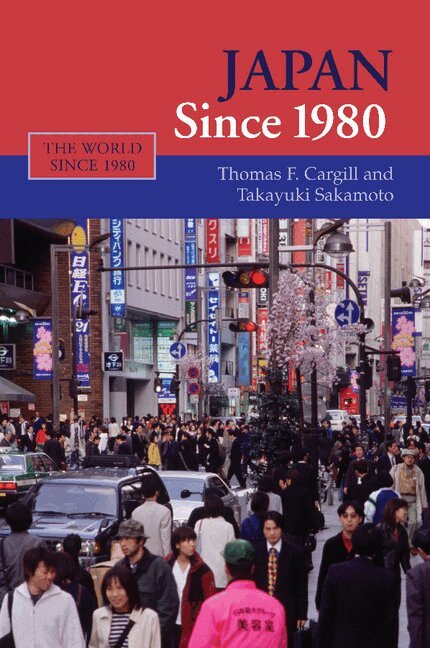
An analysis of the performance of Japan's economic and political institutions from late 1970s to 2007. The authors explain how Japan's flawed response to new economic, political, and technological forces ushered in a lost decade and a half of economic development from 1990. Impressive economic performance in the 1980s masked an 'accident waiting to happen' - the collapse in equity and real estate prices in 1990-1. Japan's iron triangle of politicians, bureaucrats, and client industries, combined with a flawed financial liberalization process and policy errors by the Bank of Japan and the Ministry of Finance, brought Japan to an abyss of deflation, recession, and insolvency by the late 1990s. The turning point was the election of Koizumi as prime minister in 2001. The book explores Koizumi's economic reform, new developments in socioeconomic conditions, the politics and economy after Koizumi, and the economic and political challenges facing Japan in the new century.
718 kr
Skickas inom 7-10 vardagar
An analysis of the performance of Japan's economic and political institutions from late 1970s to 2007. The authors explain how Japan's flawed response to new economic, political, and technological forces ushered in a lost decade and a half of economic development from 1990. Impressive economic performance in the 1980s masked an 'accident waiting to happen' - the collapse in equity and real estate prices in 1990-1. Japan's iron triangle of politicians, bureaucrats, and client industries, combined with a flawed financial liberalization process and policy errors by the Bank of Japan and the Ministry of Finance, brought Japan to an abyss of deflation, recession, and insolvency by the late 1990s. The turning point was the election of Koizumi as prime minister in 2001. The book explores Koizumi's economic reform, new developments in socioeconomic conditions, the politics and economy after Koizumi, and the economic and political challenges facing Japan in the new century.