
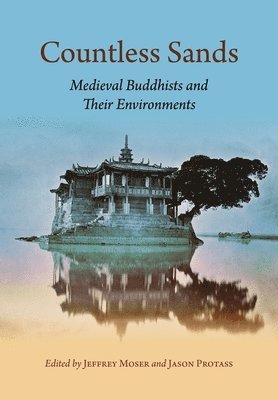
Countless Sands presents engaging analyses of the diverse relationships between Buddhism and the environment that existed in medieval Asia. Recent years have witnessed a surge in publications across the humanities that advance powerful ethical and political arguments to account for the human failure to respond effectively to global climate change. While the contributors to this volume are attuned to this challenge, rather than present explicit political arguments, they pursue a subtler effort to historicize the environment as a site and subject of Buddhist practice while providing research grounded in rigorous analysis of complex and fragmentary sources. The volume thereby mitigates against the Orientalist, East-West binaries that have long informed the invocation of Buddhism in Euro-American environmental discourses. As the chapters collectively demonstrate, there was no singular, consistently "Buddhist" understanding of the natural world, but innumerable, varied engagements preserved in discrete texts, images, and artifacts. We title the volume Countless Sands to echo the Buddhist metaphor of "sands of the Ganges" that implies an uncountable number. Through specific case studies, the authors consider such questions as: How did premodern Buddhists understand what we today call "the environment"? How did they think about their earth? How, when, and where did the various processes of the earth actually impinge on the practices of historical Buddhists? What kinds of "environmental imaginations" informed specific Buddhist practices? In so doing, the authors explore the connections between the ways in which historical Buddhist communities interacted with their environments and how they understood those environments. In the broader field of Buddhist studies, Countless Sands contributes to ongoing efforts to expand the locus of inquiry from textually based investigations of Buddhist doctrine to a broader examination of the complex and varied place of Buddhism in the lives of historical communities. The book furthers this broader process by casting it in environmental terms and will engage readers looking for models of thought-provoking historical analysis on environmental themes.
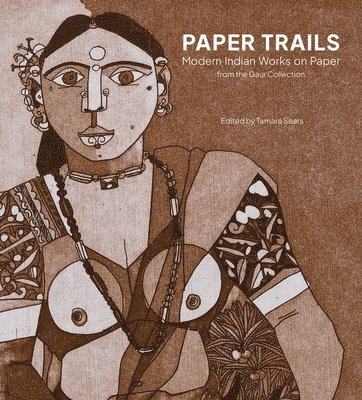
India is a nation of conflicting realities, where the old and the new, the traditional and modern regularly coexist. Here, the artists are concerned not solely with telling their own tales but also with exploring what it means to live in a nation steeped in tradition. Within the context of modern and contemporary India, works on paper offered artists a way of cultivating transnational modernist expression while continuing to explore the potential of a medium that had deeper roots in older artistic traditions native to the subcontinent. This volume features over 100 watercolors, drawings, etchings, sketches and lithographs by senior Indian modernists, born primarily before the 1950s and who came of age in the decades directly following Independence in 1947. These artists span the transition from colonial to post-colonial India, embracing both realism and abstraction, exploring complex metaphors, and making political statements that directly engage India’s past, present, and future. With contributions by Tamara Sears, Michael Mackenzie, Paula Sengupta, Emma Oslé, Darielle Mason, Rebecca M. Brown, Jeffrey Wechsler, Kishore Singh and Swathi Gorle.
Countless Sands presents engaging analyses of the diverse relationships between Buddhism and the environment that existed in medieval Asia. Recent years have witnessed a surge in publications across the humanities that advance powerful ethical and political arguments to account for the human failure to respond effectively to global climate change. While the contributors to this volume are attuned to this challenge, rather than present explicit political arguments, they pursue a subtler effort to historicize the environment as a site and subject of Buddhist practice while providing research grounded in rigorous analysis of complex and fragmentary sources. The volume thereby mitigates against the Orientalist, East-West binaries that have long informed the invocation of Buddhism in Euro-American environmental discourses. As the chapters collectively demonstrate, there was no singular, consistently "Buddhist" understanding of the natural world, but innumerable, varied engagements preserved in discrete texts, images, and artifacts. We title the volume Countless Sands to echo the Buddhist metaphor of "sands of the Ganges" that implies an uncountable number. Through specific case studies, the authors consider such questions as: How did premodern Buddhists understand what we today call "the environment"? How did they think about their earth? How, when, and where did the various processes of the earth actually impinge on the practices of historical Buddhists? What kinds of "environmental imaginations" informed specific Buddhist practices? In so doing, the authors explore the connections between the ways in which historical Buddhist communities interacted with their environments and how they understood those environments. In the broader field of Buddhist studies, Countless Sands contributes to ongoing efforts to expand the locus of inquiry from textually based investigations of Buddhist doctrine to a broader examination of the complex and varied place of Buddhism in the lives of historical communities. The book furthers this broader process by casting it in environmental terms and will engage readers looking for models of thought-provoking historical analysis on environmental themes.
India is a nation of conflicting realities, where the old and the new, the traditional and modern regularly coexist. Here, the artists are concerned not solely with telling their own tales but also with exploring what it means to live in a nation steeped in tradition. Within the context of modern and contemporary India, works on paper offered artists a way of cultivating transnational modernist expression while continuing to explore the potential of a medium that had deeper roots in older artistic traditions native to the subcontinent. This volume features over 100 watercolors, drawings, etchings, sketches and lithographs by senior Indian modernists, born primarily before the 1950s and who came of age in the decades directly following Independence in 1947. These artists span the transition from colonial to post-colonial India, embracing both realism and abstraction, exploring complex metaphors, and making political statements that directly engage India’s past, present, and future. With contributions by Tamara Sears, Michael Mackenzie, Paula Sengupta, Emma Oslé, Darielle Mason, Rebecca M. Brown, Jeffrey Wechsler, Kishore Singh and Swathi Gorle.