Tanja Bueltmann - Böcker
Visar alla böcker från författaren Tanja Bueltmann. Handla med fri frakt och snabb leverans.
7 produkter
7 produkter
669 kr
Skickas inom 3-6 vardagar
A history of the Scottish diaspora from c.1700 to 1945Did you know that Scotland was one of Europe's main population exporters in the age of mass migration? Or that the Scottish Honours System was introduced as far afield as New Zealand? This comprehensive introductory history of the Scottish diaspora examines these and related issues, exploring the migration of Scots overseas, their experiences in the new worlds in which they settled and the impact of the diaspora on Scotland. Global in scope, the book's distinctive feature is its focus on both the geographies of the Scottish diaspora and key theories, concepts and themes, including associationalism and return migration. By revisiting these themes throughout the chapters, the multifaceted characteristics of 'Scottishness' abroad are unravelled, transcending narrow interpretations that define the Scottish diaspora primarily in terms of the movement of people. Readers will gain an understanding of migration flows and destination countries, but also the imprints and legacies of émigré Scots overseas and at home.Key FeaturesComprehensive overview of Scottish diaspora historySections explaining themes and geographiesInternational in scopeConceptual case studies: England & Ireland; United States; Canada; Africa; Asia; Australia & New Zealand (the Antipodes)
306 kr
Kommande
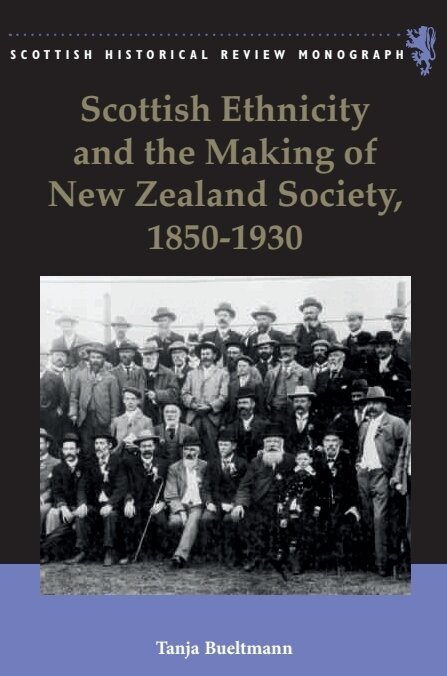
The Scots accounted for around a quarter of all UK-born immigrants to New Zealand between 1861 and 1945, but have only been accorded scant attention in New Zealand histories, specialist immigration histories and Scottish Diaspora Studies. This is all the more peculiar because the flow of Scots to New Zealand, although relatively unimportant to Scotland, constituted a sizable element to the country’s much smaller population. Seen as adaptable, integrating relatively more quickly than other ethnic migrant groups in New Zealand, the Scots’ presence was obscured by a fixation on the romanticised shortbread tin façade of Scottish identity overseas. Uncovering Scottish ethnicity from the verges of nostalgia, this study documents the notable imprint Scots left on New Zealand. The book examines Scottish immigrant community life, culture and identity between 1850 and 1930, and: *explores informal and formal networks, associational life and transferred cultural practices to capture how Scottish immigrants negotiated their ethnicity, but also how that ethnicity fed into wider social structures in New Zealand; *argues that Scottish ethnicity in New Zealand functioned more as a positive mechanism for integration into the new society than as a protective and defensive source of reassurance and comfort; and*contends that Scots contributed disproportionately to the making of New Zealand society.
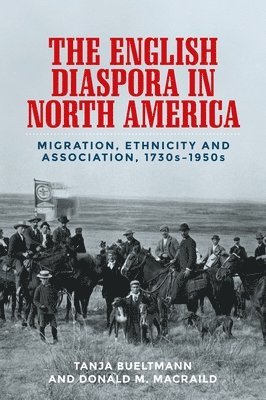
English Diaspora in North America
Migration, Ethnicity and Association, 1730s–1950s
Inbunden, Engelska, 2016
1 202 kr
Skickas inom 5-8 vardagar
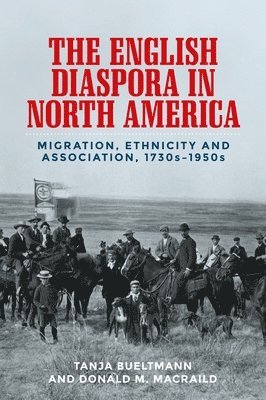
Ethnic associations were once vibrant features of societies, such as the United States and Canada, which attracted large numbers of immigrants. While the transplanted cultural lives of the Irish, Scots and continental Europeans have received much attention, the English are far less widely explored. It is assumed the English were not an ethnic community, that they lacked the alienating experiences associated with immigration and thus possessed few elements of diasporas. This deeply researched new book questions this assumption. It shows that English associations once were widespread, taking hold in colonial America, spreading to Canada and then encompassing all of the empire. Celebrating saints days, expressing pride in the monarch and national heroes, providing charity to the national poor, and forging mutual aid societies mutual, were all features of English life overseas. In fact, the English simply resembled other immigrant groups too much to be dismissed as the unproblematic, invisible immigrants.
1 271 kr
Skickas inom 5-8 vardagar
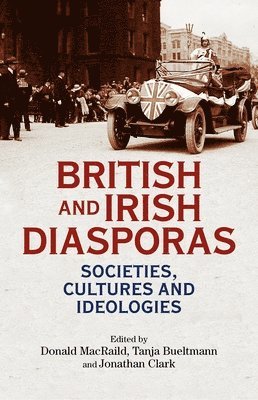
People from the British and Irish Isles have, for centuries, migrated to all corners of the globe.Wherever they went, the English, Irish, Scots, Welsh, and and even sub-national, supra-regional groups like the Cornish, co-mingled, blended and blurred. Yet while they gradually integrated into new lives in far-flung places, British and Irish Isle emigrants often maintained elements of their distinctive national cultures, which is an important foundation of diasporas. Within this wider context, this volume seeks to explore the nature and characteristics of the British and Irish diasporas, stressing their varying origins and evolution, the developing attachments to them, and the differences in each nation’s recognition of their own diaspora. The volume thus offers the first integrated study of the formation of diasporas from the islands of Ireland and Britain, with a particular view to scrutinizing the similarities, differences, tensions and possibilities of this approach.
English Diaspora in North America
Migration, Ethnicity and Association, 1730s–1950s
Häftad, Engelska, 2019
434 kr
Skickas inom 5-8 vardagar
Ethnic associations were once vibrant features of societies, such as the United States and Canada, which attracted large numbers of immigrants. While the transplanted cultural lives of the Irish, Scots and continental Europeans have received much attention, the English are far less widely explored. It is assumed the English were not an ethnic community, that they lacked the alienating experiences associated with immigration and thus possessed few elements of diasporas. This deeply researched new book questions this assumption. It shows that English associations once were widespread, taking hold in colonial America, spreading to Canada and then encompassing all of the empire. Celebrating saints days, expressing pride in the monarch and national heroes, providing charity to the national poor, and forging mutual aid societies mutual, were all features of English life overseas.
445 kr
Skickas inom 7-10 vardagar
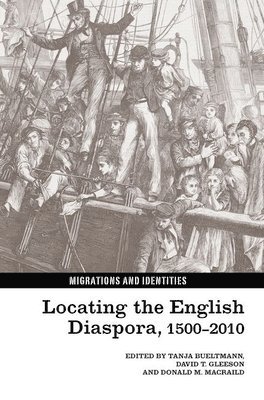
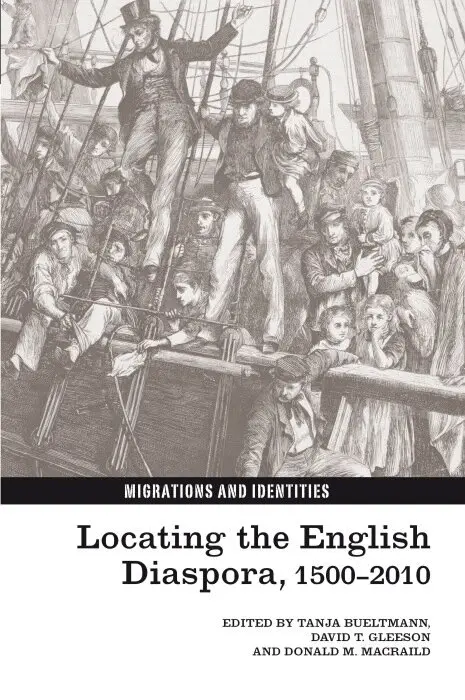
After 1600, English emigration became one of Europe’s most significant population movements. Yet compared to what has been written about the migration of Scots and Irish, relatively little energy has been expended on the numerically more significant English flows. Whilst the Scottish, Irish, German, Italian, Jewish and Black Diasporas are well known and much studied, there is virtual silence on the English. Why, then, is there no English Diaspora? Why has little been said about the English other than to map their main emigration flows? Did the English simply disappear into the host population? Or were they so fundamental, and foundational, to the Anglophone, Protestant cultures of the evolving British World that they could not be distinguished in the way Catholic Irish or continental Europeans were? With contributions from the UK, Europe North America and Australasia that examine themes as wide-ranging as Yorkshire societies in New Zealand and St George’s societies in Montreal, to Anglo-Saxonism in the Atlantic World and the English Diaspora of the sixteenth century, this international collection explores these and related key issues about the nature and character of English identity during the creation of the cultures of the wider British World. It does not do so uncritically. Several of the authors deal with and accept the invisibility of the English, while others take the opposite view. The result is a lively collection which combines reaffirmations of some existing ideas with fresh empirical research, and groundbreaking new conceptualisations.
Del 4 - Migrations and Identities
Clubbing Together
Ethnicity, Civility and Formal Sociability in the Scottish Diaspora to 1930
Inbunden, Engelska, 2014
632 kr
Skickas inom 7-10 vardagar
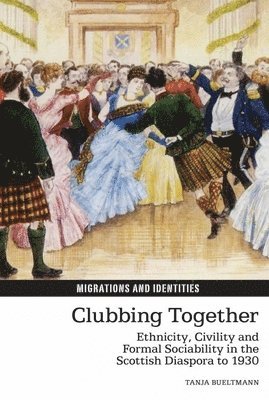
Emigrants carried a rich array of associations with them to the new worlds in which they settled, often ‘clubbing together’ along ethnic lines shortly after first foot fall. Yet while a crucial element of immigrant community life, one of the richest examples, that of Scottish migrants, has received only patchy coverage. Moreover, no one has yet problematized Scottish associations, such as St Andrew’s societies or Burns clubs, as a series of transnational connections that were deeply rooted in the civic life of their respective communities. This book provides the first global study to capture the wider relevance of the Scots’ associationalism, arguing that associations and formal sociability are a key to explaining how migrants negotiated their ethnicity in the diaspora and connected to social structures in diverse settlements. Moving beyond the traditional nineteenth-century settler dominions, the book offers a unique comparative focus, bringing together Scotland’s near diaspora in England and Ireland with that in North America, Africa, and Australasia to assess the evolution of Scottish ethnic associations, as well as their diverse roles as sites of memory and expressions of civility. The book reveals that the structures offered by Scottish associations engaged directly with the local, New World contexts, developing distinct characteristics that cannot be subsumed under one simplistic label—that of an overseas ‘national society’. The book promotes understanding not only of Scottish ethnicity overseas, but also of how different types of ethnic associational activism made diaspora tangible.