Teather Anne Teather – författare
Visar alla böcker från författaren . Handla med fri frakt och snabb leverans.
4 produkter
4 produkter
E-bok
Engelska, 2019352 kr
Läs direkt efter köp
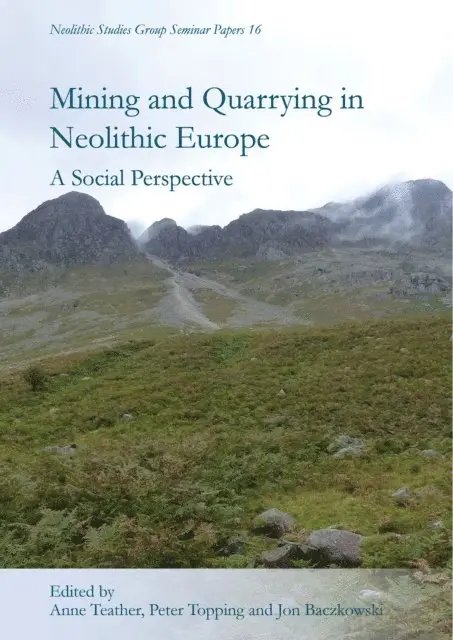
The social processes involved in acquiring flint and stone in the Neolithic began to be considered over thirty years ago, promoting a more dynamic view of past extraction processes. Whether by quarrying, mining or surface retrieval, the geographic source locations of raw materials and their resultant archaeological sites have been approached from different methodological and theoretical perspectives. In recent years this has included the exploration of previously undiscovered sites, refined radiocarbon dating, comparative ethnographic analysis and novel analytical approaches to stone tool manufacture and provenancing. The aim of this volume in the Neolithic Studies Group Papers is to explore these new findings on extraction sites and their products. How did the acquisition of raw materials fit into other aspects of Neolithic life and social networks? How did these activities merge in creating material items that underpinned cosmology, status and identity? What are the geographic similarities, constraints and variables between the various raw materials, and how does the practise of stone extraction in the UK relate to wider extractive traditions in northwestern Europe? Eight papers address these questions and act as a useful overview of the current state of research on the topic.
E-bok
PDF, Engelska, 2019352 kr
Läs direkt efter köp
The social processes involved in acquiring flint and stone in the Neolithic began to be considered over thirty years ago, promoting a more dynamic view of past extraction processes. Whether by quarrying, mining or surface retrieval, the geographic source locations of raw materials and their resultant archaeological sites have been approached from different methodological and theoretical perspectives. In recent years this has included the exploration of previously undiscovered sites, refined radiocarbon dating, comparative ethnographic analysis and novel analytical approaches to stone tool manufacture and provenancing. The aim of this volume in the Neolithic Studies Group Papers is to explore these new findings on extraction sites and their products. How did the acquisition of raw materials fit into other aspects of Neolithic life and social networks? How did these activities merge in creating material items that underpinned cosmology, status and identity? What are the geographic similarities, constraints and variables between the various raw materials, and how does the practise of stone extraction in the UK relate to wider extractive traditions in northwestern Europe? Eight papers address these questions and act as a useful overview of the current state of research on the topic.
E-bok
Engelska, 2020457 kr
Läs direkt efter köp
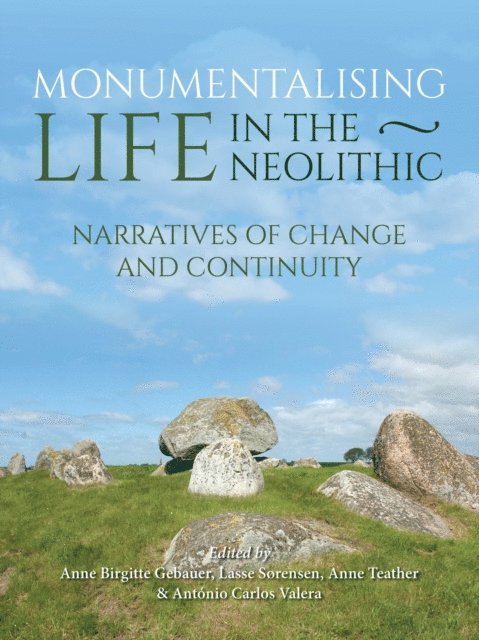
One of the principal characteristics of the European Neolithic is the development of monumentality in association with innovations in material culture and changes in subsistence from hunting and gathering to farming and pastoralism. The papers in this volume discuss the latest insights into why monumental architecture became an integral part of early farming societies in Europe and beyond. One of the topics is how we define monuments and how our arguments and recent research on temporality impacts on our interpretation of the Neolithic period. Different interpretations of Göbekli Tepe are examples of this discussion as well as our understanding of special landmarks such as flint mines.The latest evidence on the economic and paleoenvironmental context, carbon 14 dates as well as analytical methods are employed in illuminating the emergence of monumentalism in Neolithic Europe. Studies are taking place on a macro and micro scale in areas as diverse as Great Britain, Denmark, Sweden, Poland, Germany, the Dutch wetlands, Portugal and Malta involving a range of monuments from long barrows and megalithic tombs to roundels and enclosures. Transformation from a natural to a built environment by monumentalizing part of the landscape is discussed as well as changes in megalithic architecture in relation to shifts in the social structure. An ethnographic study of megaliths in Nagaland discuss monument building as an act of social construction. Other studies look into the role of monuments as expressions of cosmology and active loci of ceremonial performances. Also, a couple of papers analyse the social processes in the transformation of society in the aftermath of the initial boom in monument construction and the related changes in subsistence and social structure in northern Europe.The aim of the publication is to explore different theories about the relationship between monumentality and the Neolithic way of life through these studies encompassing a wide range of types of monuments over vast areas of Europe and beyond.
E-bok
PDF, Engelska, 2020459 kr
Läs direkt efter köp
One of the principal characteristics of the European Neolithic is the development of monumentality in association with innovations in material culture and changes in subsistence from hunting and gathering to farming and pastoralism. The papers in this volume discuss the latest insights into why monumental architecture became an integral part of early farming societies in Europe and beyond. One of the topics is how we define monuments and how our arguments and recent research on temporality impacts on our interpretation of the Neolithic period. Different interpretations of Göbekli Tepe are examples of this discussion as well as our understanding of special landmarks such as flint mines.The latest evidence on the economic and paleoenvironmental context, carbon 14 dates as well as analytical methods are employed in illuminating the emergence of monumentalism in Neolithic Europe. Studies are taking place on a macro and micro scale in areas as diverse as Great Britain, Denmark, Sweden, Poland, Germany, the Dutch wetlands, Portugal and Malta involving a range of monuments from long barrows and megalithic tombs to roundels and enclosures. Transformation from a natural to a built environment by monumentalizing part of the landscape is discussed as well as changes in megalithic architecture in relation to shifts in the social structure. An ethnographic study of megaliths in Nagaland discuss monument building as an act of social construction. Other studies look into the role of monuments as expressions of cosmology and active loci of ceremonial performances. Also, a couple of papers analyse the social processes in the transformation of society in the aftermath of the initial boom in monument construction and the related changes in subsistence and social structure in northern Europe.The aim of the publication is to explore different theories about the relationship between monumentality and the Neolithic way of life through these studies encompassing a wide range of types of monuments over vast areas of Europe and beyond.