Theodore A. Wilson - Böcker
Visar alla böcker från författaren Theodore A. Wilson. Handla med fri frakt och snabb leverans.
4 produkter
4 produkter
408 kr
Skickas inom 10-15 vardagar
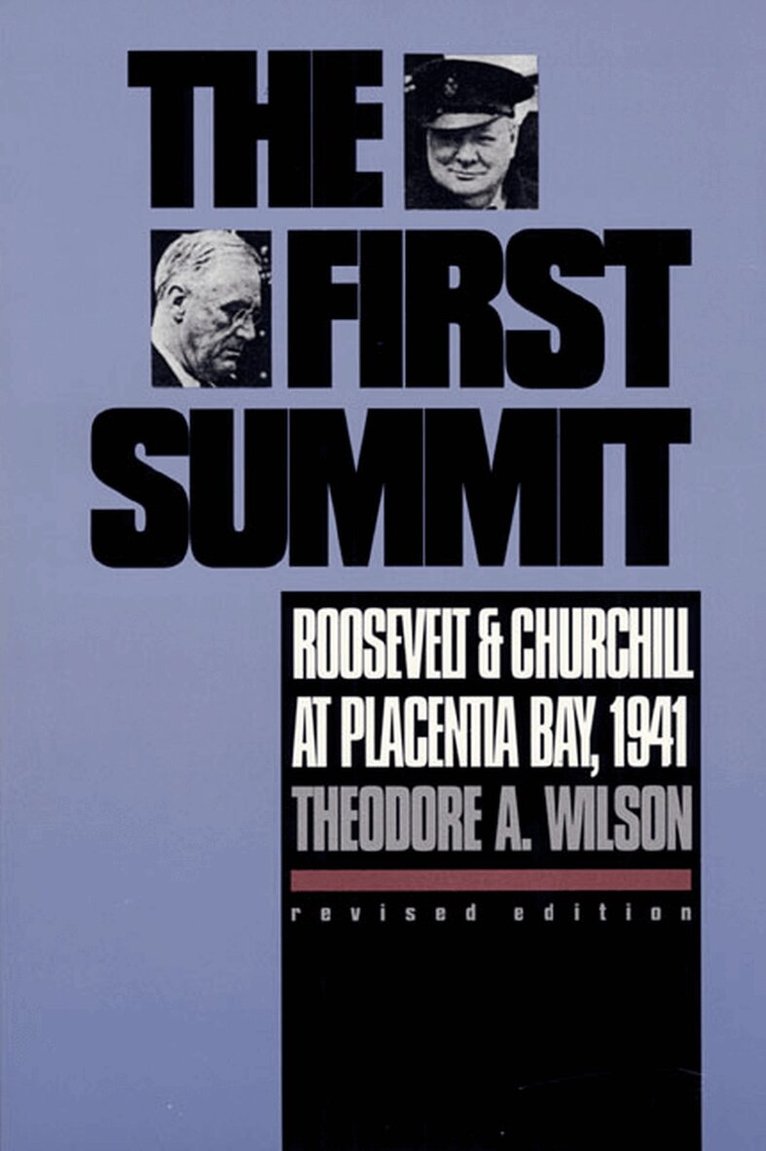
Four months before Pearl Harbour, Winston Churchill and Franklin D. Roosevelt met in secret aboard a ship in a secluded Newfoundland harbour. This was the first summit conference of World War II. Although it would soon be overshadowed by the events to come, the 1941 summit at Placentia Bay produced dramatic results. It confirmed the policy of material aid for Britain and sanctioned the ""Atlantic Charter"". It also laid the groundwork for the three-way alliance that would bring about the destruction of the Axis powers. In this revised edition of his study, historian Theodore Wilson has expanded and updated the narrative. Drawing upon primary sources made available since the first edition he has added new material. Wilson analyzes the events of August 1941 and concludes that President Roosevelt was not totally in control. As the country lurched from crisis to crisis, bureaucratic politics and organizational dynamics were far more influential than FDR in determining the evolution of US strategy, US policy toward Japan, Anglo-American economic relations, and the efforts to mobilize for war. Wilson also recaptures the drama and colour of the shipboard discussions - from Roosevelt's bizarre working methods to Churchill's choice of entertainment in the evenings.
381 kr
Skickas inom 10-15 vardagar
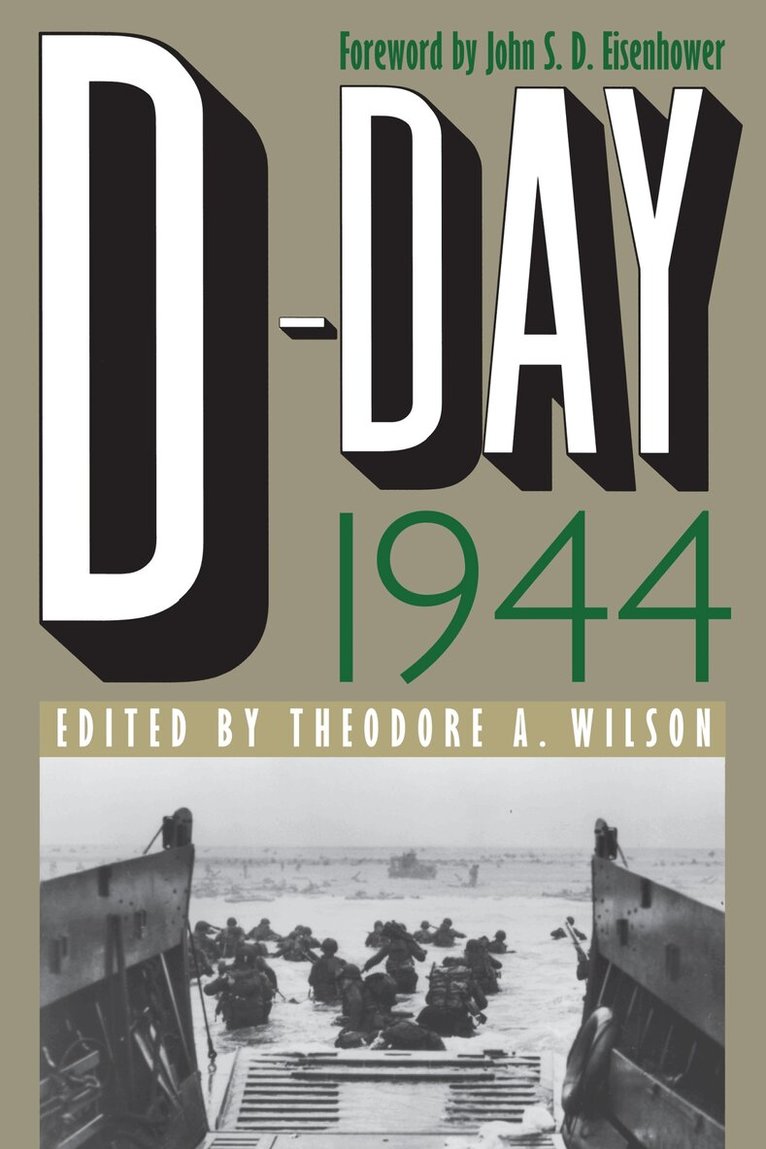
June 6, 1944: the Allies launch the largest combined aerial and amphibious assault in modern history. Taking the Germans by surprise, they storm the heavily fortified defences at the beachheads along the Normandy coast. The cost in Allied lives is enormous (nearly 10,000 lost at Omaha alone), but the long-awaited Second Front is finally opened, marking the beginning of the end for Hitler's Third Reich. 50 years later, we are still trying to come to grips with the impact of what General Dwight Eisenhower called ""this great and noble undertaking"". In ""D-Day 1944"" 20 authors reassess the meanings and lessons of this monumental event and show why it retains such a prominent place in our national memory. Drawing upon a vast array of newly available archival sources, these authors extend and revise our understanding of coalition warmaking, the controversy over opening the Second Front, the logistics of operations ""Bolero"" and ""Overlord"", air and naval operations, small unit training and combat, the unique contributions of ""special forces"" and of ""Ultra"" and ""Fortitude"" intelligence, the war zone experience for French civilians, Eisenhower's leadership, and the comparative performances of the American, British and Canadian forces in combat. ""D-Day 1944"" also features valuable eyewitness commentaries by General Omar Bradley, Vice-Admiral Friedrich Ruge (German Navy), Pulitzer Prize-winning journalist Don Whitehead, and George Marshall's biographer Forrest Pogue. Together, these essays remind us why a half century later D-Day remains one of the true defining moments of World War II.
671 kr
Skickas inom 10-15 vardagar
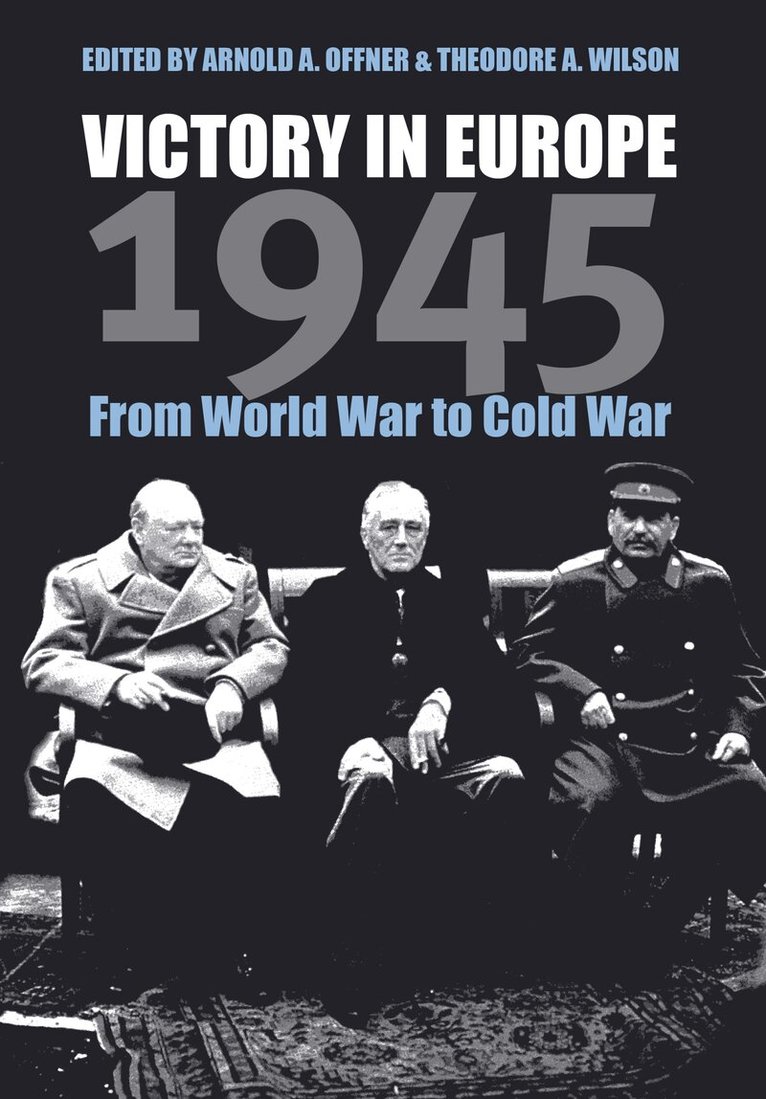
At the end of World War II in Europe, peace had finally come but at a terrible price: its cities and countryside were devastated, 35 million lay dead, and those who did survive faced extreme economic hardship and the threat of starvation. Ending the war was more than a matter of defeating the German army; it was about a new world order emerging in fits and starts from the smouldering ruins of a continent. In this provocative collection, 11 senior scholars explore the transition from war to uneasy peace. Authorities such as Warren Kimball, Randall Woods and Garry Clifford examine how and why the war ended as it did, whether a different resolution was possible and what the victors actually won. They also consider whether the circumstances surrounding war termination made inevitable the ensuing Cold War. Some examine the often-tragic results of actions taken to deal with such immediate circumstances as the food crisis. Others assess the roles of key players, such as the joint chiefs of staff, during the transition from shooting war to cold war. Other issues that have preoccupied scholars and policy makers since 1945 regarding the chaotic termination of the war, such as Eisenhower's decision to stop at the Elbe, are also discussed.
666 kr
Skickas inom 10-15 vardagar
This book thoroughly covers each subfield of respiratory mechanics: pulmonary mechanics, the respiratory pump, and flow. It presents the current understanding of the field and serves as a guide to the scientific literature from the golden age of respiratory mechanics, 1960 - 2010. Specific topics covered include the contributions of surface tension and tissue forces to lung recoil, the gravitational deformation of the lung, and the interdependence forces that act on pulmonary airways and blood vessels. The geometry and kinematics of the ribs is also covered in detail, as well as the respiratory action of the external and internal intercostal muscles, the mechanics of the diaphragm, and the quantitative compartmental models of the chest wall is also described. Additionally, flow in the airways is covered thoroughly, including the wave-speed and viscous expiratory flow-limiting mechanisms; convection, diffusion and the stationary front; and the distribution of ventilation. This is an ideal book for respiratory physiologists, pneumologists, exercise physiologists, and critical care physicians.This book also: Maximizes reader insights into current and landmark respiratory mechanics researchConcisely yet thoroughly explores the current research on pulmonary mechanics, the respiratory pump, and flowServes as an invaluable guide for those entering the field, or those seeking to expand their knowledge of it