Thomas A. Hale - Böcker
Visar alla böcker från författaren Thomas A. Hale. Handla med fri frakt och snabb leverans.
7 produkter
7 produkter
555 kr
Skickas inom 10-15 vardagar
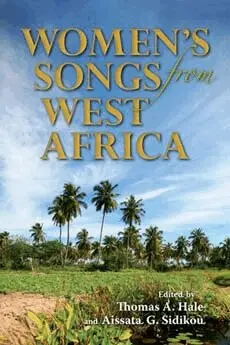
Exploring the origins, organization, subject matter, and performance contexts of singers and singing, Women's Songs from West Africa expands our understanding of the world of women in West Africa and their complex and subtle roles as verbal artists. Covering Côte d'Ivoire, the Gambia, Mali, Niger, Nigeria, Senegal, and beyond, the essays attest to the importance of women's contributions to the most widespread form of verbal art in Africa.
176 kr
Skickas inom 10-15 vardagar
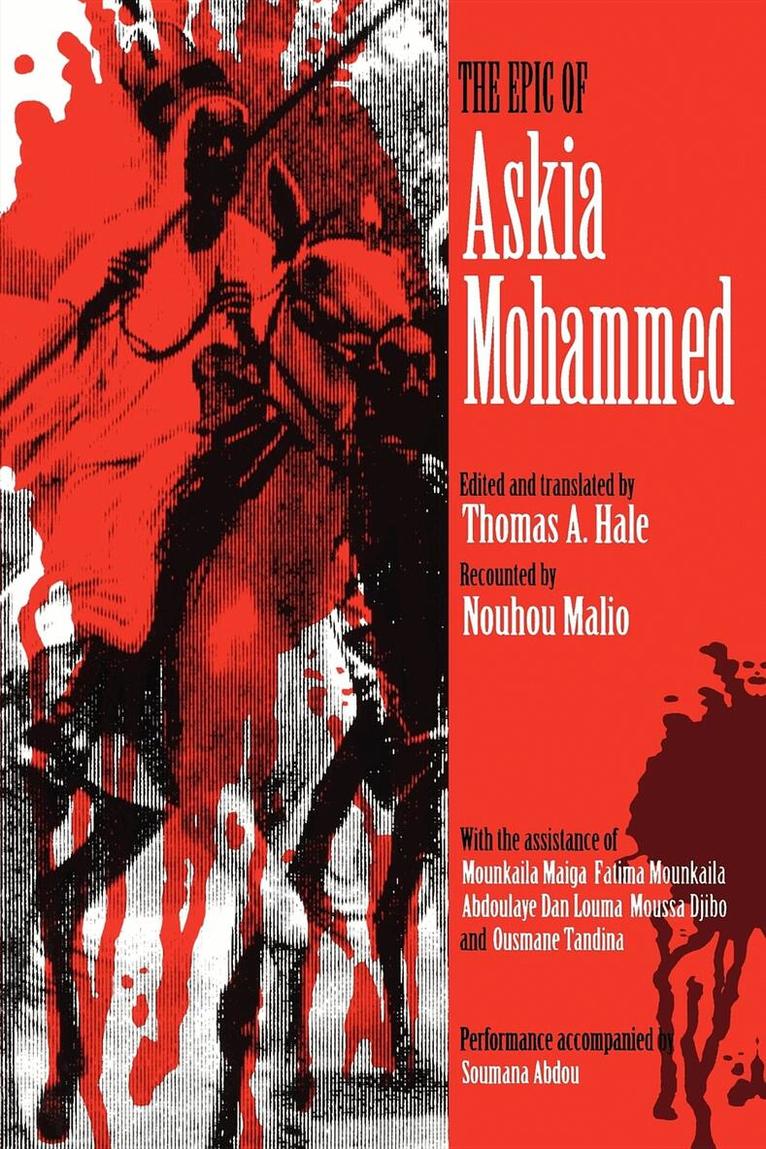
Askia Mohammed is the most famous leader in the history of the Songhay Empire, which reached its apogee during his reign in 1493-1528. Songhay, approximately halfway between the present-day cities of Timbuktu in Mali and Niamey in Niger, became a political force beginning in 1463, under the leadership of Sonni Ali Ber. By the time of his death in 1492, the foundation had been laid for the development under Askia Mohammed of a complex system of administration, a well-equipped army and navy, and a network of large government-owned farms. The present rendition of the epic was narrated by the griot (or jeseré) Nouhou Malio over two evenings in Saga, a small town on the Niger River, two miles downstream from Niamey. The text is a word-for-word translation from Nouhou Malio's oral performance.
268 kr
Skickas inom 10-15 vardagar
"The editors . . . must be congratulated . . . Long live the African storytellers!" —Africa Today"It is difficult to imagine a more practical introduction to contemporary African epic than this anthology . . . no other single volume comprehends the full scope of African epic (as opposed to praise poetry) the way this one does. . . . The stories are engaging, and the free-verse translations are surprisingly readable. . . . Recommended for all academic collections." —ChoiceWestern culture traces its literary heritage to such well-known epics as the Iliad and the Odyssey and Gilgamesh. But it is only recently that scholars have turned their attention toward capturing the rich oral tradition that is still alive in Africa today. These 25 selections introduce English-speaking readers to the extensive epic traditions in Africa.
282 kr
Skickas inom 7-10 vardagar
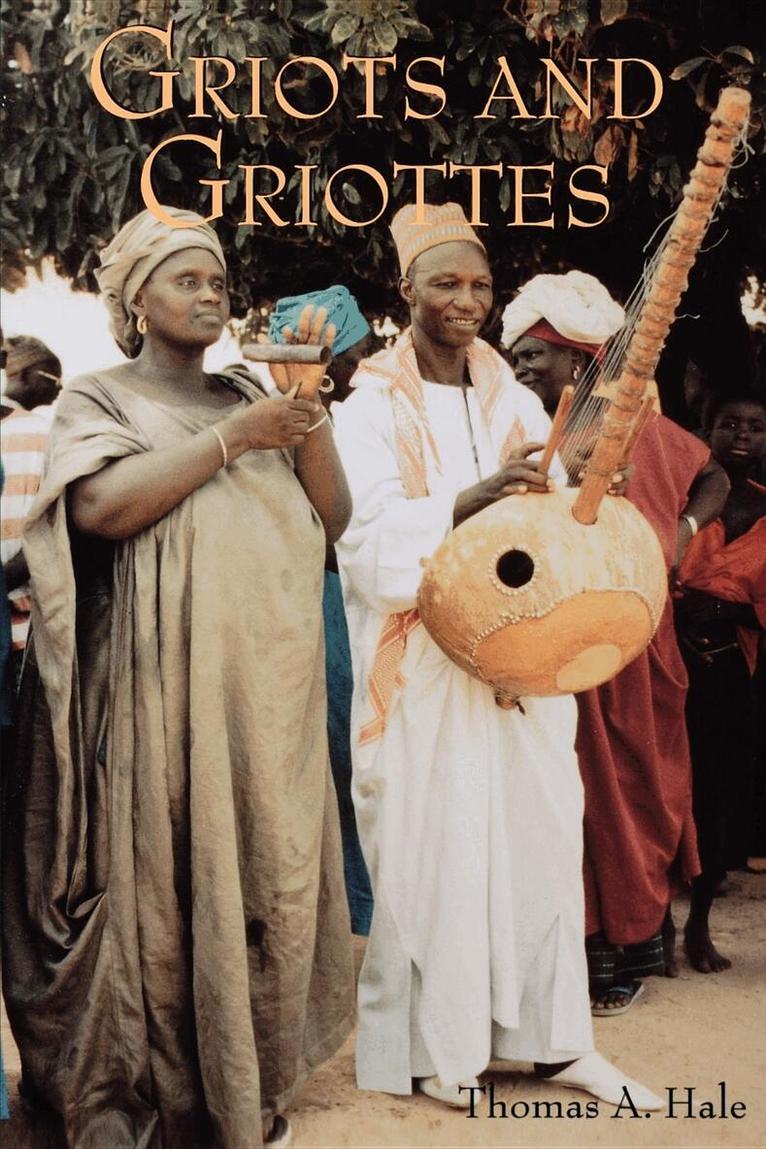
Griots, a uniquely African profession, fulfill a variety of roles as genealogists, historians, spokespersons, diplomats, musicians, teachers, praise singers, and advisors. Telling the story of these remarkable wordsmiths and performers, Thomas A. Hale addresses the nature of their verbal and musical art, the role of female griots, or griottes, how griots and griottes fit into their societies, and what their future might be in Africa and the rest of the world.
391 kr
Skickas inom 10-15 vardagar
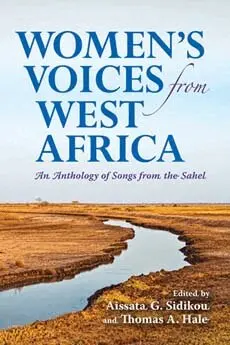
Aissata G. Sidikou and Thomas A. Hale reveal the world of women's songs and singing in West Africa. This anthology—collected from 17 ethnic traditions across West Africa—introduces the power and beauty of the intimate expressions of African women. The songs, many translated here for the first time, reflect all stages of the life cycle and all walks of life. They entertain, give comfort and encouragement, and empower other women to face the challenges imposed on them by their families, men, and society. Women's Voices from West Africa opens a new window on women's changing roles in contemporary Africa.
1 215 kr
Skickas inom 7-10 vardagar
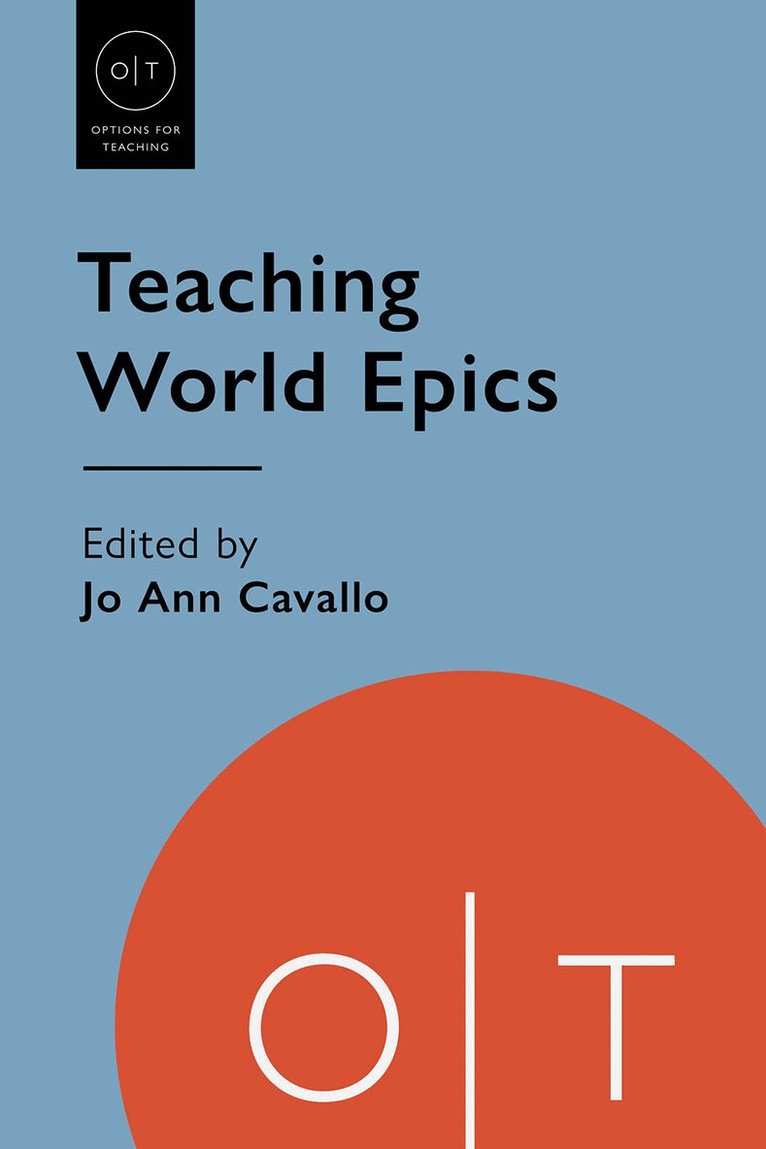
Essays for teaching ancient and recent epic narratives from around the world.Cultures across the globe have embraced epics: stories of memorable deeds by heroic characters whose actions have significant consequences for their lives and their communities. Incorporating narrative elements also found in sacred history, chronicle, saga, legend, romance, myth, folklore, and the novel, epics throughout history have both animated the imagination and encouraged reflection on what it means to be human. Teaching World Epics addresses ancient and more recent epic works from Africa, Europe, Mesoamerica, and East, Central, and South Asia that are available in English translations.Useful to instructors of literature, peace and conflict studies, transnational studies, women's studies, and religious studies, the essays in this volume focus on epics in sociopolitical and cultural contexts, on the adaptation and reception of epic works, and on themes that are especially relevant today, such as gender dynamics and politics, national identity, colonialism and imperialism, violence, and war.This volume includes discussion of Ludovico Ariosto's Orlando Furioso, Giulia Bigolina's Urania, The Book of Dede Korkut, Luis Vaz de Camões's Os Lusiadas, David of Sassoun, The Epic of Askia Mohammed, The Epic of Gilgamesh, the epic of Sun-Jata, Alonso de Ercilla y Zúñiga's La Araucana, Homer's Iliad and Odyssey, Kalevala, Kebra Nagast, Kudrun, The Legend of Poṉṉivaḷa Nadu, the Mahabharata, Manas, John Milton's Paradise Lost, Mwindo, the Nibelungenlied, Poema de mio Cid, Popol Wuj, the Ramayana, the Shahnameh, Sirat Bani Hilal, Edmund Spenser's The Faerie Queene, Statius's Thebaid, The Tale of the Heike, Three Kingdoms, Gaspar Pérez de Villagrá's Historia de la Nueva México, and Virgil's Aeneid.
491 kr
Skickas inom 7-10 vardagar
Essays for teaching ancient and recent epic narratives from around the world.Cultures across the globe have embraced epics: stories of memorable deeds by heroic characters whose actions have significant consequences for their lives and their communities. Incorporating narrative elements also found in sacred history, chronicle, saga, legend, romance, myth, folklore, and the novel, epics throughout history have both animated the imagination and encouraged reflection on what it means to be human. Teaching World Epics addresses ancient and more recent epic works from Africa, Europe, Mesoamerica, and East, Central, and South Asia that are available in English translations.Useful to instructors of literature, peace and conflict studies, transnational studies, women's studies, and religious studies, the essays in this volume focus on epics in sociopolitical and cultural contexts, on the adaptation and reception of epic works, and on themes that are especially relevant today, such as gender dynamics and politics, national identity, colonialism and imperialism, violence, and war.This volume includes discussion of Ludovico Ariosto's Orlando Furioso, Giulia Bigolina's Urania, The Book of Dede Korkut, Luis Vaz de Camões's Os Lusiadas, David of Sassoun, The Epic of Askia Mohammed, The Epic of Gilgamesh, the epic of Sun-Jata, Alonso de Ercilla y Zúñiga's La Araucana, Homer's Iliad and Odyssey, Kalevala, Kebra Nagast, Kudrun, The Legend of Poṉṉivaḷa Nadu, the Mahabharata, Manas, John Milton's Paradise Lost, Mwindo, the Nibelungenlied, Poema de mio Cid, Popol Wuj, the Ramayana, the Shahnameh, Sirat Bani Hilal, Edmund Spenser's The Faerie Queene, Statius's Thebaid, The Tale of the Heike, Three Kingdoms, Gaspar Pérez de Villagrá's Historia de la Nueva México, and Virgil's Aeneid.