Thomas Biebricher – författare
Visar alla böcker från författaren Thomas Biebricher. Handla med fri frakt och snabb leverans.
15 produkter
15 produkter
E-bok
PDF, Engelska, 20221 958 kr
Läs direkt efter köp
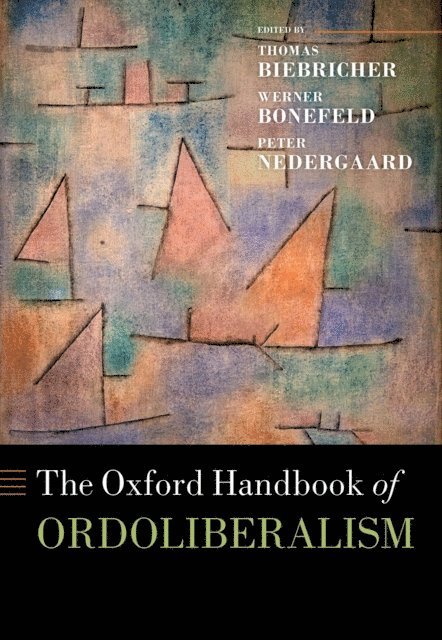
Since the financial crisis of 2008, ordoliberalism emerged from relative obscurity to become one of the crucial terms of analysis across a wide range of academic literatures and public discussion. In fact, it became the main reference for a number of issues, including assessments of the attempted resolution of the Eurozone crisis, arguments about German hegemony in Europe, debates over the future of economic liberalism and controversies about authoritarian liberalism. What is striking about ordoliberalism is its pronounced ambiguity, as some view it as a more refined and potentially progressive variant of neoliberalism, while others cast it as a blueprint for a regime of austerity reigning over a society of competition with only rudimentary democratic institutions. And while ordoliberalism is often portrayed as a quintessentially German tradition, its impact has not been confined to the German context, extending all the way to the unlikely case of China. In short, ordoliberalism is a phenomenon of arguably considerable influence that remains poorly understood, as it is mystified by its proponents and vilified by its critics. The Oxford Handbook of Ordoliberalism contains a selection of chapters written by an international cast of experts on ordoliberalism that aim to elucidate and analyze the latter in all of its many facets. From the intellectual origins and prime exemplars to its main theoretical themes and practical applications up to the most recent debates taking place across a range of disciplines, this volume offers the first comprehensive account of ordoliberalism for the English-speaking world.
E-bok
Engelska, 20221 958 kr
Läs direkt efter köp
Since the financial crisis of 2008, ordoliberalism emerged from relative obscurity to become one of the crucial terms of analysis across a wide range of academic literatures and public discussion. In fact, it became the main reference for a number of issues, including assessments of the attempted resolution of the Eurozone crisis, arguments about German hegemony in Europe, debates over the future of economic liberalism and controversies about authoritarian liberalism. What is striking about ordoliberalism is its pronounced ambiguity, as some view it as a more refined and potentially progressive variant of neoliberalism, while others cast it as a blueprint for a regime of austerity reigning over a society of competition with only rudimentary democratic institutions. And while ordoliberalism is often portrayed as a quintessentially German tradition, its impact has not been confined to the German context, extending all the way to the unlikely case of China. In short, ordoliberalism is a phenomenon of arguably considerable influence that remains poorly understood, as it is mystified by its proponents and vilified by its critics. The Oxford Handbook of Ordoliberalism contains a selection of chapters written by an international cast of experts on ordoliberalism that aim to elucidate and analyze the latter in all of its many facets. From the intellectual origins and prime exemplars to its main theoretical themes and practical applications up to the most recent debates taking place across a range of disciplines, this volume offers the first comprehensive account of ordoliberalism for the English-speaking world.
Inbunden, Engelska, 2022
2 499 kr
Skickas inom 5-8 vardagar
Since the financial crisis of 2008, ordoliberalism emerged from relative obscurity to become one of the crucial terms of analysis across a wide range of academic literatures and public discussion. In fact, it became the main reference for a number of issues, including assessments of the attempted resolution of the Eurozone crisis, arguments about German hegemony in Europe, debates over the future of economic liberalism and controversies about authoritarian liberalism. What is striking about ordoliberalism is its pronounced ambiguity, as some view it as a more refined and potentially progressive variant of neoliberalism, while others cast it as a blueprint for a regime of austerity reigning over a society of competition with only rudimentary democratic institutions. And while ordoliberalism is often portrayed as a quintessentially German tradition, its impact has not been confined to the German context, extending all the way to the unlikely case of China. In short, ordoliberalism is a phenomenon of arguably considerable influence that remains poorly understood, as it is mystified by its proponents and vilified by its critics. The Oxford Handbook of Ordoliberalism contains a selection of chapters written by an international cast of experts on ordoliberalism that aim to elucidate and analyze the latter in all of its many facets. From the intellectual origins and prime exemplars to its main theoretical themes and practical applications up to the most recent debates taking place across a range of disciplines, this volume offers the first comprehensive account of ordoliberalism for the English-speaking world.
Inbunden, Engelska, 2019
1 214 kr
Skickas inom 5-8 vardagar
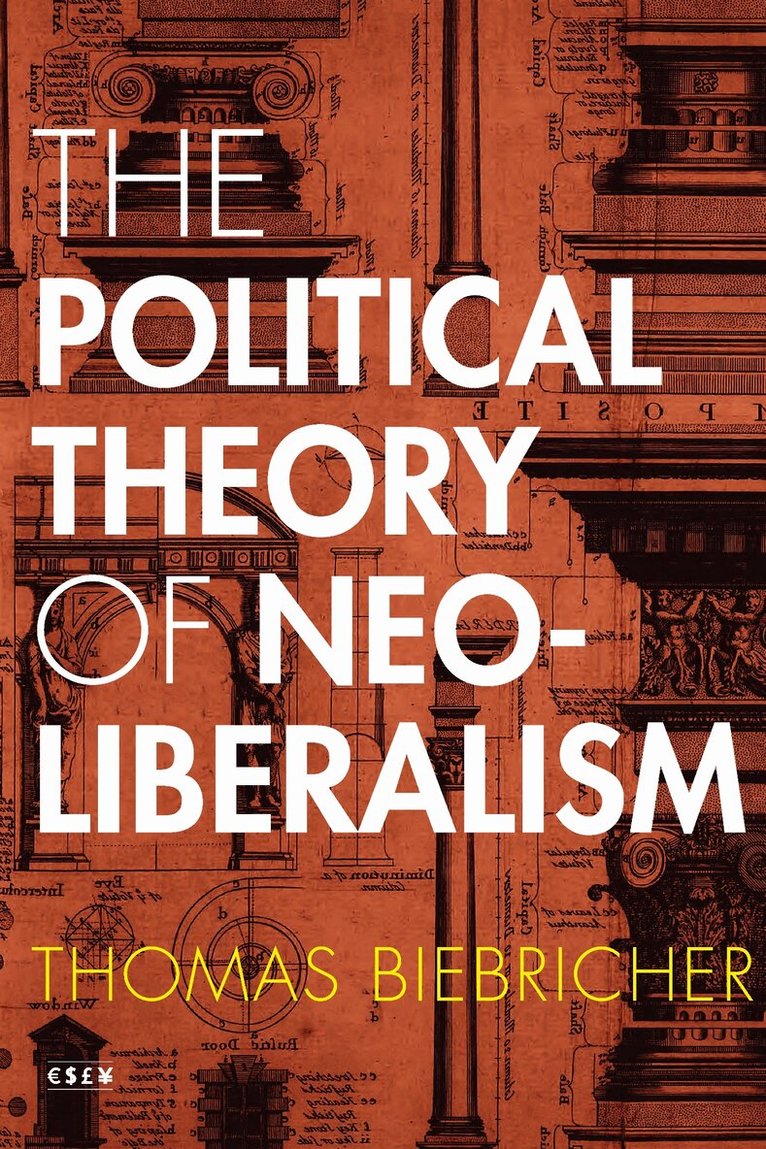
Neoliberalism has become a dirty word. In political discourse, it stigmatizes a political opponent as a market fundamentalist; in academia, the concept is also mainly wielded by its critics, while those who might be seen as actual neoliberals deny its very existence. Yet the term remains necessary for understanding the varieties of capitalism across space and time. Arguing that neoliberalism is widely misunderstood when reduced to a doctrine of markets and economics alone, this book shows that it has a political dimension that we can reconstruct and critique. Recognizing the heterogeneities within and between both neoliberal theory and practice, The Political Theory of Neoliberalism looks to distinguish between the two as well as to theorize their relationship. By examining the views of state, democracy, science, and politics in the work of six major figures—Eucken, Röpke, Rüstow, Hayek, Friedman, and Buchanan—it offers the first comprehensive account of the varieties of neoliberal political thought. Ordoliberal perspectives, in particular, emerge in a new light. Turning from abstract to concrete, the book also interprets recent neoliberal reforms of the European Union to offer a diagnosis of contemporary capitalism more generally. The latest economic crises hardly brought the neoliberal era to an end. Instead, as Thomas Biebricher shows, we are witnessing an authoritarian liberalism whose reign has only just begun.
Häftad, Engelska, 2019
295 kr
Skickas inom 5-8 vardagar
Neoliberalism has become a dirty word. In political discourse, it stigmatizes a political opponent as a market fundamentalist; in academia, the concept is also mainly wielded by its critics, while those who might be seen as actual neoliberals deny its very existence. Yet the term remains necessary for understanding the varieties of capitalism across space and time. Arguing that neoliberalism is widely misunderstood when reduced to a doctrine of markets and economics alone, this book shows that it has a political dimension that we can reconstruct and critique. Recognizing the heterogeneities within and between both neoliberal theory and practice, The Political Theory of Neoliberalism looks to distinguish between the two as well as to theorize their relationship. By examining the views of state, democracy, science, and politics in the work of six major figures—Eucken, Röpke, Rüstow, Hayek, Friedman, and Buchanan—it offers the first comprehensive account of the varieties of neoliberal political thought. Ordoliberal perspectives, in particular, emerge in a new light. Turning from abstract to concrete, the book also interprets recent neoliberal reforms of the European Union to offer a diagnosis of contemporary capitalism more generally. The latest economic crises hardly brought the neoliberal era to an end. Instead, as Thomas Biebricher shows, we are witnessing an authoritarian liberalism whose reign has only just begun.
E-bok
Engelska, 2019353 kr
Läs direkt efter köp
Neoliberalism has become a dirty word. In political discourse, it stigmatizes a political opponent as a market fundamentalist; in academia, the concept is also mainly wielded by its critics, while those who might be seen as actual neoliberals deny its very existence. Yet the term remains necessary for understanding the varieties of capitalism across space and time. Arguing that neoliberalism is widely misunderstood when reduced to a doctrine of markets and economics alone, this book shows that it has a political dimension that we can reconstruct and critique. Recognizing the heterogeneities within and between both neoliberal theory and practice, The Political Theory of Neoliberalism looks to distinguish between the two as well as to theorize their relationship. By examining the views of state, democracy, science, and politics in the work of six major figures—Eucken, Röpke, Rüstow, Hayek, Friedman, and Buchanan—it offers the first comprehensive account of the varieties of neoliberal political thought. Ordoliberal perspectives, in particular, emerge in a new light. Turning from abstract to concrete, the book also interprets recent neoliberal reforms of the European Union to offer a diagnosis of contemporary capitalism more generally. The latest economic crises hardly brought the neoliberal era to an end. Instead, as Thomas Biebricher shows, we are witnessing an authoritarian liberalism whose reign has only just begun.
Inbunden, Engelska, 2017
1 815 kr
Skickas inom 10-15 vardagar
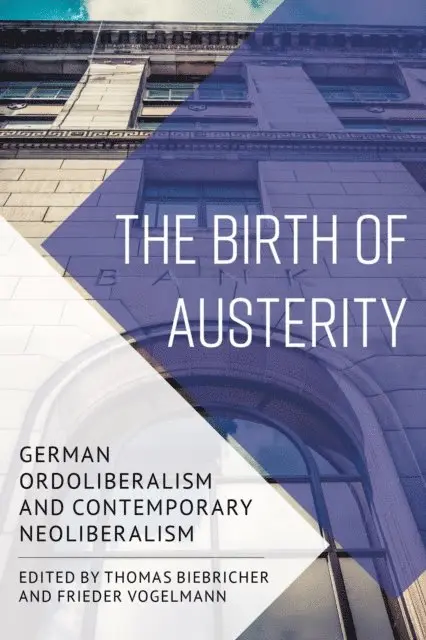
Ordoliberalism and the ‘Freiburg School’ have gained traction in contemporary political economy in response to two factors: a rising interest in governmentality studies and the banking, financial and sovereign debt crisis in Europe. In the face of these crises, Germany has assumed a position of quasi-hegemony in the European Union, making decisions about bailouts, the politics of crisis management and the rise of austerity.This volume gathers together English translations of seminal ordoliberal texts by thinkers ranging from Walter Eucken and Wilhelm Röpke to Franz Böhm, Alexander Rüstow and Hans Grossmann-Doerth. Offering some foundational insights into ordoliberalism, these essays give insight into a field that is much misunderstood outside Germany. The second half of the book comprises of analyses of contemporary issues in light of ordoliberal thought, showing how its ideas endure and relate directly to austerity policy across Europe.
Häftad, Engelska, 2017
619 kr
Skickas inom 10-15 vardagar
Ordoliberalism and the ‘Freiburg School’ have gained traction in contemporary political economy in response to two factors: a rising interest in governmentality studies and the banking, financial and sovereign debt crisis in Europe. In the face of these crises, Germany has assumed a position of quasi-hegemony in the European Union, making decisions about bailouts, the politics of crisis management and the rise of austerity.This volume gathers together English translations of seminal ordoliberal texts by thinkers ranging from Walter Eucken and Wilhelm Röpke to Franz Böhm, Alexander Rüstow and Hans Grossmann-Doerth. Offering some foundational insights into ordoliberalism, these essays give insight into a field that is much misunderstood outside Germany. The second half of the book comprises of analyses of contemporary issues in light of ordoliberal thought, showing how its ideas endure and relate directly to austerity policy across Europe.
E-bok
Engelska, 2017686 kr
Läs direkt efter köp
Ordoliberalism and the ‘Freiburg School’ have gained traction in contemporary political economy in response to two factors: a rising interest in governmentality studies and the banking, financial and sovereign debt crisis in Europe. In the face of these crises, Germany has assumed a position of quasi-hegemony in the European Union, making decisions about bailouts, the politics of crisis management and the rise of austerity.This volume gathers together English translations of seminal ordoliberal texts by thinkers ranging from Walter Eucken and Wilhelm Röpke to Franz Böhm, Alexander Rüstow and Hans Grossmann-Doerth. Offering some foundational insights into ordoliberalism, these essays give insight into a field that is much misunderstood outside Germany. The second half of the book comprises of analyses of contemporary issues in light of ordoliberal thought, showing how its ideas endure and relate directly to austerity policy across Europe.
Del 2813 - edition suhrkamp
Oben rechts
Häftad, Tyska, 2026
237 kr
Skickas inom 3-6 vardagar
Inbunden, Tyska, 2023
323 kr
Skickas inom 3-6 vardagar
Häftad, Tyska, 2022
227 kr
Skickas inom 3-6 vardagar
Häftad, Tyska
202 kr
Skickas inom 3-6 vardagar
193 kr
Läs direkt efter köp
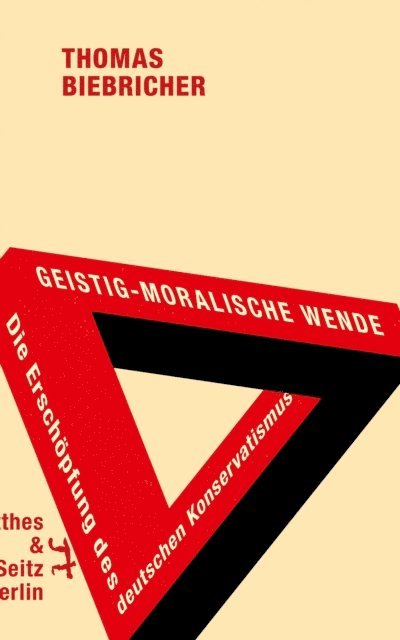
Nach 13 Jahren Großer Koalition wird klar, dass sich neben der Sozialdemokratie auch der Konservatismus und seine traditionelle politische Heimat, die CDU, in einer tiefen Identitätskrise befinden. Das zeigen nicht zuletzt das Aufkommen der AfD und ministeriale Revolutionsaufrufe gegen die vermeintliche liberale Kulturhegemonie.Erstaunlicherweise waren schon bei der Wahl der schwarz-gelben Kohl-Regierung 1983 ähnliche Töne zu hören: Gegen die Vorherrschaft der 68er-Ideen sollte eine »geistig-moralische Wende« dem Konservatismus wieder zu seiner rechtmäßigen Stellung verhelfen. Doch während zur gleichen Zeit Reagan und Thatcher die Gesellschaft nachhaltig umgestalteten, ist der geistig-moralische Aufbruch hierzulande fast völlig vergessen; grundlegende Strukturreformen blieben den rot-grünen Nachfolgern überlassen. Doch warum?In seiner Untersuchung der Erschöpfung des Konservatismus unternimmt Thomas Biebricher eine Reise in das politisch-kulturelle Klima der letzten Jahre der alten Bundesrepublik und der Wendezeit und beschreibt die wachsende Orientierungslosigkeit zwischen Neue Rechte und Neoliberalismus. Auf diese Weise erzählt er zugleich die Vorgeschichte des Zerfalls unseres klassischen politischen Koordinatensystems, dessen Zeugen wir heute werden.
E-bok
Tyska, 2019173 kr
Läs direkt efter köp
Zu Beginn der Finanzkrise 2008 prognostizierte Jürgen Habermas das Ende des Neoliberalismus. Einige Jahre und mehrere Krisen später kann davon kaum mehr die Rede sein. Doch worum handelt es sich, wenn von Neoliberalismus die Rede ist? Wenige Begriffe sind derart schillernd wie umstritten. Die vorliegende Einführung nimmt ihren Ausgang bei einer Analyse der wichtigsten Vertreter neoliberalen Denkens von Walter Eucken über Friedrich August von Hayek bis zu Milton Friedman und James Buchanan, analysiert im Weiteren Neoliberalisierungsprozesse in den USA, Großbritannien und Deutschland während der 1980er und 1990er Jahre und thematisiert schließlich die Frage neoliberalen Regierens aus der Perspektive von Governance-Theorien sowie der von Michel Foucault inspirierten Gouvernementalitätstheorie.