Thomas F Love – författare
Visar alla böcker från författaren Thomas F Love. Handla med fri frakt och snabb leverans.
4 produkter
4 produkter
State, Capital, And Rural Society
Anthropological Perspectives On Political Economy In Mexico And The Andes
Inbunden, Engelska, 2019
2 113 kr
Skickas inom 10-15 vardagar
This volume represents recent anthropological research on the political economy of Latin America. Dependency theories, modes of production analysis, and theories of the state all attempt to conceptualize the interrelations among "class," "interest," and, at some level, "power." All three, that is, focus on classical questions of political economy. The studies presented in this volume both draw on the insights of this literature and challenge the grander theories in important respects. The chapters in this volume represent an anthropological contribution to the political economy of Latin America, a bypassing of dependency theory and the adoption of its successors, mode of production analysis and state theory.
State, Capital, And Rural Society
Anthropological Perspectives On Political Economy In Mexico And The Andes
Häftad, Engelska, 2021
618 kr
Skickas inom 10-15 vardagar
This volume represents recent anthropological research on the political economy of Latin America. Dependency theories, modes of production analysis, and theories of the state all attempt to conceptualize the interrelations among "class," "interest," and, at some level, "power." All three, that is, focus on classical questions of political economy. The studies presented in this volume both draw on the insights of this literature and challenge the grander theories in important respects. The chapters in this volume represent an anthropological contribution to the political economy of Latin America, a bypassing of dependency theory and the adoption of its successors, mode of production analysis and state theory.
999 kr
Skickas inom 10-15 vardagar
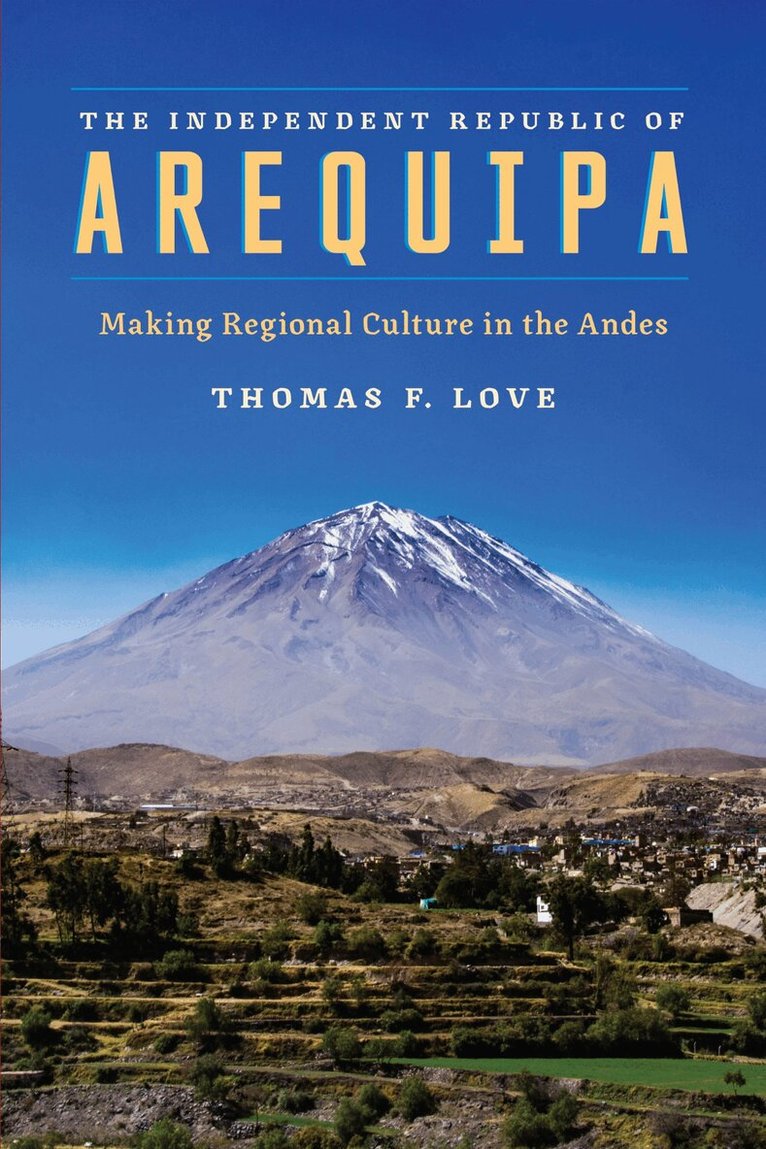
Arequipa, Peru’s second largest city, has the most intense regional culture in the central Andes. ArequipeÑos fiercely conceive of themselves as exceptional and distinctive, yet also broadly representative of the nation’s overall hybrid nature-a blending of coast (modern, “white”) and sierra (traditional, “indigenous”). The Independent Republic of Arequipa investigates why and how this regional identity developed in a boom of cultural production after the War of the Pacific (1879–1884) through the mid-twentieth century.Drawing on decades of ethnographic fieldwork, Thomas F. Love offers the first anthropological history of southwestern Peru’s distinctive regional culture. He examines both its pre-Hispanic and colonial altiplano foundations (anchored in continuing pilgrimage to key Marian shrines) and the nature of its mid-nineteenth century “revolutionary” identity in cross-class resistance to Lima’s autocratic control of nation-building in the post-Independence state. Love then examines Arequipa’s early twentieth-century “mestizo” identity (an early and unusual case of “browning” of regional identity) in the context of raging debates about the “national question” and the “Indian problem,” as well as the post-WWII development of extravagant displays of distinctive bull-on-bull fighting that now constitute the very performance of regional identity. Love’s research reveals that Arequipa’s “traditional” local culture, symbolically marked by populist, secular, and rural elements, was in fact a project of urban-based, largely middle-class cultural entrepreneurs, invented to counter continuing LimeÑo autocratic power, marked by nostalgia, and anxious about the inclusion of the nation’s indigenous majority as full modern citizens.
319 kr
Skickas inom 7-10 vardagar
Arequipa, Peru’s second largest city, has the most intense regional culture in the central Andes. ArequipeÑos fiercely conceive of themselves as exceptional and distinctive, yet also broadly representative of the nation’s overall hybrid nature-a blending of coast (modern, “white”) and sierra (traditional, “indigenous”). The Independent Republic of Arequipa investigates why and how this regional identity developed in a boom of cultural production after the War of the Pacific (1879–1884) through the mid-twentieth century.Drawing on decades of ethnographic fieldwork, Thomas F. Love offers the first anthropological history of southwestern Peru’s distinctive regional culture. He examines both its pre-Hispanic and colonial altiplano foundations (anchored in continuing pilgrimage to key Marian shrines) and the nature of its mid-nineteenth century “revolutionary” identity in cross-class resistance to Lima’s autocratic control of nation-building in the post-Independence state. Love then examines Arequipa’s early twentieth-century “mestizo” identity (an early and unusual case of “browning” of regional identity) in the context of raging debates about the “national question” and the “Indian problem,” as well as the post-WWII development of extravagant displays of distinctive bull-on-bull fighting that now constitute the very performance of regional identity. Love’s research reveals that Arequipa’s “traditional” local culture, symbolically marked by populist, secular, and rural elements, was in fact a project of urban-based, largely middle-class cultural entrepreneurs, invented to counter continuing LimeÑo autocratic power, marked by nostalgia, and anxious about the inclusion of the nation’s indigenous majority as full modern citizens.