Thomas Karako – författare
Visar alla böcker från författaren Thomas Karako. Handla med fri frakt och snabb leverans.
9 produkter
Project Atom
A Competitive Strategies Approach to Defining U.S. Nuclear Strategy and Posture for 2025–2050
Av Clark Murdock, Samuel J. Brannen m. fl.
Häftad, 2015
715 kr
Lägg i varukorg
Project Atom is a forward-looking, “blue-sky” review of U.S. nuclear strategy and posture in a 2025-2050 world in which nuclear weapons are still necessary. The report highlights and addresses the current deficit in national security attention paid to the continued relevance and importance of U.S. …
Project Atom
A Competitive Strategies Approach to Defining U.S. Nuclear Strategy and Posture for 2025–2050
Av Clark Murdock, Samuel J. Brannen m. fl.
E-bok, 2015
757 kr
Lägg i varukorg
Project Atom is a forward-looking, “blue-sky” review of U.S. nuclear strategy and posture in a 2025-2050 world in which nuclear weapons are still necessary. The report highlights and addresses the current deficit in national security attention paid to the continued relevance and importance of U.S. …
Missile Defense Agency and the Color of Money
Fewer Resources, More Responsibility, and a Growing Budget Squeeze
E-bok, 2016
607 kr
Lägg i varukorg
This study explores the growing competition for scarce dollars at the U.S. Missile Defense Agency (MDA). It traces the authorities, roles, and missions assigned to the agency and the growing trend of using what was originally intended to be a research and development budget for procurement and …
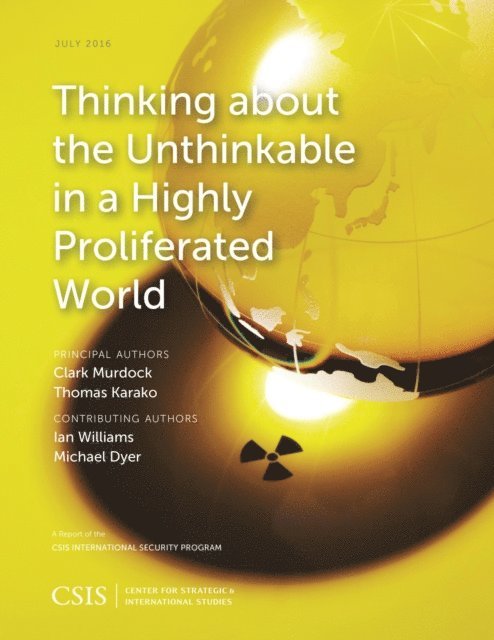
Thinking about the Unthinkable in a Highly Proliferated World
Av Clark Murdock, Thomas Karako
Häftad, 2016
559 kr
Lägg i varukorg
For decades, the United States has led the effort to stem the spread of nuclear weapons, both among potential adversaries and among its allies and partners. The current state of deterrence and of the nonproliferation regime, however, is open to many doubts. What happens if the nonproliferation …
Thinking about the Unthinkable in a Highly Proliferated World
Av Clark Murdock, Thomas Karako
E-bok, 2016
608 kr
Lägg i varukorg
For decades, the United States has led the effort to stem the spread of nuclear weapons, both among potential adversaries and among its allies and partners. The current state of deterrence and of the nonproliferation regime, however, is open to many doubts. What happens if the nonproliferation …
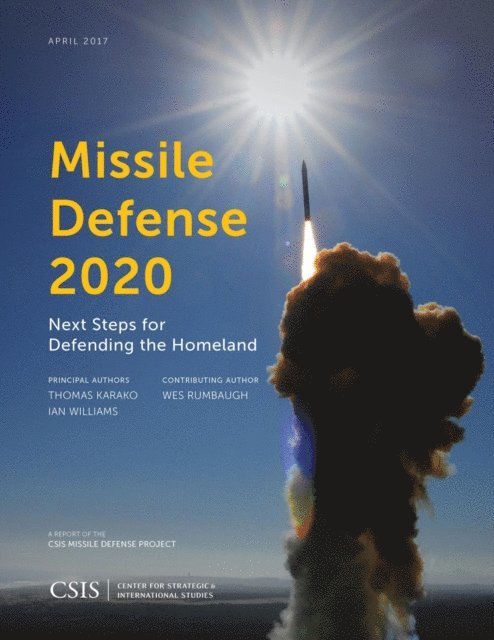
Missile Defense 2020
Next Steps for Defending the Homeland
Av Thomas Karako, Ian Williams
E-bok, 2017
745 kr
Lägg i varukorg
In policy pronouncements over the last two administrations, the protection of the American homeland was regularly identified as the first priority of U.S. missile defense efforts. Homeland missile defense today is provided by the Ground-based Midcourse Defense program and other elements of the …
Missile Defense and Defeat
Considerations for the New Policy Review
Häftad, 2017
559 kr
Lägg i varukorg
The National Defense Authorization Act of 2016 mandates a review of missile defeat policy, strategy, and capability to be completed by January 2018. This upcoming Missile Defeat Review (MDR) represents an opportunity for the Trump administration to articulate a vision for the future of air and …
Missile Defense and Defeat
Considerations for the New Policy Review
E-bok, 2017
608 kr
Lägg i varukorg
The National Defense Authorization Act of 2016 mandates a review of missile defeat policy, strategy, and capability to be completed by January 2018. This upcoming Missile Defeat Review (MDR) represents an opportunity for the Trump administration to articulate a vision for the future of air and …
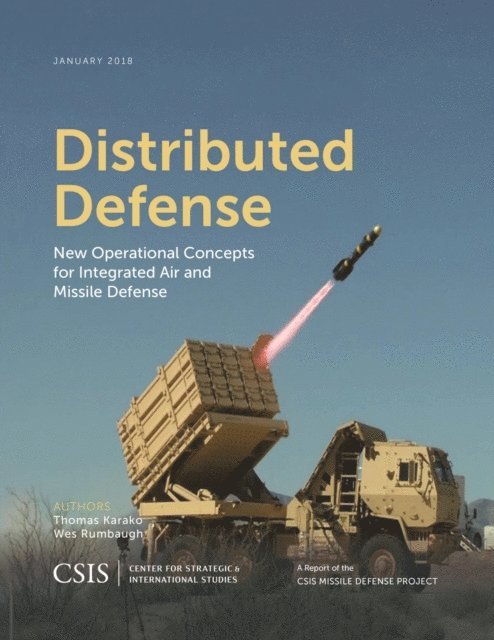
Distributed Defense
New Operational Concepts for Integrated Air and Missile Defense
Av Thomas Karako, Wes Rumbaugh
E-bok, 2017
667 kr
Lägg i varukorg
Despite the rising salience of missile threats, current air and missile defense forces are far too susceptible to suppression. Today’s U.S. air and missile defense (AMD) force lacks the depth, capacity, and operational flexibility to simultaneously perform both missions. Discussions about improving …