Thomas M. Alexander - Böcker
Visar alla böcker från författaren Thomas M. Alexander. Handla med fri frakt och snabb leverans.
4 produkter
4 produkter
326 kr
Skickas inom 10-15 vardagar
In addition to being one of the greatest technical philosophers of the twentieth century, John Dewey (1859-1952) was an educational innovator, a Progressive Era reformer, and one of America's last great public intellectuals. Dewey's insights into the problems of public education, immigration, the prospects for democratic government, and the relation of religious faith to science are as fresh today as when they were first published. His penetrating treatments of the nature and function of philosophy, the ethical and aesthetic dimensions of life, and the role of inquiry in human experience are of increasing relevance at the turn of the 21st century.Based on the award-winning 37-volume critical edition of Dewey's work, The Essential Dewey presents for the first time a collection of Dewey's writings that is both manageable and comprehensive. The volume includes essays and book chapters that exhibit Dewey's intellectual development over time; the selection represents his mature thinking on every major issue to which he turned his attention. Eleven part divisions cover: Dewey in Context; Reconstructing Philosophy; Evolutionary Naturalism; Pragmatic Metaphysics; Habit, Conduct, and Language; Meaning, Truth, and Inquiry; Valuation and Ethics; The Aims of Education; The Individual, the Community, and Democracy; Pragmatism and Culture: Science and Technology, Art and Religion; and Interpretations and Critiques. Taken as a whole, this collection provides unique access to Dewey's understanding of the problems and prospects of human existence and of the philosophical enterprise.
366 kr
Skickas inom 10-15 vardagar
In addition to being one of the greatest technical philosophers of the twentieth century, John Dewey (1859-1952) was an educational innovator, a Progressive Era reformer, and one of America's last great public intellectuals. Dewey's insights into the problems of public education, immigration, the prospects for democratic government, and the relation of religious faith to science are as fresh today as when they were first published. His penetrating treatments of the nature and function of philosophy, the ethical and aesthetic dimensions of life, and the role of inquiry in human experience are of increasing relevance at the turn of the 21st century.Based on the award-winning 37-volume critical edition of Dewey's work, The Essential Dewey presents for the first time a collection of Dewey's writings that is both manageable and comprehensive. The volume includes essays and book chapters that exhibit Dewey's intellectual development over time; the selection represents his mature thinking on every major issue to which he turned his attention. Eleven part divisions cover: Dewey in Context; Reconstructing Philosophy; Evolutionary Naturalism; Pragmatic Metaphysics; Habit, Conduct, and Language; Meaning, Truth, and Inquiry; Valuation and Ethics; The Aims of Education; The Individual, the Community, and Democracy; Pragmatism and Culture: Science and Technology, Art and Religion; and Interpretations and Critiques. Taken as a whole, this collection provides unique access to Dewey's understanding of the problems and prospects of human existence and of the philosophical enterprise.
458 kr
Skickas inom 10-15 vardagar
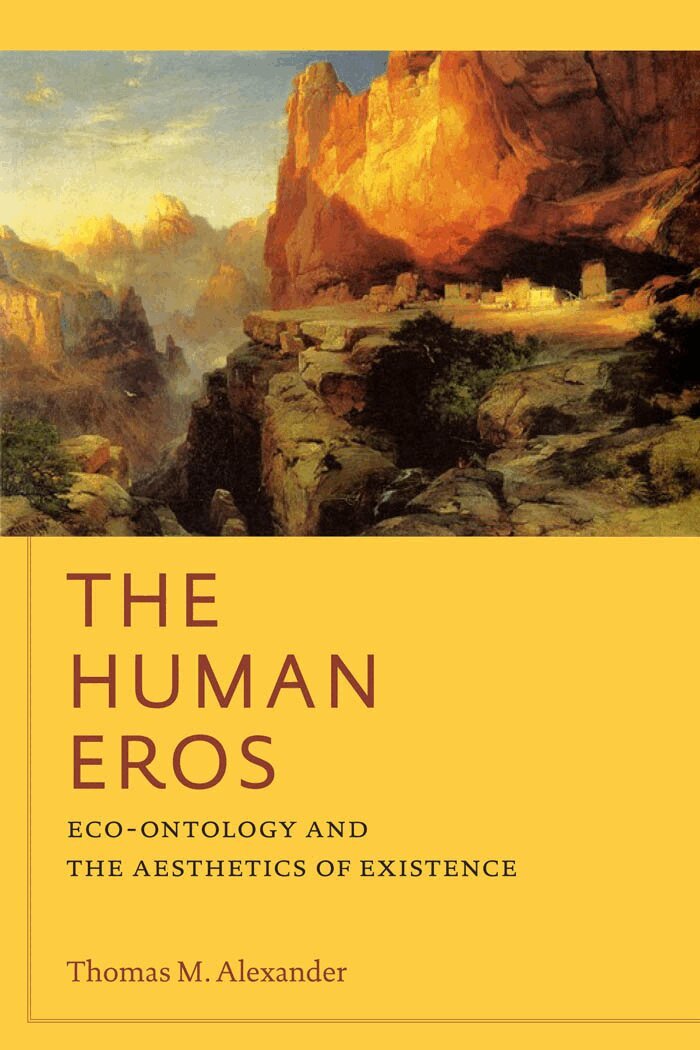
The Human Eros explores themes in classical American philosophy, primarily the thought of John Dewey, but also that of Ralph Waldo Emerson, George Santayana, and Native American traditions. Alexander's primary claim is that human beings have an inherent need to experience meaning and value, a "Human Eros." Ourvarious cultures are symbolic environments or "spiritual ecologies" within which the Human Eros seeks to thrive. This is how we inhabit the earth.Encircling and sustaining our cultural existence is nature, yet Western philosophy has not provided adequate conceptual models for thinking ecologically. Alexander introduces the idea of "eco-ontology" to explore ways in which this might be done, beginning with the primacy of Nature over Being but also including the recognition of possibility and potentiality as inherent aspects of existence. He argues for the centrality of Dewey's thought to an effective ecological philosophy. Both "pragmatism" and "naturalism," he shows, need to be contextualized within an emergentist, relational, nonreductive view of nature and an aesthetic, imaginative, nonreductive view of intelligence.
594 kr
Skickas inom 3-6 vardagar
Thomas Alexander shows that the primary, guiding concern of Dewey's philosophy is his theory of aesthetic experience. He directly challenges those critics, most notably Stephen Pepper and Benedetto Croce, who argued that this area is the least consistent part of Dewey's thought.The author demonstrates that the fundamental concept in Dewey's system is that of "experience" and that paradigmatic treatment of experience is to be found in Dewey's analysis of aesthetics and art. The confusions resulting from the neglect of this orientation have led to prolonged misunderstandings, eventual neglect, and unwarranted popularity for ideas at odds with the genuine thrust of Dewey's philosophical concerns. By exposing the underlying aesthetic foundations of Dewey's philosophy, Alexander aims to rectify many of these errors, generating a fruitful new interest in Dewey.