Thomas P. Ryan – författare
2 420 kr
Läs direkt efter köp
Using current research and discussion of the topic along with clear applications, Modern Experimental Design highlights the guiding role of statistical principles in experimental design construction. This text can serve as both an applied introduction as well as a concise review of the essential types of experimental designs and their applications.
Topical coverage includes designs containing one or multiple factors, designs with at least one blocking factor, split-unit designs and their variations as well as supersaturated and Plackett-Burman designs. In addition, the text contains extensive treatment of:
Conditional effects analysis as a proposed general method of analysis Multiresponse optimization Space-filling designs, including Latin hypercube and uniform designs Restricted regions of operability and debarred observations Analysis of Means (ANOM) used to analyze data from various types of designs The application of available software, including Design-Expert, JMP, and MINITABThis text provides thorough coverage of the topic while also introducing the reader to new approaches. Using a large number of references with detailed analyses of datasets, Modern Experimental Design works as a well-rounded learning tool for beginners as well as a valuable resource for practitioners.
Modern Regression Methods
1 940 kr
Skickas inom 5-8 vardagar
2 228 kr
Skickas inom 5-8 vardagar
418 kr
Skickas inom 5-8 vardagar
500 kr
Skickas inom 5-8 vardagar
2 594 kr
Läs direkt efter köp
Modern Engineering Statistics presents state-of-the-art statistical methodology germane to engineering applications. With a nice blend of methodology and applications, this book provides and carefully explains the concepts necessary for students to fully grasp and appreciate contemporary statistical techniques in the context of engineering.
With almost thirty years of teaching experience, many of which were spent teaching engineering statistics courses, the author has successfully developed a book that displays modern statistical techniques and provides effective tools for student use. This book features:
Examples demonstrating the use of statistical thinking and methodology for practicing engineers
A large number of chapter exercises that provide the opportunity for readers to solve engineering-related problems, often using real data sets
Clear illustrations of the relationship between hypothesis tests and confidence intervals
Extensive use of Minitab and JMP to illustrate statistical analyses
The book is written in an engaging style that interconnects and builds on discussions, examples, and methods as readers progress from chapter to chapter. The assumptions on which the methodology is based are stated and tested in applications. Each chapter concludes with a summary highlighting the key points that are needed in order to advance in the text, as well as a list of references for further reading. Certain chapters that contain more than a few methods also provide end-of-chapter guidelines on the proper selection and use of those methods. Bridging the gap between statistics education and real-world applications, Modern Engineering Statistics is ideal for either a one- or two-semester course in engineering statistics.
585 kr
Läs direkt efter köp
Modern Engineering Statistics presents state-of-the-art statistical methodology germane to engineering applications. With a nice blend of methodology and applications, this book provides and carefully explains the concepts necessary for students to fully grasp and appreciate contemporary statistical techniques in the context of engineering.
With almost thirty years of teaching experience, many of which were spent teaching engineering statistics courses, the author has successfully developed a book that displays modern statistical techniques and provides effective tools for student use. This book features:
Examples demonstrating the use of statistical thinking and methodology for practicing engineers
A large number of chapter exercises that provide the opportunity for readers to solve engineering-related problems, often using real data sets
Clear illustrations of the relationship between hypothesis tests and confidence intervals
Extensive use of Minitab and JMP to illustrate statistical analyses
The book is written in an engaging style that interconnects and builds on discussions, examples, and methods as readers progress from chapter to chapter. The assumptions on which the methodology is based are stated and tested in applications. Each chapter concludes with a summary highlighting the key points that are needed in order to advance in the text, as well as a list of references for further reading. Certain chapters that contain more than a few methods also provide end-of-chapter guidelines on the proper selection and use of those methods. Bridging the gap between statistics education and real-world applications, Modern Engineering Statistics is ideal for either a one- or two-semester course in engineering statistics.
Modern Regression Methods, Set
2 180 kr
Skickas
1 652 kr
Skickas inom 5-8 vardagar
Modern Experimental Design
2 077 kr
Skickas inom 5-8 vardagar
1 898 kr
Läs direkt efter köp
"As a comprehensive statistics reference book for quality improvement, it certainly is one of the best books available." —Technometrics
This new edition continues to provide the most current, proven statistical methods for quality control and quality improvement
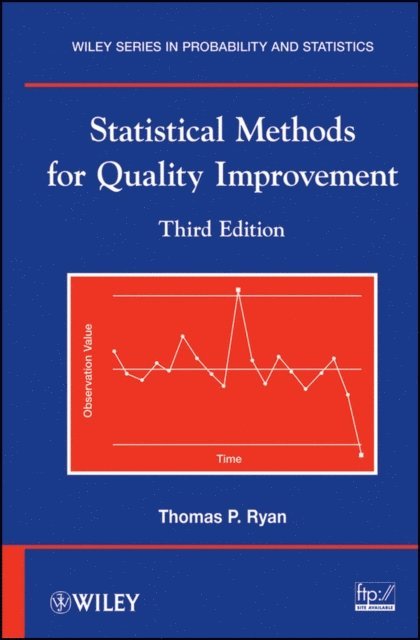
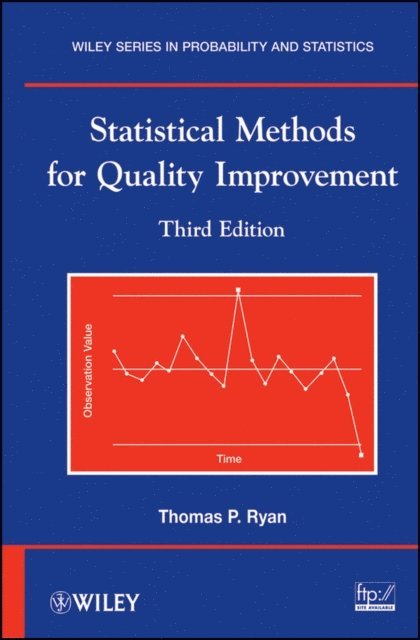
The use of quantitative methods offers numerous benefits in the fields of industry and business, both through identifying existing trouble spots and alerting management and technical personnel to potential problems. Statistical Methods for Quality Improvement, Third Edition guides readers through a broad range of tools and techniques that make it possible to quickly identify and resolve both current and potential trouble spots within almost any manufacturing or nonmanufacturing process. The book provides detailed coverage of the application of control charts, while also exploring critical topics such as regression, design of experiments, and Taguchi methods.
In this new edition, the author continues to explain how to combine the many statistical methods explored in the book in order to optimize quality control and improvement. The book has been thoroughly revised and updated to reflect the latest research and practices in statistical methods and quality control, and new features include:
Updated coverage of control charts, with newly added tools The latest research on the monitoring of linear profiles and other types of profiles Sections on generalized likelihood ratio charts and the effects of parameter estimation on the properties of CUSUM and EWMA procedures New discussions on design of experiments that include conditional effects and fraction of design space plots New material on Lean Six Sigma and Six Sigma programs and trainingIncorporating the latest software applications, the author has added coverage on how to use Minitab software to obtain probability limits for attribute charts. new exercises have been added throughout the book, allowing readers to put the latest statistical methods into practice. Updated references are also provided, shedding light on the current literature and providing resources for further study of the topic.
Statistical Methods for Quality Improvement, Third Edition is an excellent book for courses on quality control and design of experiments at the upper-undergraduate and graduate levels. the book also serves as a valuable reference for practicing statisticians, engineers, and physical scientists interested in statistical quality improvement.
1 898 kr
Läs direkt efter köp
"As a comprehensive statistics reference book for quality improvement, it certainly is one of the best books available." —Technometrics
This new edition continues to provide the most current, proven statistical methods for quality control and quality improvement
The use of quantitative methods offers numerous benefits in the fields of industry and business, both through identifying existing trouble spots and alerting management and technical personnel to potential problems. Statistical Methods for Quality Improvement, Third Edition guides readers through a broad range of tools and techniques that make it possible to quickly identify and resolve both current and potential trouble spots within almost any manufacturing or nonmanufacturing process. The book provides detailed coverage of the application of control charts, while also exploring critical topics such as regression, design of experiments, and Taguchi methods.
In this new edition, the author continues to explain how to combine the many statistical methods explored in the book in order to optimize quality control and improvement. The book has been thoroughly revised and updated to reflect the latest research and practices in statistical methods and quality control, and new features include:
Updated coverage of control charts, with newly added tools The latest research on the monitoring of linear profiles and other types of profiles Sections on generalized likelihood ratio charts and the effects of parameter estimation on the properties of CUSUM and EWMA procedures New discussions on design of experiments that include conditional effects and fraction of design space plots New material on Lean Six Sigma and Six Sigma programs and trainingIncorporating the latest software applications, the author has added coverage on how to use Minitab software to obtain probability limits for attribute charts. new exercises have been added throughout the book, allowing readers to put the latest statistical methods into practice. Updated references are also provided, shedding light on the current literature and providing resources for further study of the topic.
Statistical Methods for Quality Improvement, Third Edition is an excellent book for courses on quality control and design of experiments at the upper-undergraduate and graduate levels. the book also serves as a valuable reference for practicing statisticians, engineers, and physical scientists interested in statistical quality improvement.
Sample Size Determination and Power
1 337 kr
Skickas inom 5-8 vardagar
1 566 kr
Läs direkt efter köp
A comprehensive approach to sample size determination and power with applications for a variety of fields
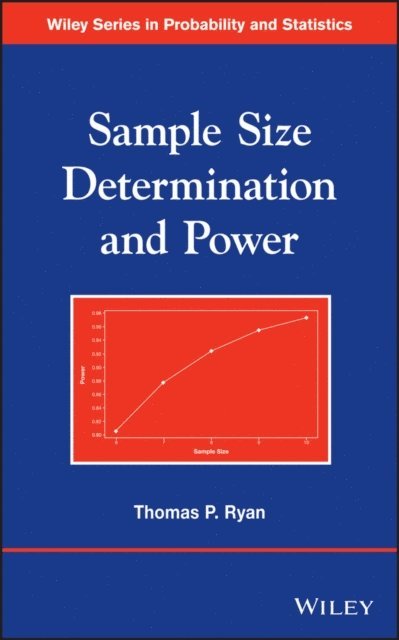
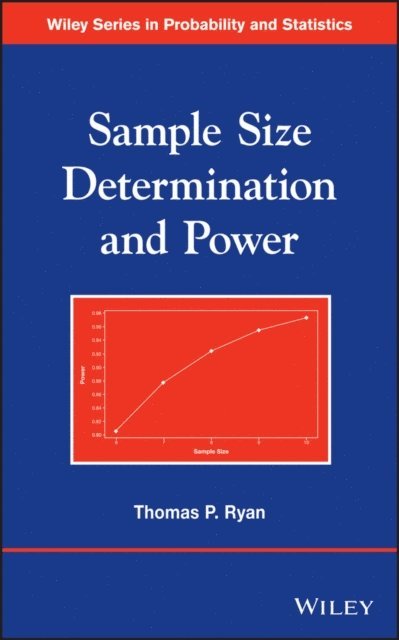
Sample Size Determination and Power features a modern introduction to the applicability of sample size determination and provides a variety of discussions on broad topics including epidemiology, microarrays, survival analysis and reliability, design of experiments, regression, and confidence intervals.
The book distinctively merges applications from numerous fields such as statistics, biostatistics, the health sciences, and engineering in order to provide a complete introduction to the general statistical use of sample size determination. Advanced topics including multivariate analysis, clinical trials, and quality improvement are addressed, and in addition, the book provides considerable guidance on available software for sample size determination. Written by a well-known author who has extensively class-tested the material, Sample Size Determination and Power:
Highlights the applicability of sample size determination and provides extensive literature coverage Presents a modern, general approach to relevant software to guide sample size determination including CATD (computer-aided trial design) Addresses the use of sample size determination in grant proposals and provides up-to-date references for grant investigatorsAn appealing reference book for scientific researchers in a variety of fields, such as statistics, biostatistics, the health sciences, mathematics, ecology, and geology, who use sampling and estimation methods in their work, Sample Size Determination and Power is also an ideal supplementary text for upper-level undergraduate and graduate-level courses in statistical sampling.
1 566 kr
Läs direkt efter köp
A comprehensive approach to sample size determination and power with applications for a variety of fields
Sample Size Determination and Power features a modern introduction to the applicability of sample size determination and provides a variety of discussions on broad topics including epidemiology, microarrays, survival analysis and reliability, design of experiments, regression, and confidence intervals.
The book distinctively merges applications from numerous fields such as statistics, biostatistics, the health sciences, and engineering in order to provide a complete introduction to the general statistical use of sample size determination. Advanced topics including multivariate analysis, clinical trials, and quality improvement are addressed, and in addition, the book provides considerable guidance on available software for sample size determination. Written by a well-known author who has extensively class-tested the material, Sample Size Determination and Power:
Highlights the applicability of sample size determination and provides extensive literature coverage Presents a modern, general approach to relevant software to guide sample size determination including CATD (computer-aided trial design) Addresses the use of sample size determination in grant proposals and provides up-to-date references for grant investigatorsAn appealing reference book for scientific researchers in a variety of fields, such as statistics, biostatistics, the health sciences, mathematics, ecology, and geology, who use sampling and estimation methods in their work, Sample Size Determination and Power is also an ideal supplementary text for upper-level undergraduate and graduate-level courses in statistical sampling.