Thomas P. Scheck – författare
Visar alla böcker från författaren Thomas P. Scheck. Handla med fri frakt och snabb leverans.
7 produkter
7 produkter
Inbunden, Engelska, 2008
860 kr
Skickas inom 5-8 vardagar
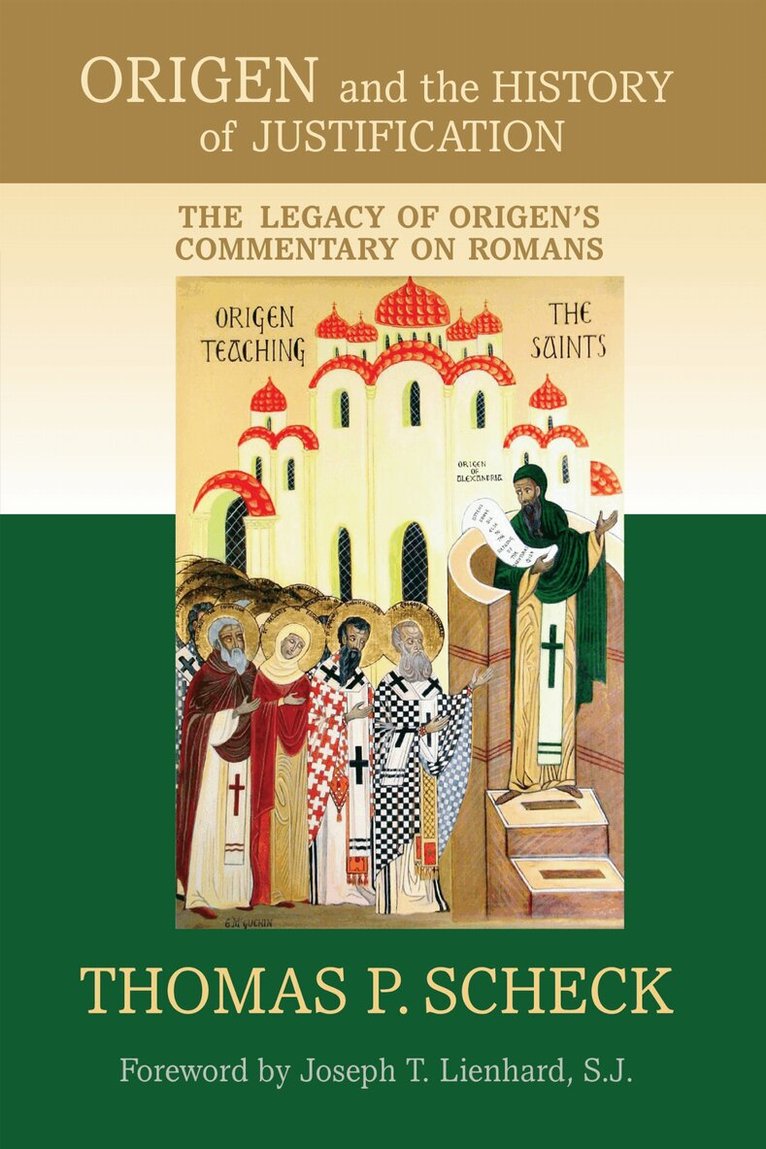
Standard accounts of the history of interpretation of Paul's Letter to the Romans often begin with St. Augustine. As Thomas P. Scheck demonstrates, however, the Commentary on the Epistle to the Romans by Origen of Alexandria (185-254 CE) was a major work of Pauline exegesis which, by means of the Latin translation preserved in the West, had a significant influence on the Christian exegetical tradition. Scheck begins by exploring Origen's views on justification and on the intimate connection of faith and post-baptismal good works as essential to justification. He traces the enormous influence Origen's Commentary on Romans had on later theologians in the Latin West, including the ways in which theologians often appropriated Origen's exegesis in their own work. Scheck analyzes in particular the reception of Origen by Pelagius, Augustine, William of St. Thierry, Erasmus, Cornelius Jansen, the Anglican Bishop Richard Montagu, and the Catholic lay apologist John Heigham, as well as Martin Luther, Philip Melanchthon, and other Protestant Reformers who harshly attacked Origen's interpretation as fatally flawed. But as Scheck shows, theologians through the post-Reformation controversies of the sixteenth and seventeenth centuries studied and engaged Origen extensively, even if not always in agreement. An important work in patristics, biblical interpretation, and historical theology, Origen and the History of Justification establishes the formative role played by Origen's Pauline exegesis, while also contributing to our understanding of the theological issues surrounding justification in the western Christian tradition.
Häftad, Engelska, 2016
274 kr
Skickas inom 5-8 vardagar
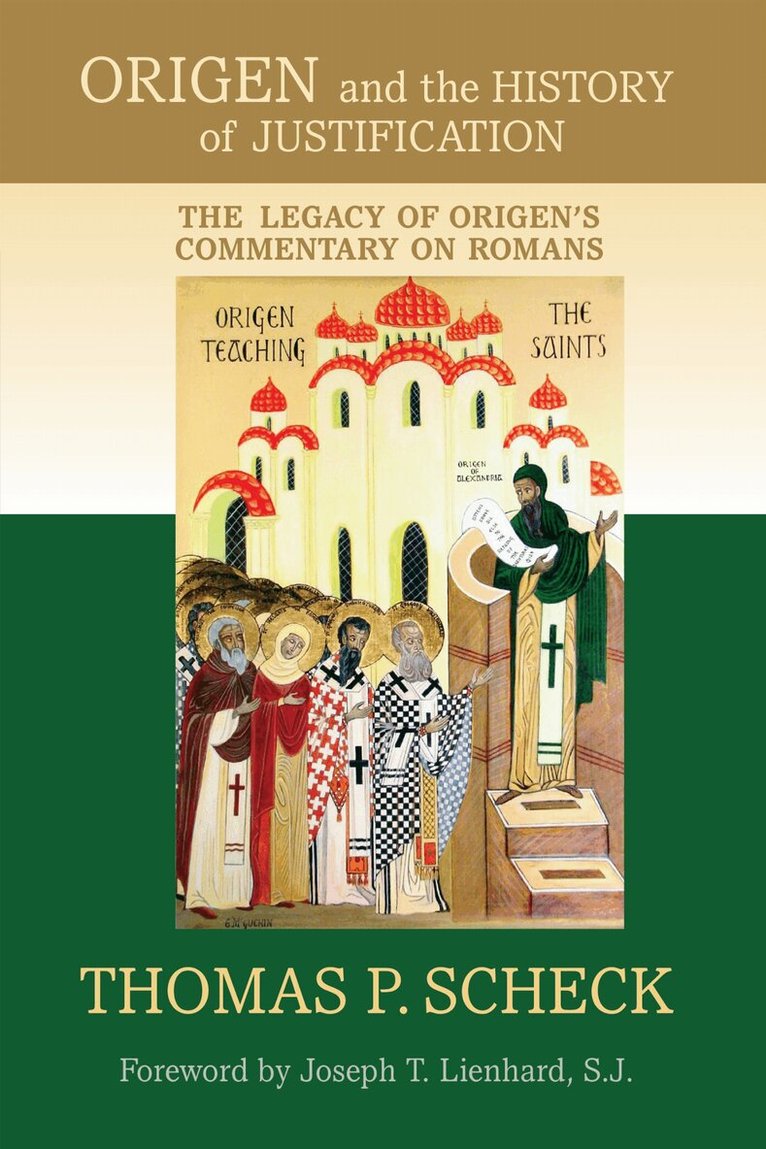
Standard accounts of the history of interpretation of Paul's Letter to the Romans often begin with St. Augustine. As Thomas P. Scheck demonstrates, however, the Commentary on the Epistle to the Romans by Origen of Alexandria (185-254 CE) was a major work of Pauline exegesis which, by means of the Latin translation preserved in the West, had a significant influence on the Christian exegetical tradition. Scheck begins by exploring Origen's views on justification and on the intimate connection of faith and post-baptismal good works as essential to justification. He traces the enormous influence Origen's Commentary on Romans had on later theologians in the Latin West, including the ways in which theologians often appropriated Origen's exegesis in their own work. Scheck analyzes in particular the reception of Origen by Pelagius, Augustine, William of St. Thierry, Erasmus, Cornelius Jansen, the Anglican Bishop Richard Montagu, and the Catholic lay apologist John Heigham, as well as Martin Luther, Philip Melanchthon, and other Protestant Reformers who harshly attacked Origen's interpretation as fatally flawed. But as Scheck shows, theologians through the post-Reformation controversies of the sixteenth and seventeenth centuries studied and engaged Origen extensively, even if not always in agreement. An important work in patristics, biblical interpretation, and historical theology, Origen and the History of Justification establishes the formative role played by Origen's Pauline exegesis, while also contributing to our understanding of the theological issues surrounding justification in the western Christian tradition.
Inbunden, Engelska, 2021
699 kr
Skickas inom 3-6 vardagar
Häftad, Engelska, 2009
752 kr
Skickas inom 5-8 vardagar
Häftad, Engelska, 2016
752 kr
Skickas inom 5-8 vardagar
Häftad, Engelska, 2017
699 kr
Skickas inom 3-6 vardagar
E-bok
Engelska, 2016689 kr
Läs direkt efter köp
Jerome (c. 347-419/20), one of the West''s four doctors of the church, was recognized early on as one of the church''s foremost translators, commentators and advocates of Christian asceticism. Skilled in Hebrew and Greek in addition to his native Latin, he was thoroughly familiar with Jewish traditions and brought them to bear on his understanding of the Old Testament. Beginning in 379, Jerome used his considerable linguistic skills to translate Origen''s commentaries and, eventually, to translate and comment on Scripture himself.In 392, while preparing his Latin Vulgate translation of the Bible, Jerome wrote his commentary on Nahum, the first in a series of commentaries on five of the twelve minor prophets. Micah, Zephaniah, Haggai and Habakkuk soon followed. He was interrupted in 393 by the Origenist controversy, after which he became a vocal critic of Origen of Alexandria—a controversy he referred to in his commentaries on Jonah and Obadiah in 396.This Ancient Christian Texts volume, edited and translated by Thomas Scheck in collaboration with classics students from Ave Maria University, includes these seven commentaries. The second volume contains Jerome''s commentaries on Zechariah, Malachi, Hosea, Joel and Amos, all of which were written in 406, completing the group of twelve prophets.Throughout these commentaries Jerome displays his familiarity with both Hebrew and Greek texts. His spiritual exegesis relies heavily on the exegetical work of Origen. Jerome looks beyond the nationalistic sentiments of the prophets to see a wider message about God''s mercy and justice. His commitment to the truthfulness of the Scriptures as the Word of God is exemplified by his defense of the historicity of Jonah. He finds the fundamental message of the prophets to be the intent to console the saints, so that they may disdain the things of this world and prepare themselves for the day of judgment.Ancient Christian Texts are new English translations of full-length commentaries or sermon series from ancient Christian authors that allow you to study key writings of the early church fathers in a fresh way.