Thomas Pavel - Böcker
Visar alla böcker från författaren Thomas Pavel. Handla med fri frakt och snabb leverans.
3 produkter
3 produkter
1 215 kr
Tillfälligt slut
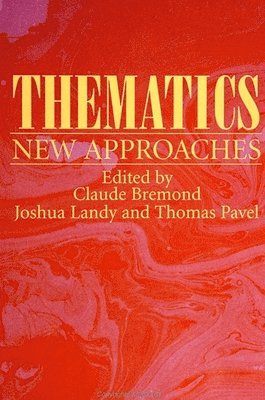
This book aims at refocusing critical reflection on thematics in the arts, a topic that has been neglected recently. The volume is divided into four sections: theoretical essays, applications to literature, reflections on thematics in music and the visual arts, and a conclusion.The contributors, of international reputation, include Jean-Yves Bosseur, Claude Bremond, Menachem Brinker, Peter Cryle, Lubomír Dolezel, Françoise Escal, Thomas Pavel, Shlomith Rimmon-Kenan, Georges Roque, Jean-Marie Schaeffer, Cesare Segre, and Werner Sollars. In the theoretical section, the authors assess the need for new thematics, relate thematics to structural analysis and interpretation, and sketch a history of the discipline. The second section contains three applications to literature and examines the theme of the double, the Faustian literary theme, and the relation between literary theme and plot. The third section includes essays on classical music, modern music, and painting. The volume concludes with an essay on the aesthetic implications of thematic studies. The contributors answer questions about the nature of themes in general, and what would constitute a modern theory of literary themes.
651 kr
Skickas inom 3-6 vardagar
This book aims at refocusing critical reflection on thematics in the arts, a topic that has been neglected recently. The volume is divided into four sections: theoretical essays, applications to literature, reflections on thematics in music and the visual arts, and a conclusion.The contributors, of international reputation, include Jean-Yves Bosseur, Claude Bremond, Menachem Brinker, Peter Cryle, Lubomír Dolezel, Françoise Escal, Thomas Pavel, Shlomith Rimmon-Kenan, Georges Roque, Jean-Marie Schaeffer, Cesare Segre, and Werner Sollars. In the theoretical section, the authors assess the need for new thematics, relate thematics to structural analysis and interpretation, and sketch a history of the discipline. The second section contains three applications to literature and examines the theme of the double, the Faustian literary theme, and the relation between literary theme and plot. The third section includes essays on classical music, modern music, and painting. The volume concludes with an essay on the aesthetic implications of thematic studies. The contributors answer questions about the nature of themes in general, and what would constitute a modern theory of literary themes.
325 kr
Skickas inom 7-10 vardagar
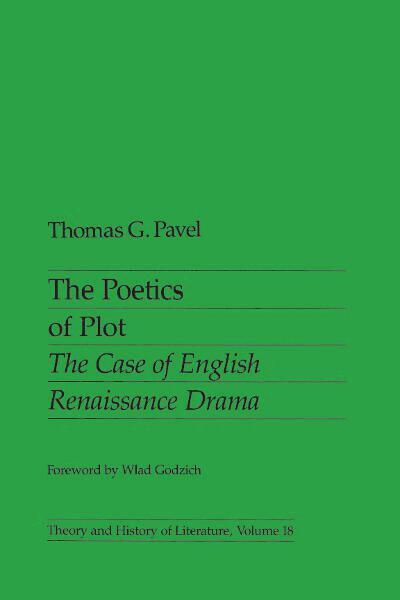
Thomas Pavel has written extensively on poetics, linguistics, and narratology. In this book he proposes an original theory and methodology of plot analysis-a reading that draws upon the most fruitful aspects of literary structuralism and upon contemporary linguistic models (specifically generative grammar). Theorists have tended to use formal plot analysis to examine relatively simple literary artifacts, like folk tales and short stories; Pavel, however, applies his model to a group of English Renaissance tragedies and demonstrates that plot analysis can make a major contribution to the understanding of sophisticated literary texts.Pavel leads the reader through step-by-step analyses of increasingly complex plot structures as he explicates Marlowe’s Tamburlaine I, the Jew of Malta, Doctor Faustus and Edward the Second; Kyd’s Spanish Tragedy; The Arden Feversham; and, finally, Shakespeare’s King Lear. He has chosen these plays for their chronological proximity, yet their diversity allows for contrasts and typological considerations. The inclusion of most of Marlowe’s tragedies enables Pavel to gain new insights into a single writer’s strategies of plot construction.The Poetics of Plot moves beyond the establishment and application of a new theory of plot to address broader issues in cultural studies: the role of linguistic models in literary studies, the nature and function of agency in plot advancement and history, the universal features of plot organization, and the relation of plot patterns to period styles and dominant modes of organized knowledge. In his foreword to The Poetics of Plot, Wlad Godzich sketches the historical context in which Pavel’s discussion of plot appears and makes explicit the way that the study of plot challenges both the presuppositions of linguistic analysis and the status of action in philosophical thought.