Thomas T. Veblen – författare
Visar alla böcker från författaren Thomas T. Veblen. Handla med fri frakt och snabb leverans.
5 produkter
5 produkter
E-bok
PDF, Engelska, 20151 076 kr
Läs direkt efter köp
The Physical Geography of South America, the eighth volume in the Oxford Regional Environments series, presents an enduring statement on the physical and biogeographic conditions of this remarkable continent and their relationships to human activity. It fills a void in recent environmental literature by assembling a team of specialists from within and beyond South America in order to provide an integrated, cross-disciplinary body of knowledge about this mostly tropical continent, together with its high mountains and temperate southern cone. The authors systematically cover the main components of the South American environment - tectonism, climate, glaciation, natural landscape changes, rivers, vegetation, animals, and soils. The book then presents more specific treatments of regions with special attributes from the tropical forests of the Amazon basin to the Atacama Desert and Patagonian steppe, and from the Atlantic, Caribbean, and Pacific coasts to the high Andes. Additionally, the continents environments are given a human face by evaluating the roles played by people over time, from pre-European and European colonial impacts to the effects of modern agriculture and urbanization, and from interactions with El Niño events to prognoses for the future environments of the continent.
Inbunden, Engelska, 1996
1 207 kr
Skickas inom 5-8 vardagar
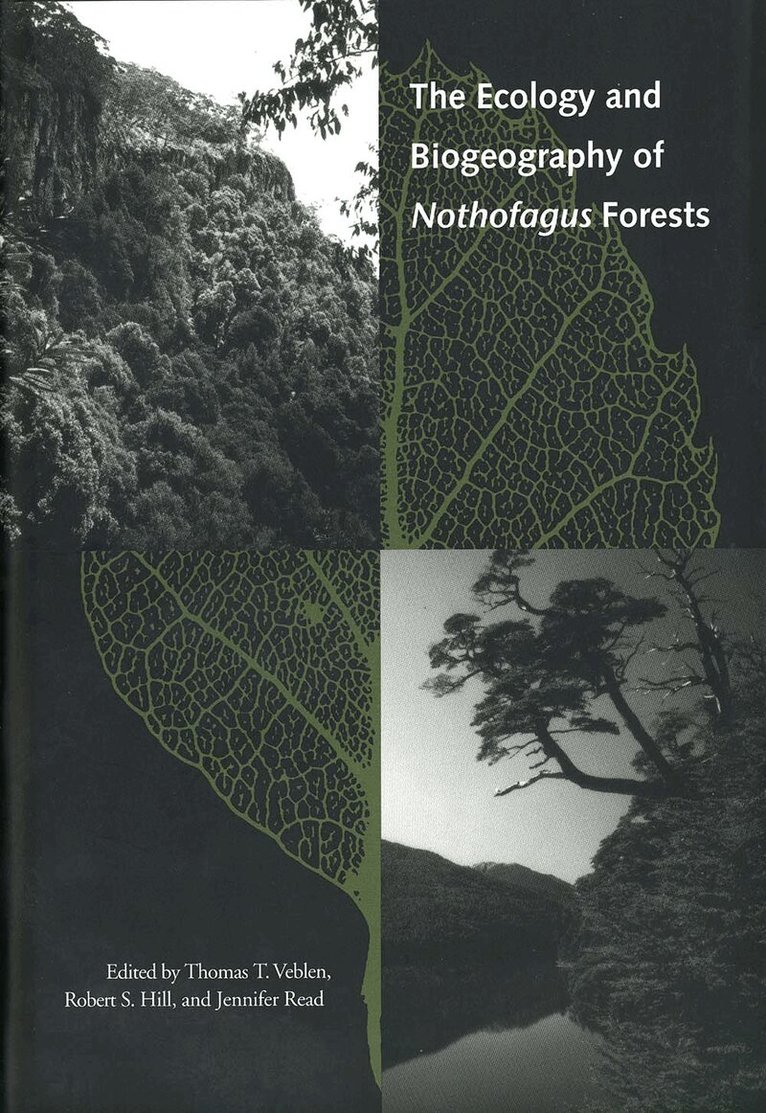
Ecologists and biogeographers have been intrigued for a long time by the striking similarity of the vegetation and flora of southern temperate zone regions separated by large oceans. These scientists have been particularly interested in the occurrence in these regions of Nothofagus--southern beeches. This book, which focuses on the distribution, history, and ecology of the genus Nothofagus, provides a key to understanding the historical plant geography and modern vegetation patterns of the southern hemisphere.The book begins with a discussion of the long-term and broad-scale patterns of origin and differentiation in the genus. Next each major Nothofagus biome is discussed, first in a chapter that considers contemporary ecological patterns and then in a chapter that focuses on the history and paleoecology of the region. Authorities in the field deal with the temperate zone of the southwest Pacific region (New Zealand and Australia); the adjacent tropical zone of the southwest Pacific (New Guinea and New Caledonia); and South America, ranging from the Mediterranean-type climate region of central Chile to the subantarctic latitudes of Tierra del Fuego.
E-bok
PDF, Engelska, 20062 049 kr
Läs direkt efter köp
Both fire and climatic variability have monumental impacts on the dynamics of temperate ecosystems. These impacts can sometimes be extreme or devastating as seen in recent El Nino/La Nina cycles and in uncontrolled fire occurrences. This volume brings together research conducted in western North and South America, areas of a great deal of collaborative work on the influence of people and climate change on fire regimes. In order to give perspective to patterns of change over time, it emphasizes the integration of paleoecological studies with studies of modern ecosystems. Data from a range of spatial scales, from individual plants to communities and ecosystems to landscape and regional levels, are included. Contributions come from fire ecology, paleoecology, biogeography, paleoclimatology, landscape and ecosystem ecology, ecological modeling, forest management, plant community ecology and plant morphology. The book gives a synthetic overview of methods, data and simulation models for evaluating fire regime processes in forests, shrublands and woodlands and assembles case studies of fire, climate and land use histories. The unique approach of this book gives researchers the benefits of a north-south comparison as well as the integration of paleoecological histories, current ecosystem dynamics and modeling of future changes.
Del 160 - Ecological Studies
Fire and Climatic Change in Temperate Ecosystems of the Western Americas
Inbunden, Engelska, 2002
1 671 kr
Skickas inom 10-15 vardagar
Both fire and climatic variability have monumental impacts on the dynamics of temperate ecosystems. These impacts can sometimes be extreme or devastating as seen in recent El Nino/La Nina cycles and in uncontrolled fire occurrences. This volume brings together research conducted in western North and South America, areas of a great deal of collaborative work on the influence of people and climate change on fire regimes. In order to give perspective to patterns of change over time, it emphasizes the integration of paleoecological studies with studies of modern ecosystems. Data from a range of spatial scales, from individual plants to communities and ecosystems to landscape and regional levels, are included. Contributions come from fire ecology, paleoecology, biogeography, paleoclimatology, landscape and ecosystem ecology, ecological modeling, forest management, plant community ecology and plant morphology. The book gives a synthetic overview of methods, data and simulation models for evaluating fire regime processes in forests, shrublands and woodlands and assembles case studies of fire, climate and land use histories. The unique approach of this book gives researchers the benefits of a north-south comparison as well as the integration of paleoecological histories, current ecosystem dynamics and modeling of future changes.
Del 160 - Ecological Studies
Fire and Climatic Change in Temperate Ecosystems of the Western Americas
Häftad, Engelska, 2013
1 623 kr
Skickas inom 10-15 vardagar
Both fire and climatic variability have monumental impacts on the dynamics of temperate ecosystems. These impacts can sometimes be extreme or devastating as seen in recent El Nino/La Nina cycles and in uncontrolled fire occurrences. This volume brings together research conducted in western North and South America, areas of a great deal of collaborative work on the influence of people and climate change on fire regimes. In order to give perspective to patterns of change over time, it emphasizes the integration of paleoecological studies with studies of modern ecosystems. Data from a range of spatial scales, from individual plants to communities and ecosystems to landscape and regional levels, are included. Contributions come from fire ecology, paleoecology, biogeography, paleoclimatology, landscape and ecosystem ecology, ecological modeling, forest management, plant community ecology and plant morphology. The book gives a synthetic overview of methods, data and simulation models for evaluating fire regime processes in forests, shrublands and woodlands and assembles case studies of fire, climate and land use histories. The unique approach of this book gives researchers the benefits of a north-south comparison as well as the integration of paleoecological histories, current ecosystem dynamics and modeling of future changes.