Tiina Seppälä - Böcker
Visar alla böcker från författaren Tiina Seppälä. Handla med fri frakt och snabb leverans.
6 produkter
6 produkter
2 166 kr
Skickas inom 10-15 vardagar
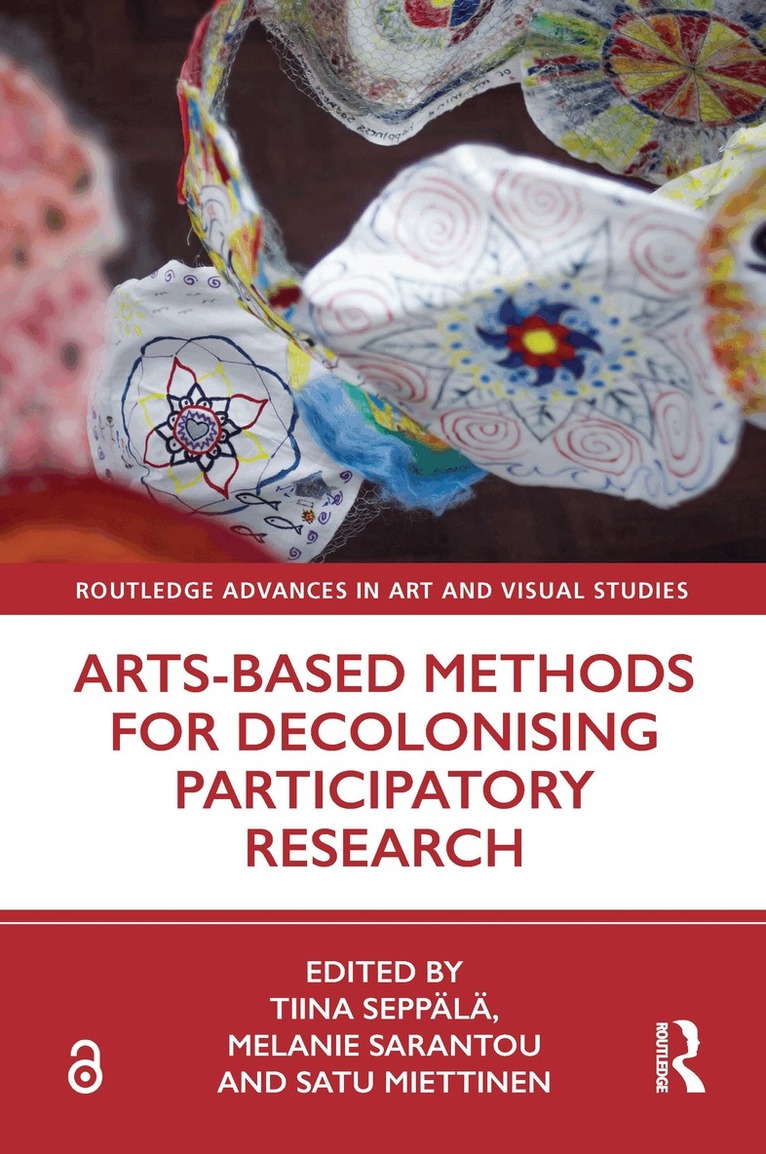
In an effort to challenge the ways in which colonial power relations and Eurocentric knowledges are reproduced in participatory research, this book explores whether and how it is possible to use arts-based methods for creating more horizontal and democratic research practices.In discussing both the transformative potential and limitations of arts-based methods, the book asks: What can arts-based methods contribute to decolonising participatory research and its processes and practices? The book takes part in ongoing debates related to the need to decolonise research, and investigates practical contributions of arts-based methods in the practice-led research domain. Further, it discusses the role of artistic research in depth, locating it in a decolonising context.The book will be of interest to scholars working in art history, design, fine arts, service design, social sciences and development studies.The Open Access version of this book, available at http://www.taylorfrancis.com, has been made available under a Creative Commons Attribution-Non Commercial 4.0 license.
598 kr
Skickas inom 10-15 vardagar
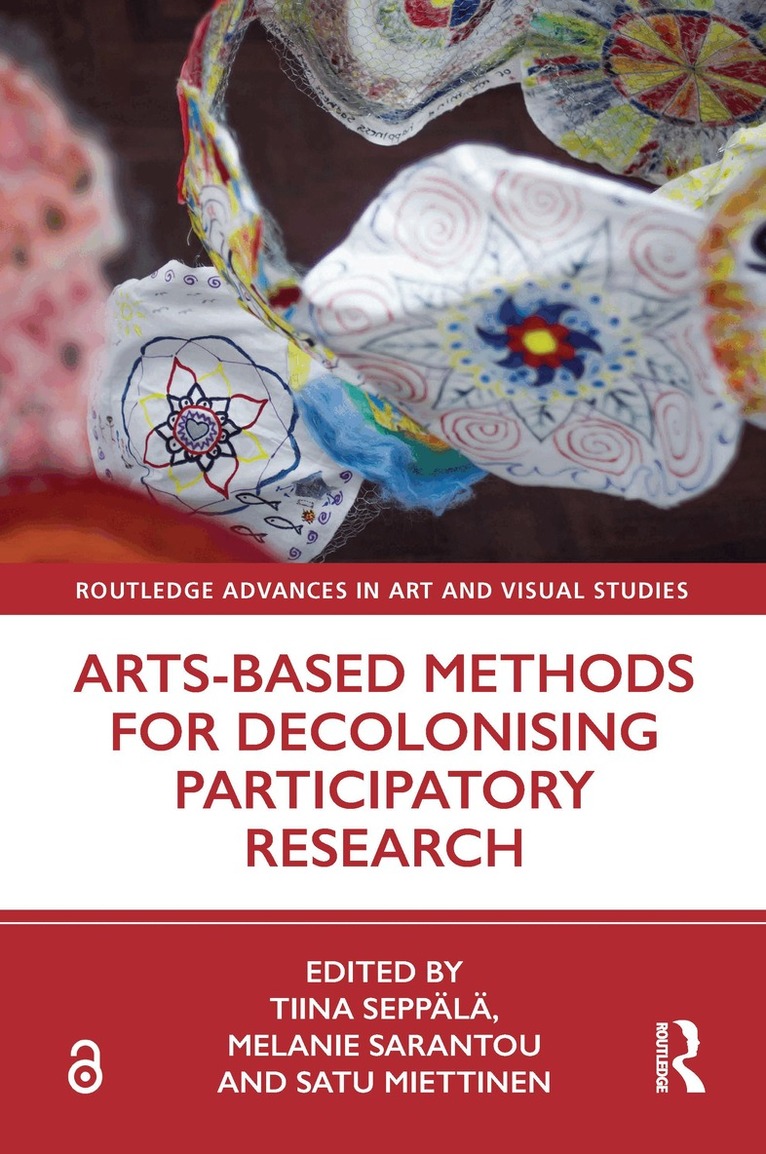
In an effort to challenge the ways in which colonial power relations and Eurocentric knowledges are reproduced in participatory research, this book explores whether and how it is possible to use arts-based methods for creating more horizontal and democratic research practices.In discussing both the transformative potential and limitations of arts-based methods, the book asks: What can arts-based methods contribute to decolonising participatory research and its processes and practices? The book takes part in ongoing debates related to the need to decolonise research, and investigates practical contributions of arts-based methods in the practice-led research domain. Further, it discusses the role of artistic research in depth, locating it in a decolonising context.The book will be of interest to scholars working in art history, design, fine arts, service design, social sciences and development studies.The Open Access version of this book, available at http://www.taylorfrancis.com, has been made available under a Creative Commons Attribution-Non Commercial 4.0 license.
Globalizing Resistance against War
Theories of Resistance and the New Anti-War Movement
Inbunden, Engelska, 2012
649 kr
Skickas inom 10-15 vardagar
The political revival of the anti-war movement after 9/11 launched a controversial debate on global resistance. Through detailed study of the anti-war movement in Britain, this book critically evaluates the theoretical debate from the perspective of ‘critical theory in political practice’.This book presents new arguments and theoretical framework to consider globalized resistance to war. In an attempt to develop the theoretical debate further, this book analyses two strands of current thought; liberal cosmopolitanism which considers the movement a consensual force of opposition against war in the form of global civil society, and radical poststructuralism which speaks of the Multitude’s ‘war against war’.. Including detailed empirical case study of four anti-war organizations; the Stop the War Coalition, the Campaign for Nuclear Disarmament, Globalise Resistance and War Resisters’ International, the author illustrates the limitations of the abstract nature of current theorizing and highlights the need for theory to be more engaged with political practice. While revealing tensions and conflicts within the new anti-war movement, the study not only underlines the need to critically analyse the dominant theoretical discourses but also suggests that the movement would benefit from a more open discussion about the complex relationship between unity and diversity.Globalizing Resistance against War is invaluable reading for students and scholars of International Sociology, International Relations, War and Peace Studies, International Theory and Political Theory.
2 103 kr
Skickas inom 10-15 vardagar
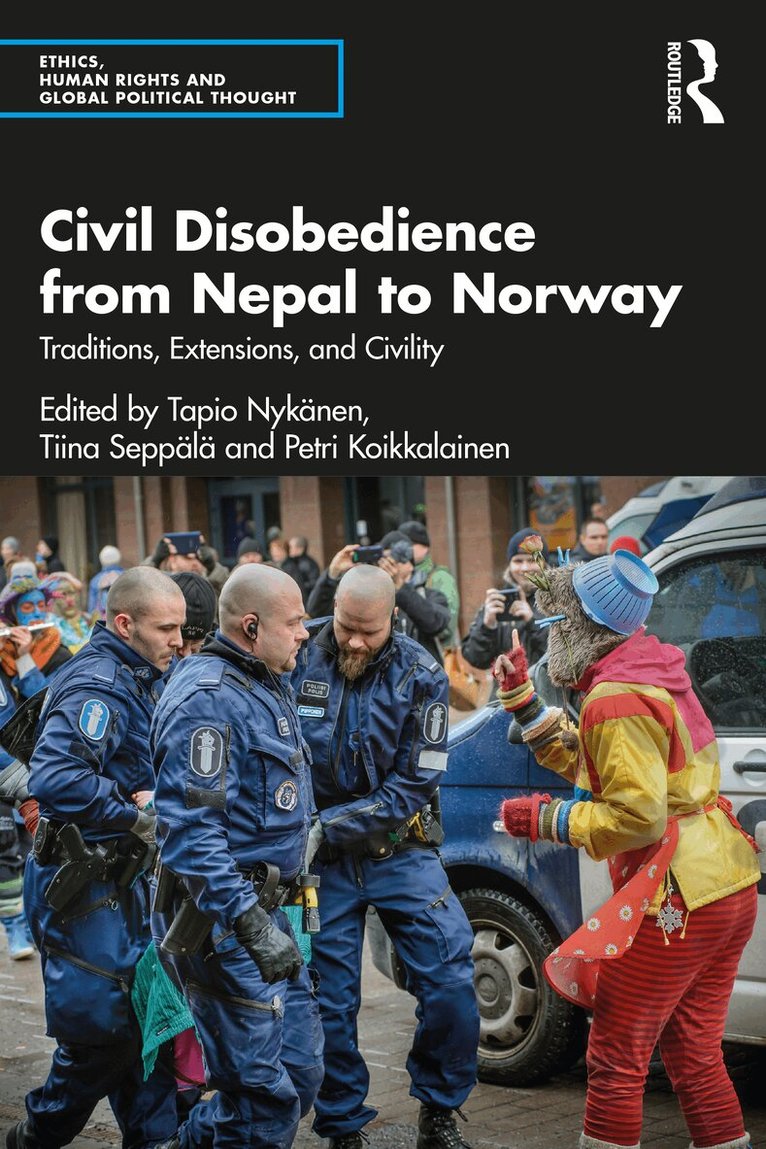
This volume explores the shifts in how civil disobedience has come to be theorized, defined, understood, and practised in contemporary politics. As social activism takes increasingly global forms, the goals of individuals and groups who view themselves as disobedient activists today can be defined in broader cultural terms than before, and their relationship to law and violence can be ambiguous.Civil disobedience may no longer be entirely nonviolent, its purposes no longer necessarily serve progressive or emancipatory agendas. Its manifestations often blur the lines established in “classic”, philosophically justified, and self-regulatory forms as epitomised in mass nonviolent protests of Mahatma Gandhi and Martin Luther King and theories of Arendt, Rawls and Dworkin. How civil disobedience operates has changed over the years, and this volume unpacks its many contemporary lives. It discusses new theoretical and political dilemmas and paradoxes through empirical cases and practical examples from Europe, the United States, and South Asia, which enables a “mirroring” perspective for the challenges and complexities of civil disobedience in different parts of the world.Bringing together innovative and introspective perspectives on people and protests in contemporary political contexts, this volume will be of great interest to scholars and philosophers of political science, international relations theory, political philosophy, peace and conflict studies, sociology, and cultural studies.
563 kr
Skickas inom 10-15 vardagar
This volume explores the shifts in how civil disobedience has come to be theorized, defined, understood, and practised in contemporary politics. As social activism takes increasingly global forms, the goals of individuals and groups who view themselves as disobedient activists today can be defined in broader cultural terms than before, and their relationship to law and violence can be ambiguous.Civil disobedience may no longer be entirely nonviolent, its purposes no longer necessarily serve progressive or emancipatory agendas. Its manifestations often blur the lines established in “classic”, philosophically justified, and self-regulatory forms as epitomised in mass nonviolent protests of Mahatma Gandhi and Martin Luther King and theories of Arendt, Rawls and Dworkin. How civil disobedience operates has changed over the years, and this volume unpacks its many contemporary lives. It discusses new theoretical and political dilemmas and paradoxes through empirical cases and practical examples from Europe, the United States, and South Asia, which enables a “mirroring” perspective for the challenges and complexities of civil disobedience in different parts of the world.Bringing together innovative and introspective perspectives on people and protests in contemporary political contexts, this volume will be of great interest to scholars and philosophers of political science, international relations theory, political philosophy, peace and conflict studies, sociology, and cultural studies.
Globalizing Resistance against War
Theories of Resistance and the New Anti-War Movement
Häftad, Engelska, 2015
332 kr
Skickas inom 10-15 vardagar
The political revival of the anti-war movement after 9/11 launched a controversial debate on global resistance. Through detailed study of the anti-war movement in Britain, this book critically evaluates the theoretical debate from the perspective of ‘critical theory in political practice’.This book presents new arguments and theoretical framework to consider globalized resistance to war. In an attempt to develop the theoretical debate further, this book analyses two strands of current thought; liberal cosmopolitanism which considers the movement a consensual force of opposition against war in the form of global civil society, and radical poststructuralism which speaks of the Multitude’s ‘war against war’.. Including detailed empirical case study of four anti-war organizations; the Stop the War Coalition, the Campaign for Nuclear Disarmament, Globalise Resistance and War Resisters’ International, the author illustrates the limitations of the abstract nature of current theorizing and highlights the need for theory to be more engaged with political practice. While revealing tensions and conflicts within the new anti-war movement, the study not only underlines the need to critically analyse the dominant theoretical discourses but also suggests that the movement would benefit from a more open discussion about the complex relationship between unity and diversity.Globalizing Resistance against War is invaluable reading for students and scholars of International Sociology, International Relations, War and Peace Studies, International Theory and Political Theory.