Tim Boersma – författare
Visar alla böcker från författaren Tim Boersma. Handla med fri frakt och snabb leverans.
11 produkter
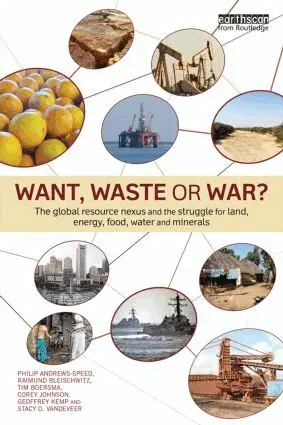
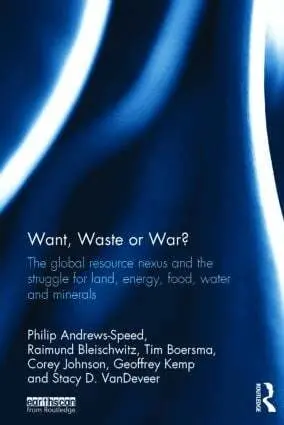
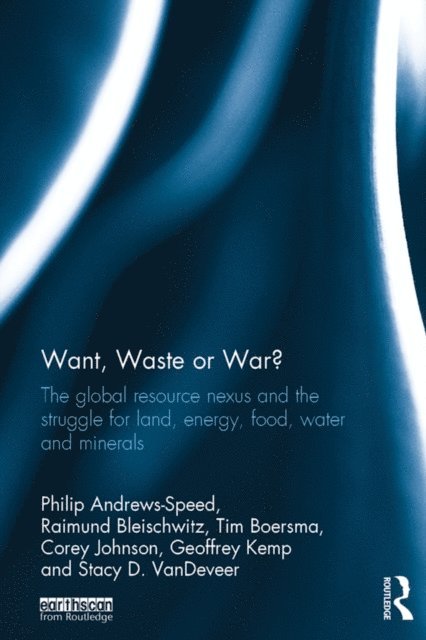
Want, Waste or War?
The Global Resource Nexus and the Struggle for Land, Energy, Food, Water and Minerals
Av Philip Andrews-Speed, Raimund Bleischwitz m. fl.
Häftad, 2014
824 kr
Lägg i varukorg
In addition to environmental change, the structure and trends of global politics and the economy are also changing as more countries join the ranks of the world’s largest economies with their resource-intensive patterns. The nexus approach, conceptualized as attention to resource connections and …
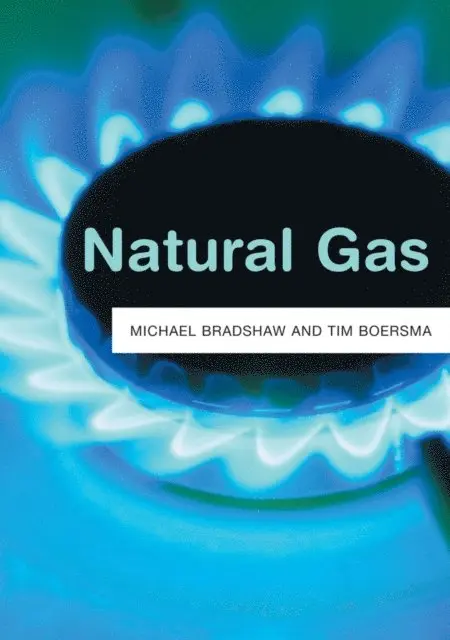
Natural Gas
Av Michael J. Bradshaw, Tim Boersma
Inbunden, 2020
691 kr
Lägg i varukorg
Is natural gas the ‘bridge’ to our low-carbon future? In power generation, industrial processes, parts of the transportation sector, and for domestic use, natural gas still has the potential to play a greater role in various energy transition pathways around the world. But such a future is by no …
Natural Gas
Av Michael J. Bradshaw, Tim Boersma
Häftad, 2020
231 kr
Lägg i varukorg
Is natural gas the ‘bridge’ to our low-carbon future? In power generation, industrial processes, parts of the transportation sector, and for domestic use, natural gas still has the potential to play a greater role in various energy transition pathways around the world. But such a future is by no …
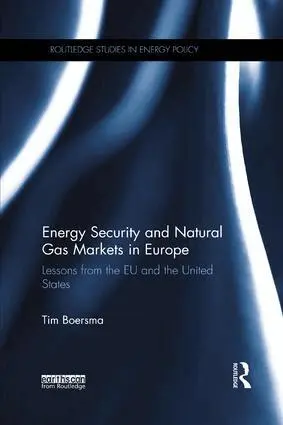
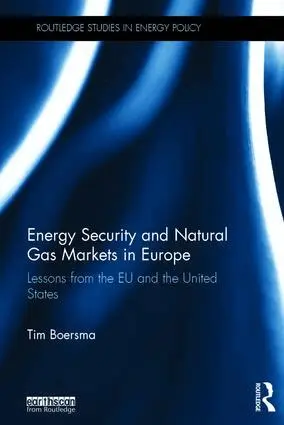
Energy Security and Natural Gas Markets in Europe
Lessons from the EU and the United States
Av Tim Boersma
Häftad, 2017
824 kr
Lägg i varukorg
Moving beyond most conventional thinking about energy security in Europe which revolves around stability of supplies and the reliability of suppliers, this book presents the history of European policy-making regarding energy resources, including recent controversies about shale gas and fracking. …
Want, Waste or War?
The Global Resource Nexus and the Struggle for Land, Energy, Food, Water and Minerals
Av Philip Andrews-Speed, Raimund Bleischwitz m. fl.
Inbunden, 2014
2515 kr
Lägg i varukorg
In addition to environmental change, the structure and trends of global politics and the economy are also changing as more countries join the ranks of the world’s largest economies with their resource-intensive patterns. The nexus approach, conceptualized as attention to resource connections and …
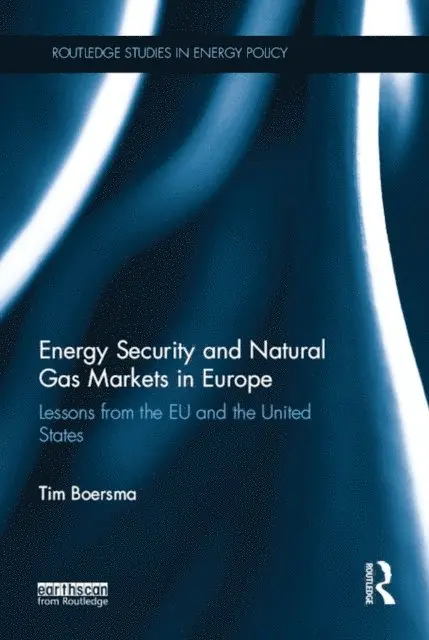
Energy Security and Natural Gas Markets in Europe
Lessons from the EU and the United States
Av Tim Boersma
Inbunden, 2015
2590 kr
Lägg i varukorg
Moving beyond most conventional thinking about energy security in Europe which revolves around stability of supplies and the reliability of suppliers, this book presents the history of European policy-making regarding energy resources, including recent controversies about shale gas and fracking. …
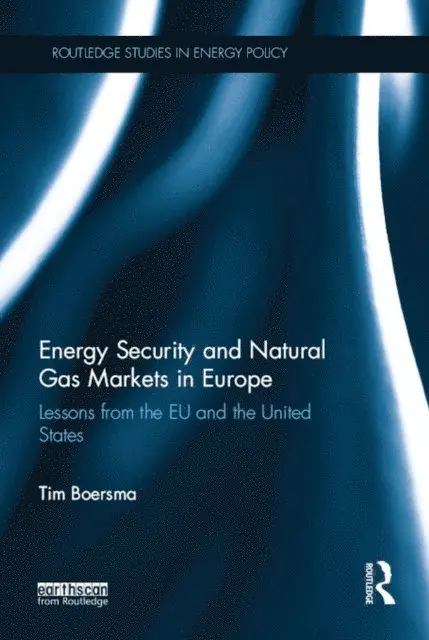
Energy Security and Natural Gas Markets in Europe
Lessons from the EU and the United States
Av Tim Boersma
E-bok, 2015
949 kr
Lägg i varukorg
Moving beyond most conventional thinking about energy security in Europe which revolves around stability of supplies and the reliability of suppliers, this book presents the history of European policy-making regarding energy resources, including recent controversies about shale gas and fracking. …
Energy Security and Natural Gas Markets in Europe
Lessons from the EU and the United States
Av Tim Boersma
E-bok, 2015
970 kr
Lägg i varukorg
Moving beyond most conventional thinking about energy security in Europe which revolves around stability of supplies and the reliability of suppliers, this book presents the history of European policy-making regarding energy resources, including recent controversies about shale gas and fracking. …
Want, Waste or War?
The Global Resource Nexus and the Struggle for Land, Energy, Food, Water and Minerals
Av Stacy D. VanDeveer, Geoffrey Kemp m. fl.
E-bok, 2014
970 kr
Lägg i varukorg
In addition to environmental change, the structure and trends of global politics and the economy are also changing as more countries join the ranks of the world’s largest economies with their resource-intensive patterns. The nexus approach, conceptualized as attention to resource connections and …
Want, Waste or War?
The Global Resource Nexus and the Struggle for Land, Energy, Food, Water and Minerals
Av Stacy D. VanDeveer, Geoffrey Kemp m. fl.
E-bok, 2014
970 kr
Lägg i varukorg
In addition to environmental change, the structure and trends of global politics and the economy are also changing as more countries join the ranks of the world’s largest economies with their resource-intensive patterns. The nexus approach, conceptualized as attention to resource connections and …
Natural Gas
Av Tim Boersma, Michael J. Bradshaw
E-bok, 2020
261 kr
Lägg i varukorg
Is natural gas the ‘bridge’ to our low-carbon future? In power generation, industrial processes, parts of the transportation sector, and for domestic use, natural gas still has the potential to play a greater role in various energy transition pathways around the world. But such a future is by no …