Tim Vlandas – författare
Visar alla böcker från författaren Tim Vlandas. Handla med fri frakt och snabb leverans.
7 produkter
7 produkter
E-bok
PDF, Engelska, 20211 086 kr
Läs direkt efter köp
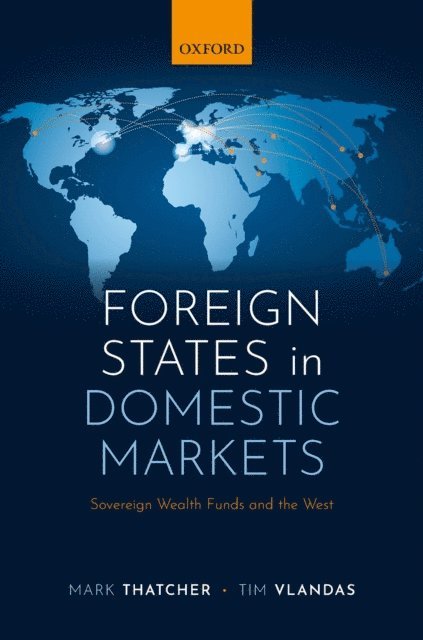
Political economy debates have focused on the internationalisation of private capital, but foreign states increasingly enter domestic markets as financial investors. How do policy makers in recipient countries react? Do they treat purchases as a threat and impose restrictions or see them as beneficial and welcome them? What are the wider implications for debates about state capacities to govern domestic economies in the face of internationalisation of financialmarkets?In response, Foreign States in Domestic Markets have developed the concept of ''internationalised statism'', where governments welcome the use of foreign state investments to govern their domestic economies. These foreign state investments are applied to the most prominent overseas state investors, Sovereign Wealth Funds (SWFs). Many SWFs are from Asia and the Middle East and their number and size have greatly expanded, reaching $9 trillion by 2020. This book examines policies towardsnon-Western SWFs buying company shares in four countries: the US, UK, France, and Germany. Although the US has imposed significant legal restrictions, the others have pursued internationalised statism in ways that are surprising given both popular and political economy classifications. This book argues that thepolicy patterns found are related to domestic politics, notably the preferences and capacities of the political executive and legislature, rather than solely economic needs or national security risks. The phenomenon of internationalised statism underlines that overseas state investment provides policy makers in recipient states with new allies and resources. The study of SWFs shows that internationalisation and liberalisation of financial markets offer national policy makers opportunities togovern their domestic economies.
E-bok
Engelska, 20211 086 kr
Läs direkt efter köp
Political economy debates have focused on the internationalisation of private capital, but foreign states increasingly enter domestic markets as financial investors. How do policy makers in recipient countries react? Do they treat purchases as a threat and impose restrictions or see them as beneficial and welcome them? What are the wider implications for debates about state capacities to govern domestic economies in the face of internationalisation of financialmarkets?In response, Foreign States in Domestic Markets have developed the concept of ''internationalised statism'', where governments welcome the use of foreign state investments to govern their domestic economies. These foreign state investments are applied to the most prominent overseas state investors, Sovereign Wealth Funds (SWFs). Many SWFs are from Asia and the Middle East and their number and size have greatly expanded, reaching $9 trillion by 2020. This book examines policies towardsnon-Western SWFs buying company shares in four countries: the US, UK, France, and Germany. Although the US has imposed significant legal restrictions, the others have pursued internationalised statism in ways that are surprising given both popular and political economy classifications. This book argues that thepolicy patterns found are related to domestic politics, notably the preferences and capacities of the political executive and legislature, rather than solely economic needs or national security risks. The phenomenon of internationalised statism underlines that overseas state investment provides policy makers in recipient states with new allies and resources. The study of SWFs shows that internationalisation and liberalisation of financial markets offer national policy makers opportunities togovern their domestic economies.
Inbunden, Engelska, 2021
1 295 kr
Skickas inom 5-8 vardagar
Political economy debates have focused on the internationalisation of private capital, but foreign states increasingly enter domestic markets as financial investors. How do policy makers in recipient countries react? Do they treat purchases as a threat and impose restrictions or see them as beneficial and welcome them? What are the wider implications for debates about state capacities to govern domestic economies in the face of internationalisation of financial markets? In response, Foreign States in Domestic Markets have developed the concept of 'internationalised statism', where governments welcome the use of foreign state investments to govern their domestic economies. These foreign state investments are applied to the most prominent overseas state investors, Sovereign Wealth Funds (SWFs). Many SWFs are from Asia and the Middle East and their number and size have greatly expanded, reaching $9 trillion by 2020. This book examines policies towards non-Western SWFs buying company shares in four countries: the US, UK, France, and Germany. Although the US has imposed significant legal restrictions, the others have pursued internationalised statism in ways that are surprising given both popular and political economy classifications. This book argues that the policy patterns found are related to domestic politics, notably the preferences and capacities of the political executive and legislature, rather than solely economic needs or national security risks. The phenomenon of internationalised statism underlines that overseas state investment provides policy makers in recipient states with new allies and resources. The study of SWFs shows that internationalisation and liberalisation of financial markets offer national policy makers opportunities to govern their domestic economies.
Del 18 - Comparative Political Economy
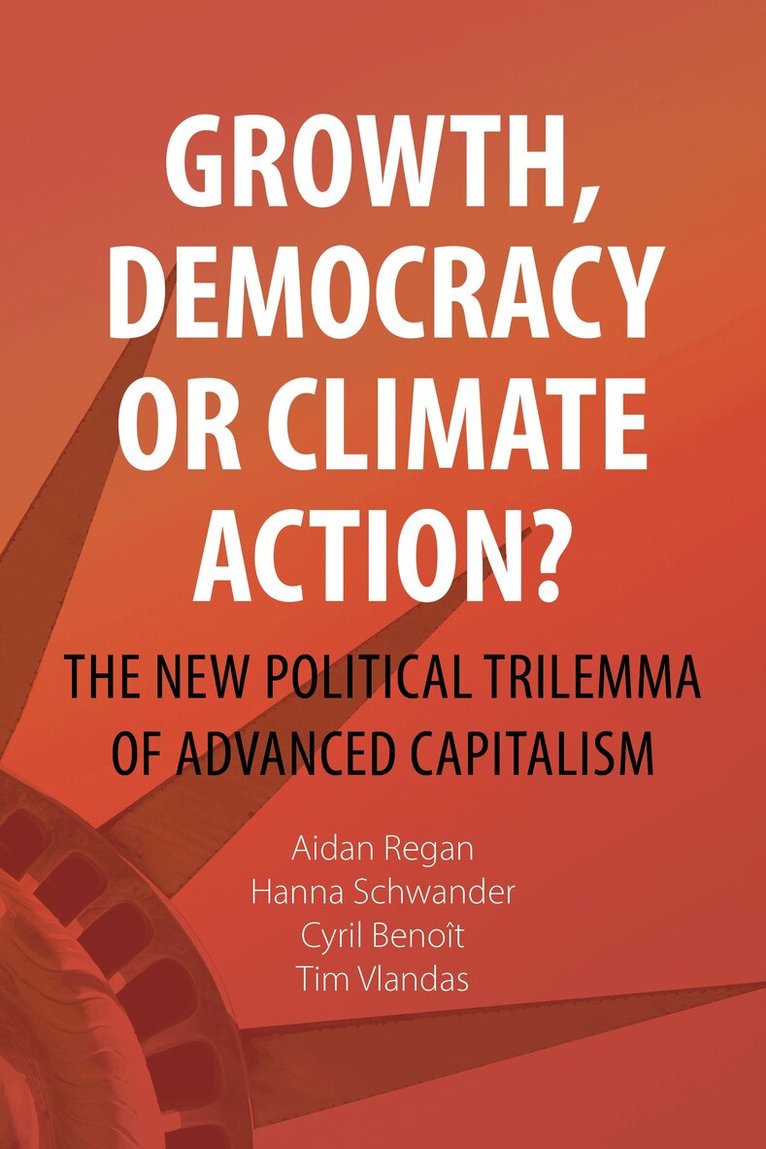
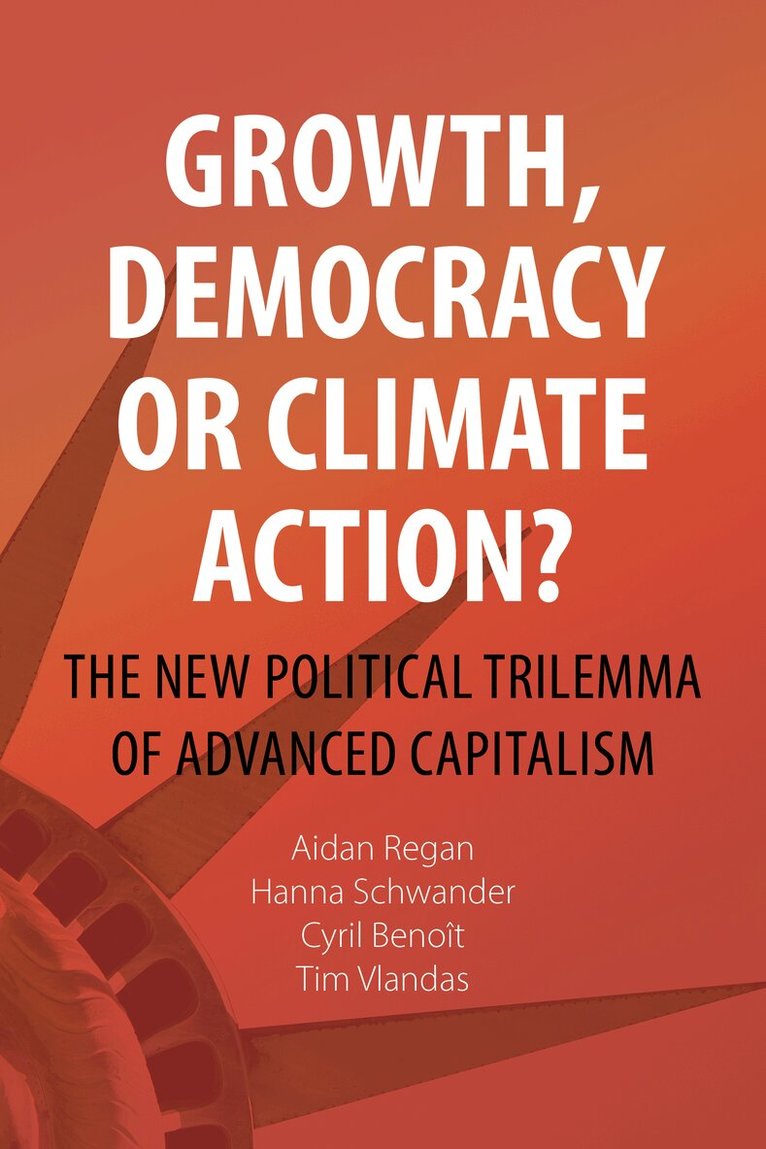
Growth, Democracy or Climate Action?
The New Political Trilemma of Advanced Capitalism
Inbunden, Engelska, 2026
1 335 kr
Skickas inom 5-8 vardagar
Governments face a conflicting choice between economic growth, democracy and tackling the climate crisis. They cannot achieve all three objectives simultaneously and the growing tensions between them are being played out in countries across the world. It is the new trilemma of advanced capitalist democracy.The authors use this trilemma as a fresh analytic framework to conceptualize these trade-offs and tensions in the study of capitalist democracies. The type of democratic politics required to generate growth and prosperity within the ecological limits of the planet, they argue, has not been taken seriously in the study of comparative political economy and needs to be located at the heart of future research. Given the unprecedented scale of structural reform that governments need to implement to effectively tackle the climate crisis, the authors question whether the transition to carbon neutrality can be done within the liberal rulebook that has governed the politics of advanced capitalism for the past hundred years.
Del 19 - Comparative Political Economy
Growth, Democracy or Climate Action?
The New Political Trilemma of Advanced Capitalism
Häftad, Engelska, 2026
378 kr
Skickas
Governments face a conflicting choice between economic growth, democracy and tackling the climate crisis. They cannot achieve all three objectives simultaneously and the growing tensions between them are being played out in countries across the world. It is the new trilemma of advanced capitalist democracy.The authors use this trilemma as a fresh analytic framework to conceptualize these trade-offs and tensions in the study of capitalist democracies. The type of democratic politics required to generate growth and prosperity within the ecological limits of the planet, they argue, has not been taken seriously in the study of comparative political economy and needs to be located at the heart of future research. Given the unprecedented scale of structural reform that governments need to implement to effectively tackle the climate crisis, the authors question whether the transition to carbon neutrality can be done within the liberal rulebook that has governed the politics of advanced capitalism for the past hundred years.
Inbunden, Engelska, 2025
1 406 kr
Skickas inom 10-15 vardagar
The sudden, dramatic rise in inflation after the COVID-19 pandemic and the Russian invasion of Ukraine interrupted three low-inflation decades and reignited the question of the causes of and responses to inflation. This book addresses that question by looking back at the emergence of the low-inflation ‘monetarist’ macroeconomic regime in the advanced capitalist economies during the 1980s. While dominant perspectives emphasise new ideas or structural power, this book puts the underlying politics at the centre of the analysis. It combines two processes in that analysis. First, the slow but steady improvement of life chances across the population since the 1950s, which shifted the relative concerns about inflation and unemployment across the population. Second, the strategic responses of political parties, and particularly social-democratic parties, to inflationary shocks in the face of a changing electorate. Case studies of leading European economies and the US underpin the argument.
E-bok
Engelska, 20251 733 kr
Läs direkt efter köp
The sudden, dramatic rise in inflation after the COVID-19 pandemic and the Russian invasion of Ukraine interrupted three low-inflation decades and reignited the question of the causes of and responses to inflation. This book addresses that question by looking back at the emergence of the low-inflation ‘monetarist’ macroeconomic regime in the advanced capitalist economies during the 1980s. While dominant perspectives emphasise new ideas or structural power, this book puts the underlying politics at the centre of the analysis. It combines two processes in that analysis. First, the slow but steady improvement of life chances across the population since the 1950s, which shifted the relative concerns about inflation and unemployment across the population. Second, the strategic responses of political parties, and particularly social-democratic parties, to inflationary shocks in the face of a changing electorate. Case studies of leading European economies and the US underpin the argument.