Timothy A. Warner – författare
2 182 kr
Skickas inom 10-15 vardagar
638 kr
Skickas inom 10-15 vardagar
730 kr
Läs direkt efter köp
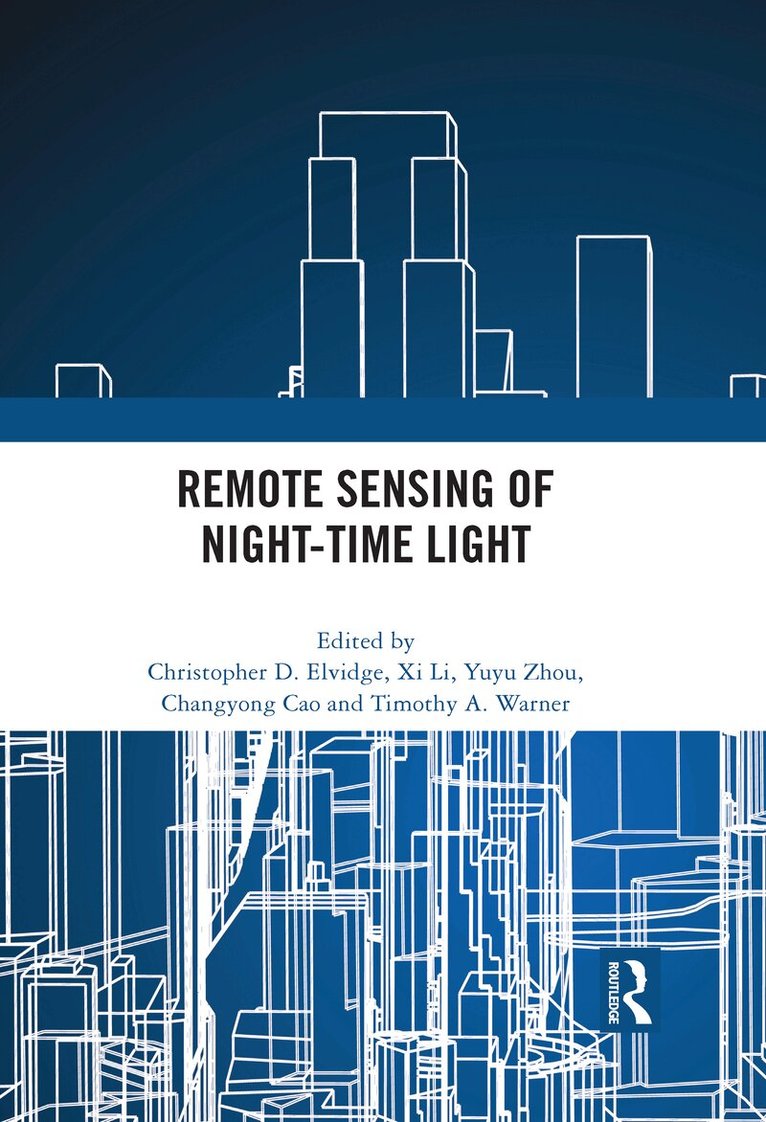
Satellite images acquired at night provide a visually arresting perspective of the Earth and the human activities that light up the otherwise mostly dark Earth. These night-time light satellite images can be compiled into a geospatial time series that represent an invaluable source of information for both the natural and social sciences. Night-time light remote sensing has been shown to be particularly useful for a range of natural science and social science applications, including studies relating to urban development, demography, sociology, fishing activity, light pollution and the consequences of civil war. Key sensors for these time-series include the Defense Meteorological Satellite Program’s Operational Linescan System (DMSP/OLS) and the Suomi National Polar-orbiting Partnership Satellite’s Visible Infrared Imaging Radiometer Suite Day/Night Band (Suomi NPP/VIIRS DNB). An increasing number of alternative sources are also available, including high spatial resolution and multispectral sensors.
This book captures key methodological issues associated with pre-processing night-time light data, documents state of the art analysis methods, and explores a wide range of applications. Major sections focus on NPP/VIIRS DNB processing; inter-calibration between NPP/VIIRS and DMPS/OLS; applications associated with socio-economic activities, applications in monitoring urbanization; and fishing activity monitoring.
The chapters in this book were originally published as a special issue of the International Journal of Remote Sensing.
730 kr
Läs direkt efter köp
Satellite images acquired at night provide a visually arresting perspective of the Earth and the human activities that light up the otherwise mostly dark Earth. These night-time light satellite images can be compiled into a geospatial time series that represent an invaluable source of information for both the natural and social sciences. Night-time light remote sensing has been shown to be particularly useful for a range of natural science and social science applications, including studies relating to urban development, demography, sociology, fishing activity, light pollution and the consequences of civil war. Key sensors for these time-series include the Defense Meteorological Satellite Program’s Operational Linescan System (DMSP/OLS) and the Suomi National Polar-orbiting Partnership Satellite’s Visible Infrared Imaging Radiometer Suite Day/Night Band (Suomi NPP/VIIRS DNB). An increasing number of alternative sources are also available, including high spatial resolution and multispectral sensors.
This book captures key methodological issues associated with pre-processing night-time light data, documents state of the art analysis methods, and explores a wide range of applications. Major sections focus on NPP/VIIRS DNB processing; inter-calibration between NPP/VIIRS and DMPS/OLS; applications associated with socio-economic activities, applications in monitoring urbanization; and fishing activity monitoring.
The chapters in this book were originally published as a special issue of the International Journal of Remote Sensing.
759 kr
Läs direkt efter köp
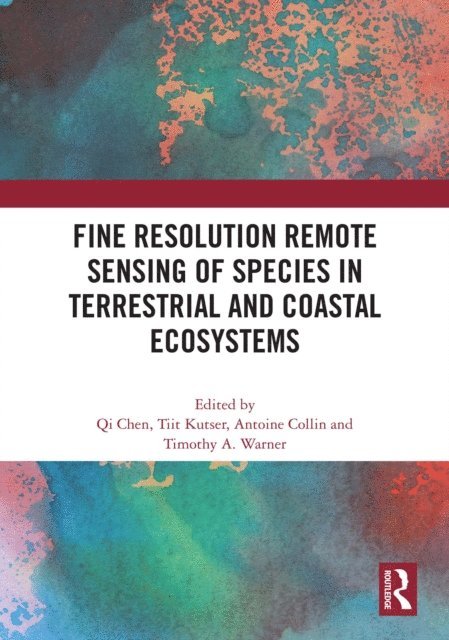
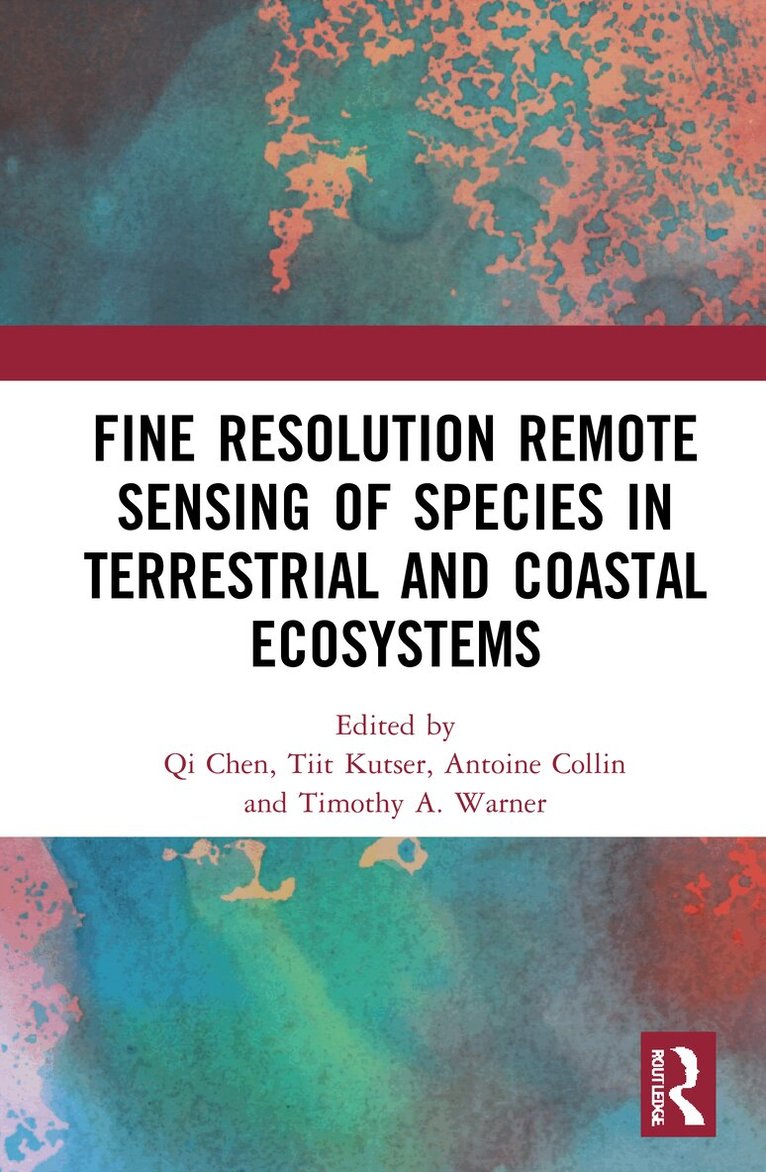
Detailed and accurate information on the spatial distribution of individual species over large spatial extents and over multiple time periods is critical for rapid response and effective management of environmental change. The twenty first century has witnessed a rapid development in both fine resolution sensors and statistical theories and techniques. These innovations hold great potential for improved accuracy of species mapping using remote sensing.
Fine Resolution Remote Sensing of Species in Terrestrial and Coastal Ecosystems is a collection of eight cutting-edge studies of fine spatial resolution remote sensing, including species mapping of biogenic and coral reefs, seagrasses, salt and freshwater marshes, and grasslands. The studies illustrate the power of fine resolution imagery for species identification, as well as the value of unmanned aerial vehicle (UAV) imagery as an ideal source of high-quality reference data at the species level. The studies also highlight the benefit of LiDAR (Light Detection and Ranging) data for species identification, and how this varies depending on the species of interest as well as the nature of the context in which the species is found. The broad range of applications explored in the book demonstrates the major contribution of remote sensing to species-level terrestrial and coastal ecosystem studies as well as the potential for future advances.
The chapters in this book were originally published as a special issue of the International Journal of Remote Sensing.
752 kr
Läs direkt efter köp
Detailed and accurate information on the spatial distribution of individual species over large spatial extents and over multiple time periods is critical for rapid response and effective management of environmental change. The twenty first century has witnessed a rapid development in both fine resolution sensors and statistical theories and techniques. These innovations hold great potential for improved accuracy of species mapping using remote sensing.
Fine Resolution Remote Sensing of Species in Terrestrial and Coastal Ecosystems is a collection of eight cutting-edge studies of fine spatial resolution remote sensing, including species mapping of biogenic and coral reefs, seagrasses, salt and freshwater marshes, and grasslands. The studies illustrate the power of fine resolution imagery for species identification, as well as the value of unmanned aerial vehicle (UAV) imagery as an ideal source of high-quality reference data at the species level. The studies also highlight the benefit of LiDAR (Light Detection and Ranging) data for species identification, and how this varies depending on the species of interest as well as the nature of the context in which the species is found. The broad range of applications explored in the book demonstrates the major contribution of remote sensing to species-level terrestrial and coastal ecosystem studies as well as the potential for future advances.
The chapters in this book were originally published as a special issue of the International Journal of Remote Sensing.
2 247 kr
Skickas inom 10-15 vardagar
544 kr
Skickas
3 207 kr
Skickas inom 3-6 vardagar
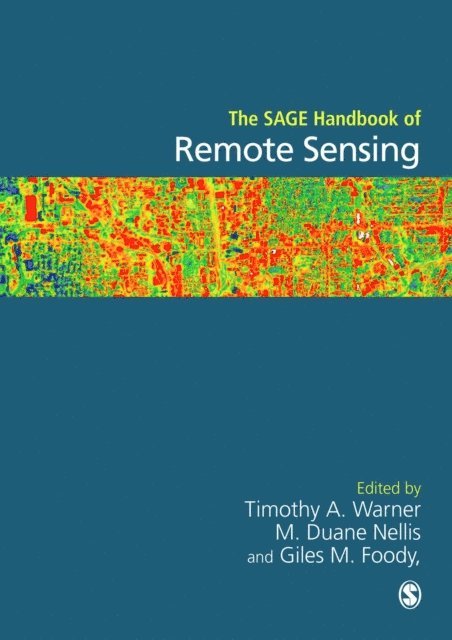
Remote Sensing acquires and interprets small or large-scale data about the Earth from a distance. Using a wide range of spatial, spectral, temporal, and radiometric scales Remote Sensing is a large and diverse field for which this Handbook will be the key research reference.
Organized in four key sections:
• Interactions of Electromagnetic Radiation with the Terrestrial Environment: chapters on Visible, Near-IR and Shortwave IR; Middle IR (3-5 micrometers); Thermal IR ; Microwave
• Digital sensors and Image Characteristics: chapters on Sensor Technology; Coarse Spatial Resolution Optical Sensors ; Medium Spatial Resolution Optical Sensors; Fine Spatial Resolution Optical Sensors; Video Imaging and Multispectral Digital Photography; Hyperspectral Sensors; Radar and Passive Microwave Sensors; Lidar
• Remote Sensing Analysis - Design and Implementation: chapters on Image Pre-Processing; Ground Data Collection; Integration with GIS; Quantitative Models in Remote Sensing; Validation and accuracy assessment;
• Remote Sensing Analysis - Applications: LITHOSPHERIC SCIENCES: chapters on Topography; Geology; Soils; PLANT SCIENCES: Vegetation; Agriculture; HYDROSPHERIC and CRYSOPHERIC SCIENCES: Hydrosphere: Fresh and Ocean Water; Cryosphere; GLOBAL CHANGE AND HUMAN ENVIRONMENTS: Earth Systems; Human Environments & Links to the Social Sciences; Real Time Monitoring Systems and Disaster Management; Land Cover Change
Illustrated throughout, an essential resource for the analysis of remotely sensed data, the SAGE Handbook of Remote Sensing provides researchers with a definitive statement of the core concepts and methodologies in the discipline.
1 621 kr
Skickas
Remote Sensing acquires and interprets small or large-scale data about the Earth from a distance. Using a wide range of spatial, spectral, temporal, and radiometric scales Remote Sensing is a large and diverse field for which this Handbook will be the key research reference.
Organized in four key sections:
• Interactions of Electromagnetic Radiation with the Terrestrial Environment: chapters on Visible, Near-IR and Shortwave IR; Middle IR (3-5 micrometers); Thermal IR ; Microwave
• Digital sensors and Image Characteristics: chapters on Sensor Technology; Coarse Spatial Resolution Optical Sensors ; Medium Spatial Resolution Optical Sensors; Fine Spatial Resolution Optical Sensors; Video Imaging and Multispectral Digital Photography; Hyperspectral Sensors; Radar and Passive Microwave Sensors; Lidar
• Remote Sensing Analysis - Design and Implementation: chapters on Image Pre-Processing; Ground Data Collection; Integration with GIS; Quantitative Models in Remote Sensing; Validation and accuracy assessment;
• Remote Sensing Analysis - Applications: LITHOSPHERIC SCIENCES: chapters on Topography; Geology; Soils; PLANT SCIENCES: Vegetation; Agriculture; HYDROSPHERIC and CRYSOPHERIC SCIENCES: Hydrosphere: Fresh and Ocean Water; Cryosphere; GLOBAL CHANGE AND HUMAN ENVIRONMENTS: Earth Systems; Human Environments & Links to the Social Sciences; Real Time Monitoring Systems and Disaster Management; Land Cover Change
Illustrated throughout, an essential resource for the analysis of remotely sensed data, the SAGE Handbook of Remote Sensing provides researchers with a definitive statement of the core concepts and methodologies in the discipline.
1 374 kr
Läs direkt efter köp
Remote Sensing acquires and interprets small or large-scale data about the Earth from a distance. Using a wide range of spatial, spectral, temporal, and radiometric scales Remote Sensing is a large and diverse field for which this Handbook will be the key research reference.
Organized in four key sections:
• Interactions of Electromagnetic Radiation with the Terrestrial Environment: chapters on Visible, Near-IR and Shortwave IR; Middle IR (3-5 micrometers); Thermal IR ; Microwave
• Digital sensors and Image Characteristics: chapters on Sensor Technology; Coarse Spatial Resolution Optical Sensors ; Medium Spatial Resolution Optical Sensors; Fine Spatial Resolution Optical Sensors; Video Imaging and Multispectral Digital Photography; Hyperspectral Sensors; Radar and Passive Microwave Sensors; Lidar
• Remote Sensing Analysis - Design and Implementation: chapters on Image Pre-Processing; Ground Data Collection; Integration with GIS; Quantitative Models in Remote Sensing; Validation and accuracy assessment;
• Remote Sensing Analysis - Applications: LITHOSPHERIC SCIENCES: chapters on Topography; Geology; Soils; PLANT SCIENCES: Vegetation; Agriculture; HYDROSPHERIC and CRYSOPHERIC SCIENCES: Hydrosphere: Fresh and Ocean Water; Cryosphere; GLOBAL CHANGE AND HUMAN ENVIRONMENTS: Earth Systems; Human Environments & Links to the Social Sciences; Real Time Monitoring Systems and Disaster Management; Land Cover Change
Illustrated throughout, an essential resource for the analysis of remotely sensed data, the SAGE Handbook of Remote Sensing provides researchers with a definitive statement of the core concepts and methodologies in the discipline.