Timothy Baycroft - Böcker
Visar alla böcker från författaren Timothy Baycroft. Handla med fri frakt och snabb leverans.
4 produkter
4 produkter
2 303 kr
Skickas inom 5-8 vardagar
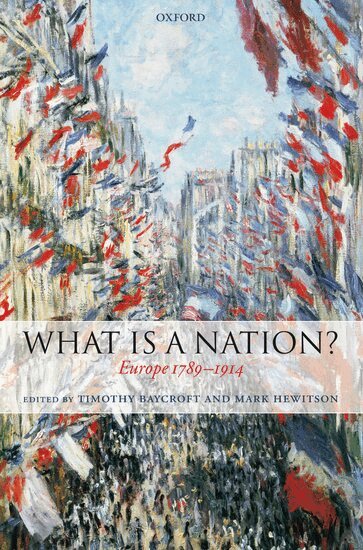
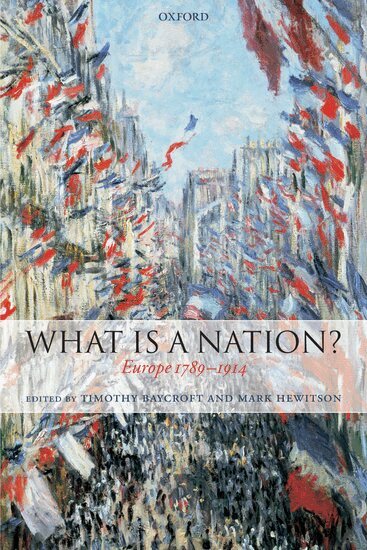
This volume analyses and compares different forms of nationalism across a range of European countries and regions during the long nineteenth century. It aims to put detailed studies of nationalist politics and thought, which have proliferated over the last ten years or so, into a wider European context. By means of such contextualization, together with new and systematic comparisons, What is a Nation? Europe 1789-1914 reassesses the arguments put forward in the principal works on nationalism as a whole, many of which pre-date the proliferation of case studies in the 1990s and which, as a consequence, make only inadequate reference to the national histories of European states. The study reconsiders whether the distinction between civic and ethnic identities and politics in Europe has been overstated and whether it needs to be replaced altogether by a new set of concepts or types. What is a Nation? explores the relationship between this and other typologies, relating them to complex processes of industrialization, increasing state intervention, secularization, democratization and urbanization. Debates about citizenship, political economy, liberal institutions, socialism, empire, changes in the states system, Darwinism, high and popular culture, Romanticism and Christianity all affected - and were affected by - discussion of nationhood and nationalist politics. The volume investigates the significance of such controversies and institutional changes for the history of modern nationalism, as it was defined in diverse European countries and regions during the long nineteenth century. By placing particular nineteenth-century nationalist movements and nation-building in a broader comparative context, prominent historians of particular European states give an original and authoritative reassessment, designed to appeal to students and academic readers alike, of one of the most contentious topics of the modern period.
734 kr
Skickas inom 7-10 vardagar
Nationalism has had repercussions throughout the modern era, lying at the root of wars, revolutions, and social and cultural movements. This volume analyses and compares different forms of nationalism as they originated and developed in Europe throughout the 'long nineteenth century', and offers an original and authoritative reassessment.What is a Nation? reconsiders whether the distinction between civic and ethnic identities and politics in Europe has been overstated, and whether it needs to be replaced altogether by a new set of concepts or types. This and other typologies are explored and related to complex processes of industrialization, increasing state intervention, secularization, democratization, and urbanization. Debates about citizenship, political economy, liberal institutions, socialism, empire, changes in the states system, Darwinism, high and popular culture, Romanticism, and Christianity all affected - and were affected by - discussion of nationhood and nationalist politics. By examining the significance of such controversies and institutional changes in a broader European context, together with new and systematic comparisons, this book reassesses the history of modern nationalism.
221 kr
Skickas inom 7-10 vardagar
An engaging range of period texts and theme books for AS and A Level history. This text analyses nationalism in Europe from the French Revolution to the Second World War. Drawing on a wide range of examples, Timothy Baycroft explains what characterises modern nations, what the theoretical roots of nationalism are, and what interaction there has been with other significant theories. The book alsot presents reasons for the overwhelming importance of nationalism in the development of modern European history. The result is a concise description of the ways in which nationalism spread through Europe and its consequences for European civilisation. Nationalism in Europe contains a selection of primary and secondary sources.
Del 39 - Royal Historical Society Studies in History New Series
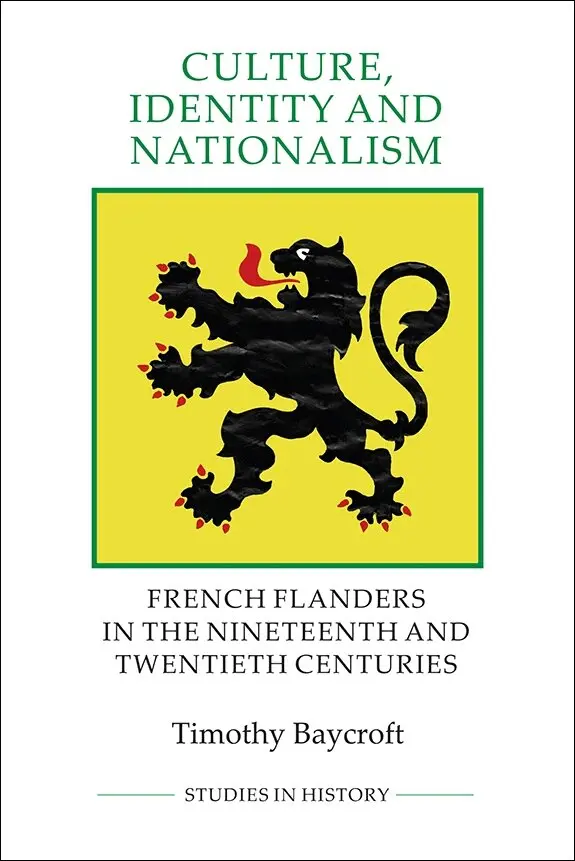
Culture, Identity and Nationalism
French Flanders in the Nineteenth and Twentieth Centuries
Häftad, Engelska, 2013
294 kr
Skickas inom 5-8 vardagar
An examination of the evolution of national and cultural identity in French Flanders over a period of 200 years.This study examines the evolution of national and regional, cultural and political identities in that northern region of France which borders Belgium, over the two centuries which followed the French Revolution. During that time the region was transformed by the development of the industrial economy, population shifts, war and occupation, and numerous changes of political regime. Through an analysis of a wide range of issues, including language, regional and national political movements, educational policy, attitudes towards immigrants and the border, the press, trade unions, and the church - as well as the attitude of the French State - the author questions traditional interpretations of the process of national assimilation in France. At the same time he illustrates how the Franco-Belgian border, originally an arbitrary line through a culturally homogeneous region, became not only a significant marker forthe identity of the French Flemish, but a real cultural division. TIMOTHY BAYCROFT is lecturer in French history, University of Sheffield.