Timothy G. Gregoire - Böcker
Visar alla böcker från författaren Timothy G. Gregoire. Handla med fri frakt och snabb leverans.
4 produkter
4 produkter
Del 122 - Lecture Notes in Statistics
Modelling Longitudinal and Spatially Correlated Data
Häftad, Engelska, 1997
1 064 kr
Skickas inom 10-15 vardagar
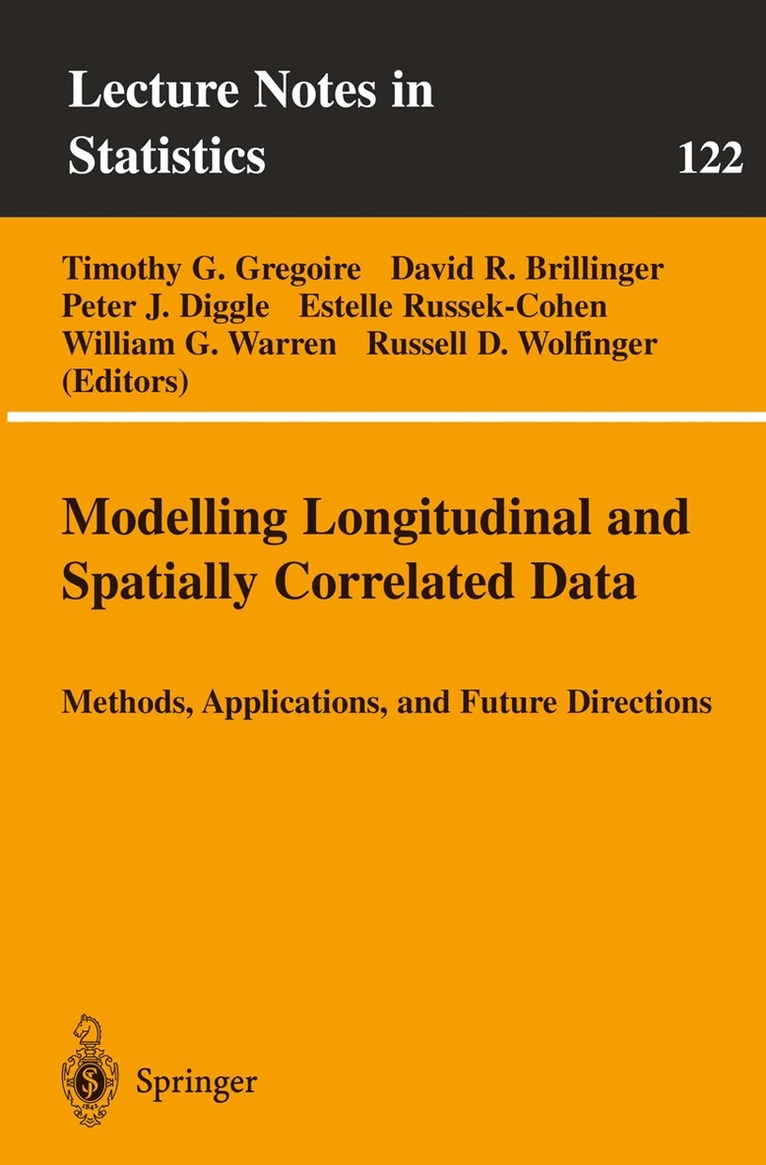
This volume focuses on the statistical treatment of continuous and discrete data measured at different points in time, locations in space, and/or across combined spatio-temporal dimensions. Linear, nonlinear, and generalized linear models and methods are presented, as are new developments to handle messy data. The volume provides an examination of the historical development of approaches to model spatially and temporally correlated data and the ongoing convergence of these methods. The papers are based on ones presented at a conference in Nantucket, Massachusetts in October 1996.
3 418 kr
Skickas inom 7-10 vardagar
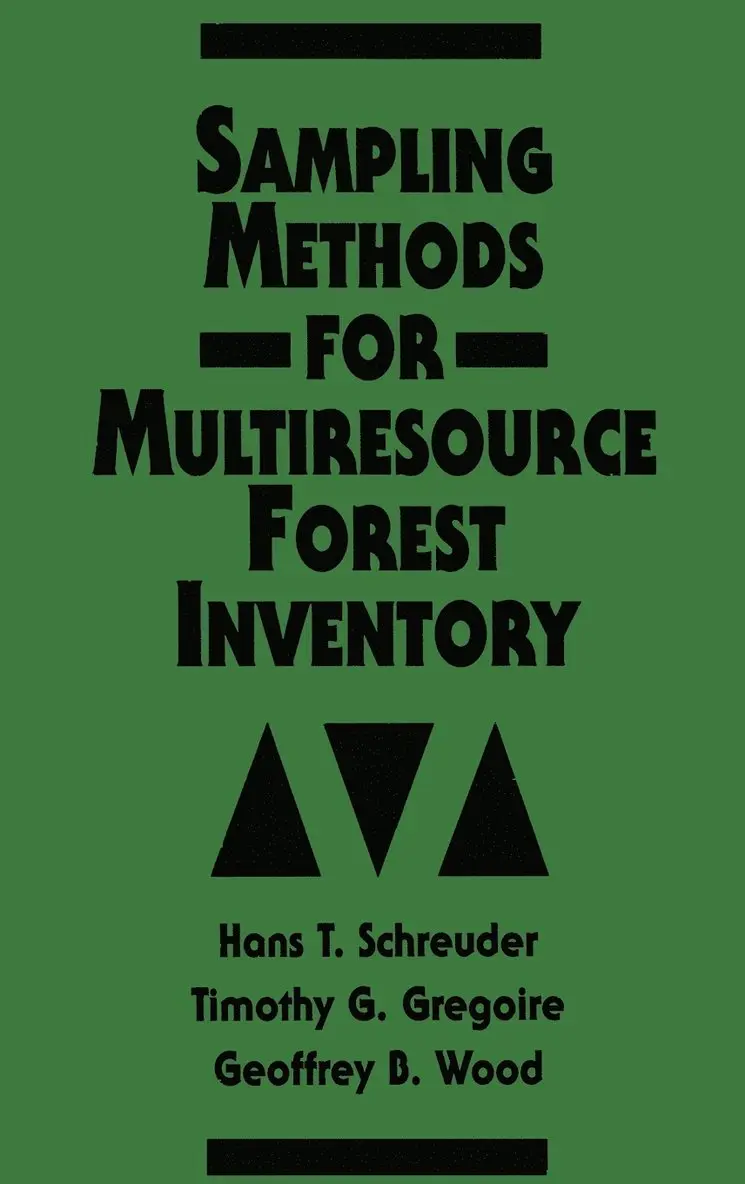
Designed to aid readers in gathering the most reliable quantitative information on forests for the least cost. Thoroughly explains the interrelationships between sampling strategies; discusses forestry techniques of efficient tactics; examines new developments in statistics having immediate applications in forestry and describes related developments that should have relevance in the future. Includes practical methods for dealing with forest data such as tree number, height, diameter and marketable wood. Also contains problem sets.
685 kr
Skickas inom 10-15 vardagar
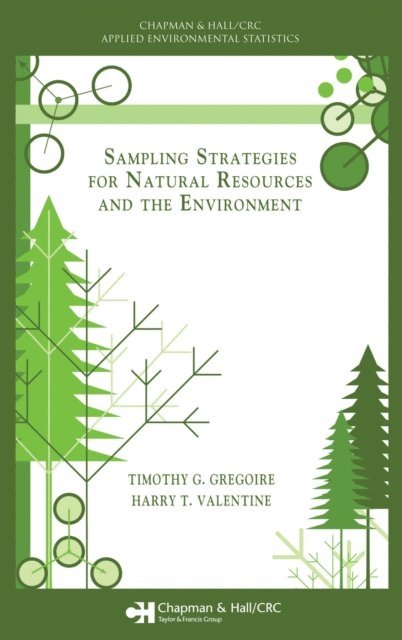
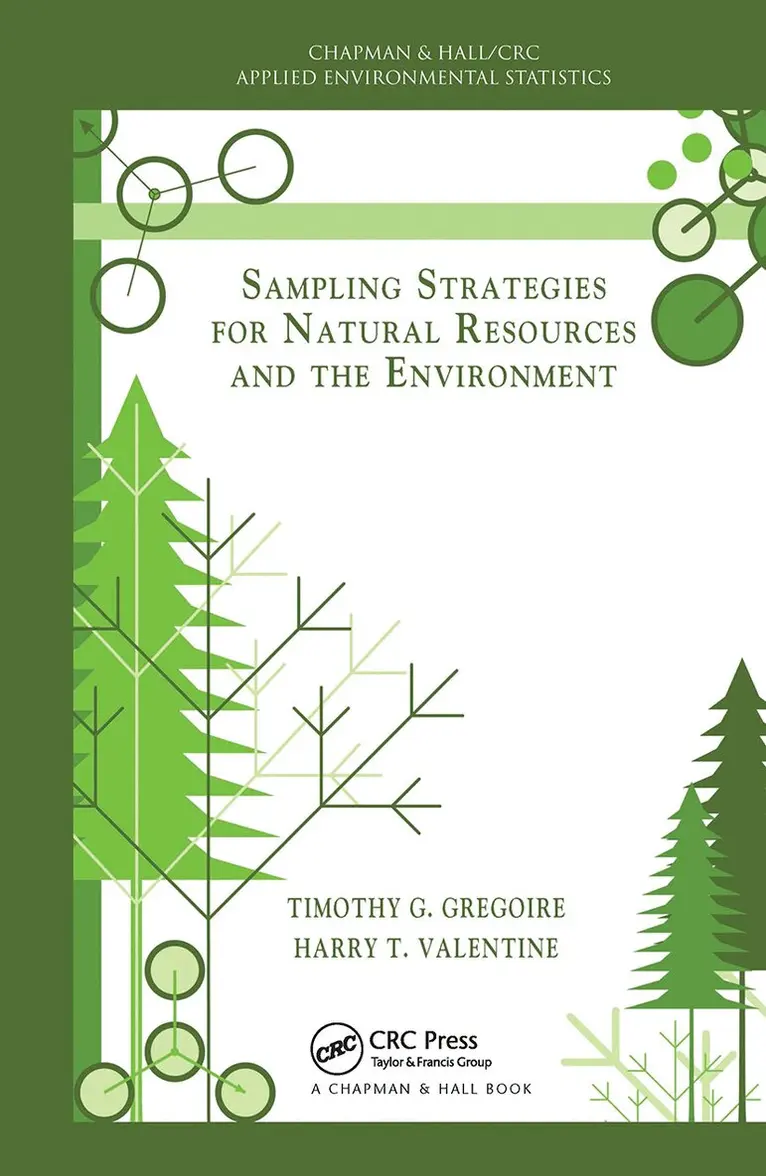
Written by renowned experts in the field, Sampling Strategies for Natural Resources and the Environment covers the sampling techniques used in ecology, forestry, environmental science, and natural resources. The book presents methods to estimate aggregate characteristics on a per unit area basis as well as on an elemental basis. In addition to common sampling designs such as simple random sampling and list sampling, the authors explore more specialized designs for sampling vegetation, including randomized branch sampling and 3P sampling.One of the book's unique features is the emphasis on areal sampling designs, including plot/quadrat sampling, Bitterlich sampling, line intersect sampling, and several lesser known designs. The book also provides comprehensive solutions to the problem of edge effect. Another distinguishing aspect is the inclusion of sampling designs for continuums, focusing on the methods of Monte Carlo integration.By presenting a conceptual understanding of each sampling design and estimation procedure as well as mathematical derivations and proofs in the chapter appendices, this text promotes a deep understanding of the underpinnings of sampling theory, estimation, and inference. Moreover, it will help you reliably sample natural populations and continuums.
1 685 kr
Skickas inom 10-15 vardagar
Written by renowned experts in the field, Sampling Strategies for Natural Resources and the Environment covers the sampling techniques used in ecology, forestry, environmental science, and natural resources. The book presents methods to estimate aggregate characteristics on a per unit area basis as well as on an elemental basis. In addition to common sampling designs such as simple random sampling and list sampling, the authors explore more specialized designs for sampling vegetation, including randomized branch sampling and 3P sampling.One of the book's unique features is the emphasis on areal sampling designs, including plot/quadrat sampling, Bitterlich sampling, line intersect sampling, and several lesser known designs. The book also provides comprehensive solutions to the problem of edge effect. Another distinguishing aspect is the inclusion of sampling designs for continuums, focusing on the methods of Monte Carlo integration.By presenting a conceptual understanding of each sampling design and estimation procedure as well as mathematical derivations and proofs in the chapter appendices, this text promotes a deep understanding of the underpinnings of sampling theory, estimation, and inference. Moreover, it will help you reliably sample natural populations and continuums.