Timothy Hyde - Böcker
Visar alla böcker från författaren Timothy Hyde. Handla med fri frakt och snabb leverans.
4 produkter
4 produkter
361 kr
Skickas inom 7-10 vardagar
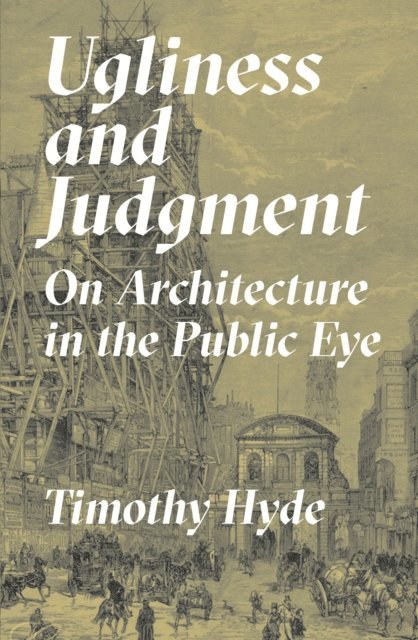
A novel interpretation of architecture, ugliness, and the social consequences of aesthetic judgmentWhen buildings are deemed ugly, what are the consequences? In Ugliness and Judgment, Timothy Hyde considers the role of aesthetic judgment—and its concern for ugliness—in architectural debates and their resulting social effects across three centuries of British architectural history. From eighteenth-century ideas about Stonehenge to Prince Charles’s opinions about the National Gallery, Hyde uncovers a new story of aesthetic judgment, where arguments about architectural ugliness do not pertain solely to buildings or assessments of style, but intrude into other spheres of civil society.Hyde explores how accidental and willful conditions of ugliness—including the gothic revival Houses of Parliament, the brutalist concrete of the South Bank, and the historicist novelty of Number One Poultry—have been debated in parliamentary committees, courtrooms, and public inquiries. He recounts how architects such as Christopher Wren, John Soane, James Stirling, and Ludwig Mies van der Rohe have been summoned by tribunals of aesthetic judgment. With his novel scrutiny of lawsuits for libel, changing paradigms of nuisance law, and conventions of monarchical privilege, he shows how aesthetic judgments have become entangled in wider assessments of art, science, religion, political economy, and the state.Moving beyond superficialities of taste in order to see how architectural improprieties enable architecture to participate in social transformations, Ugliness and Judgment sheds new light on the role of aesthetic measurement in our world.
258 kr
Skickas inom 7-10 vardagar
A novel interpretation of architecture, ugliness, and the social consequences of aesthetic judgmentWhen buildings are deemed ugly, what are the consequences? In Ugliness and Judgment, Timothy Hyde considers the role of aesthetic judgment—and its concern for ugliness—in architectural debates and their resulting social effects across three centuries of British architectural history. From eighteenth-century ideas about Stonehenge to Prince Charles’s opinions about the National Gallery, Hyde uncovers a new story of aesthetic judgment, where arguments about architectural ugliness do not pertain solely to buildings or assessments of style, but intrude into other spheres of civil society.Hyde explores how accidental and willful conditions of ugliness—including the gothic revival Houses of Parliament, the brutalist concrete of the South Bank, and the historicist novelty of Number One Poultry—have been debated in parliamentary committees, courtrooms, and public inquiries. He recounts how architects such as Christopher Wren, John Soane, James Stirling, and Ludwig Mies van der Rohe have been summoned by tribunals of aesthetic judgment. With his novel scrutiny of lawsuits for libel, changing paradigms of nuisance law, and conventions of monarchical privilege, he shows how aesthetic judgments have become entangled in wider assessments of art, science, religion, political economy, and the state.Moving beyond superficialities of taste in order to see how architectural improprieties enable architecture to participate in social transformations, Ugliness and Judgment sheds new light on the role of aesthetic measurement in our world.
372 kr
Skickas inom 7-10 vardagar
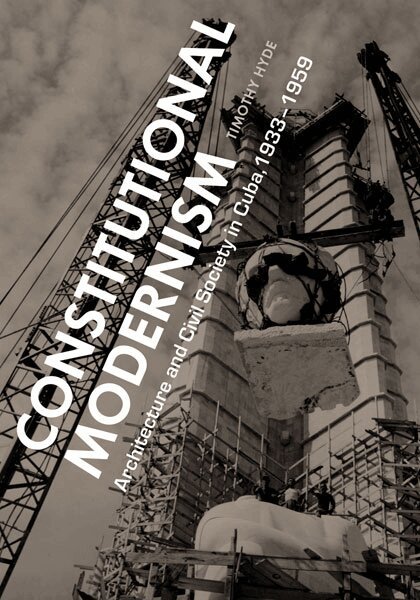
How does architecture make its appearance in civil society? Constitutional Modernism pursues this challenging question by exploring architecture, planning, and law as cultural forces. Analyzing the complex entanglements between these disciplines in the Cuban Republic, Timothy Hyde reveals how architects joined with other professionals and intellectuals in efforts to establish a stable civil society, from the promulgation of a new Cuban Constitution in 1940 up until the Cuban Revolution.By arguing that constitutionalism was elaborated through architectural principles and practices as well as legal ones, Hyde offers a new view of architectural modernism as a political and social instrument. He contends that constitutionalism produced a decisive confluence of law and architecture, a means for planning the future of Cuba. The importance of architecture in this process is laid bare by Hyde’s thorough scrutiny of a variety of textual, graphical, and physical artifacts. He examines constitutional articles, exhibitions, interviews, master plans, monuments, and other primary materials as acts of design.Read from the perspective of architectural history, Constitutional Modernism demonstrates how the modernist concepts that developed as an international discourse before the Second World War evolved through interactions with other disciplines into a civil urbanism in Cuba. And read from the perspective of Cuban history, the book explains how not only material products such as buildings and monuments but also the immaterial methods of architecture as a cultural practice produced ideas that had consequential effects on the political circumstances of the nation.
1 021 kr
Skickas inom 7-10 vardagar
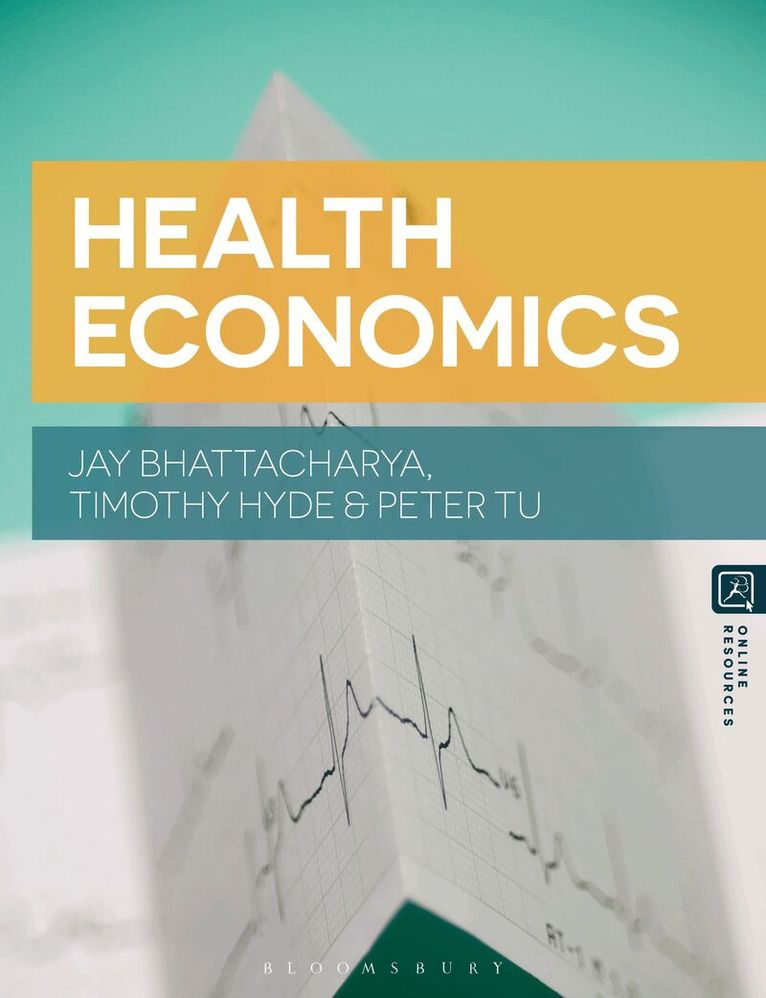
Comprehensive in coverage this textbook, written by academics from leading institutions, discusses current developments and debates in modern health economics from an international perspective. Economic models are presented in detail, complemented by real-life explanations and analysis, and discussions of the influence of such theories on policymaking. Offering sound pedagogy and economic rigor, Health Economics focuses on building intuition alongside appropriate mathematical formality, translating technical language into accessible economic narrative. Rather than shying away from intellectual building blocks, students are introduced to technical and theoretical foundations and encouraged to apply these to inform empirical studies and wider policymaking.Health Economics provides:- A broad scope, featuring comparative health policy and empirical examples from around the world to help students relate the principles of health economics to everyday life- Coverage of topical issues such as the obesity epidemic, economic epidemiology, socioeconomic health disparities, and behavioural economics- A rich learning resource, complete with hundreds of exercises to help solidify and extend understanding.This book is designed for advanced undergraduate courses in health economics and policy but may also interest postgraduate students in economics, medicine and health policy.Accompanying online resources for this title can be found at bloomsburyonlineresources.com/health-economics. These resources are designed to support teaching and learning when using this textbook and are available at no extra cost.