Tina Fruhauf – författare
Visar alla böcker från författaren Tina Fruhauf. Handla med fri frakt och snabb leverans.
13 produkter
13 produkter
Inbunden, Engelska, 2009
1 317 kr
Skickas inom 5-8 vardagar
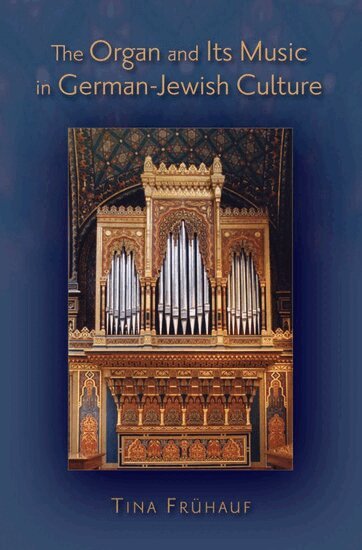
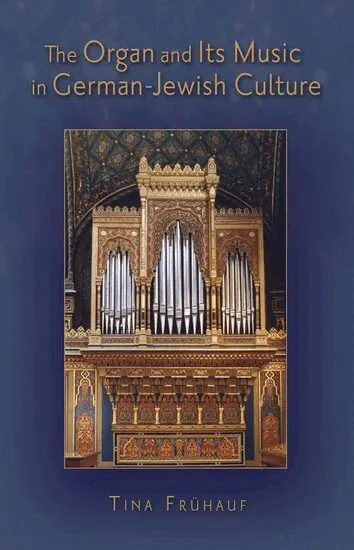
The Organ and Its Music in German-Jewish Culture examines the powerful but often overlooked presence of the organ in synagogue music and the musical life of German-speaking Jewish communities. Tina Frühauf expertly chronicles the history of the organ in Jewish culture from the earliest references in the Talmud through the 19th century, when it had established a firm and lasting presence in Jewish sacred and secular spaces in central Europe. Frühauf demonstrates how the introduction of the organ into German synagogues was part of the significant changes which took place in Judaism after the Enlightenment, and posits the organ as a symbol of the division of the Jewish community into Orthodox and Reform congregations. Newly composed organ music for Jewish liturgy after this division became part of a cross-cultural music tradition in 19th and 20th century Germany, when a specific style of organ music developed which combined elements of Western and Jewish cultures. Concluding with a discussion of the organ in Jewish communities in Israel and the USA, the book presents in-depth case studies which illustrate how the organ has been utilized in the musical life of specific Jewish communities in the 20th century. |L Based on extensive research in the archives of organ builders and Jewish musicians, The Organ and Its Music in German-Jewish Culture offers comprehensive and detailed descriptions of specific organs as well as fascinating portraits of Jewish organists and composers. With an extensive companion website featuring full color illustrations and over 200 organ dispositions, this book will be eagerly read by performers, students, and scholars of the organ, as well as students and scholars in historical musicology and Jewish music.
E-bok
PDF, Engelska, 20231 745 kr
Läs direkt efter köp
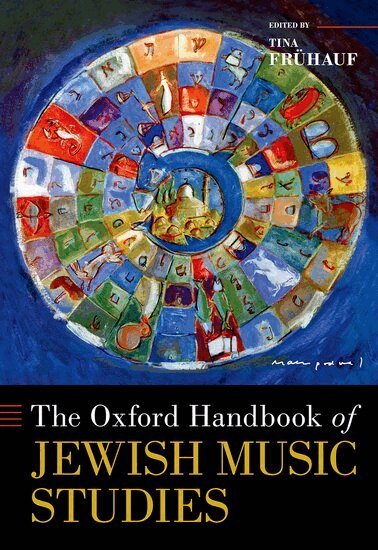
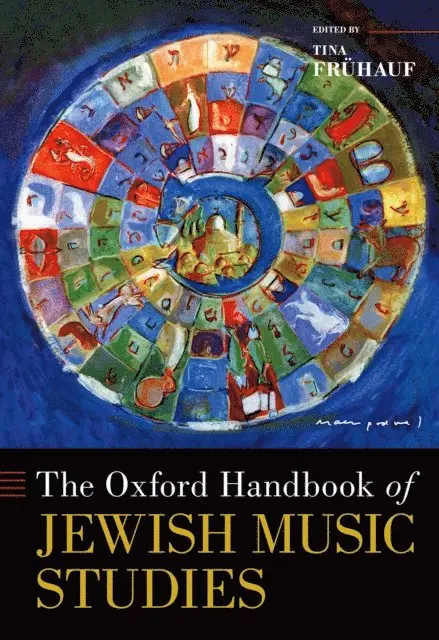
The Oxford Handbook of Jewish Music Studies is the most comprehensive and expansive critical handbook of Jewish music published to date. It is the first endeavor to address the diverse range of sounds, texts, archives, traditions, histories, geographic and political contexts, and critical discourses in the field. The thirty-one experts from thirteen countries who prepared the thirty original and groundbreaking chapters in this handbook are leaders in the disciplines of musicology and Jewish studies as well as adjacent fields. Chapters in the handbook provide a broad coverage of the subject area with considerable expansion of the topics that are normally covered in a resource of this type. Designed around eight distinct sections -- Land, City, Ghetto, Stage, Sacred and Ritual Spaces, Destruction / Remembrance, and Spirit -- the range and scope of The Oxford Handbook of Jewish Music Studies most significantly suggests a new framework for the study of Jewish music centered on spatiality and taking into consideration temporality and collectivity. Within each chapter, authors have selected what they consider to be the most important material relevant to their topic and, drawing on the most authoritative insights from historical and ethnomusicology, Jewish studies, history, anthropology, philology, religious studies, and the visual arts, have taken a genuinely inter- or transdisciplinary approach. Integrated chapter bibliographies provide material for further reading. Together the chapters form a first truly global look at Jewish music, incorporating studies from Central and East Asia, Europe, Australia, the Americas, and the Arab world. Together they span world history, from antiquity until the present day. As such, the Handbook provides a resource that researchers, scholars, and educators will use as the most important and authoritative overview of work within music and Jewish studies.
E-bok
Engelska, 20231 745 kr
Läs direkt efter köp
The Oxford Handbook of Jewish Music Studies is the most comprehensive and expansive critical handbook of Jewish music published to date. It is the first endeavor to address the diverse range of sounds, texts, archives, traditions, histories, geographic and political contexts, and critical discourses in the field. The thirty-one experts from thirteen countries who prepared the thirty original and groundbreaking chapters in this handbook are leaders in the disciplines of musicology and Jewish studies as well as adjacent fields. Chapters in the handbook provide a broad coverage of the subject area with considerable expansion of the topics that are normally covered in a resource of this type. Designed around eight distinct sections -- Land, City, Ghetto, Stage, Sacred and Ritual Spaces, Destruction / Remembrance, and Spirit -- the range and scope of The Oxford Handbook of Jewish Music Studies most significantly suggests a new framework for the study of Jewish music centered on spatiality and taking into consideration temporality and collectivity. Within each chapter, authors have selected what they consider to be the most important material relevant to their topic and, drawing on the most authoritative insights from historical and ethnomusicology, Jewish studies, history, anthropology, philology, religious studies, and the visual arts, have taken a genuinely inter- or transdisciplinary approach. Integrated chapter bibliographies provide material for further reading. Together the chapters form a first truly global look at Jewish music, incorporating studies from Central and East Asia, Europe, Australia, the Americas, and the Arab world. Together they span world history, from antiquity until the present day. As such, the Handbook provides a resource that researchers, scholars, and educators will use as the most important and authoritative overview of work within music and Jewish studies.
Inbunden, Engelska, 2021
762 kr
Skickas inom 5-8 vardagar
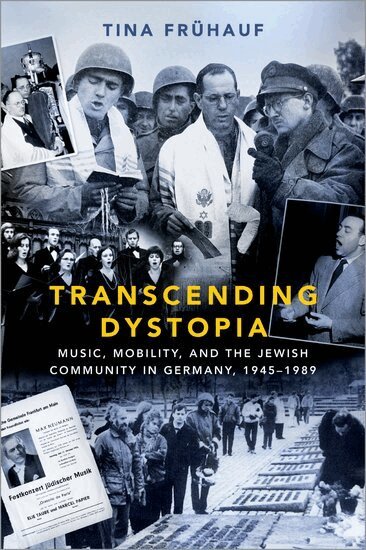
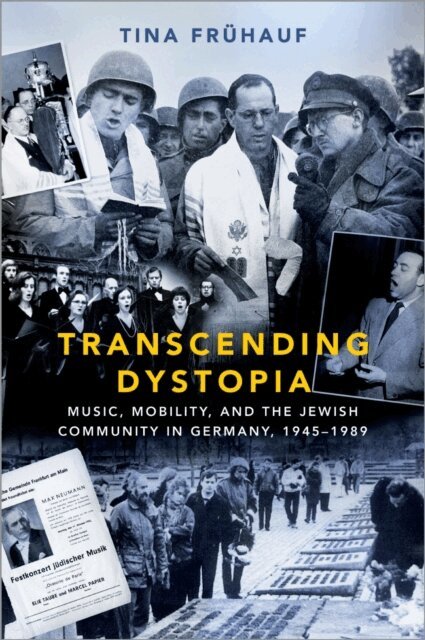
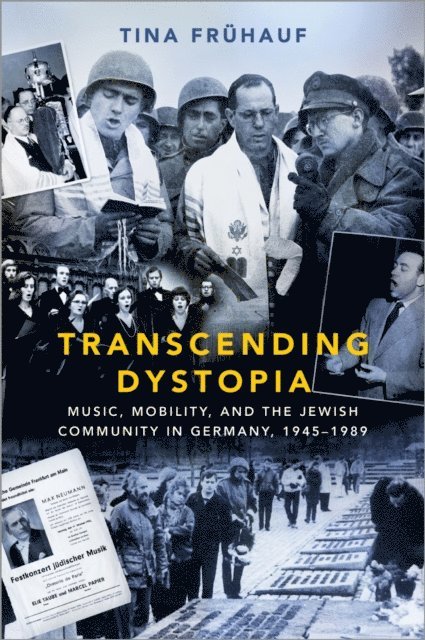
By the end of the Second World War, Germany was in ruins and its Jewish population so gravely diminished that a rich cultural life seemed unthinkable. And yet, as surviving Jews returned from hiding, the camps, and their exiles abroad, so did their music. Transcending Dystopia tells the story of the remarkable revival of Jewish musical activity that developed in postwar Germany against all odds. Author Tina Frühauf provides a kaleidoscopic panorama of musical practices in worship and social life across the country to illuminate how music contributed to transitions and transformations within and beyond Jewish communities in the aftermath of the Holocaust.Drawing on newly unearthed sources from archives and private collections, this book covers a wide spectrum of musical activity-from its role in commemorations and community events to synagogue concerts and its presence on the radio-across the divided Germany until the Fall of the Wall in 1989. Frühauf's use of mobility as a conceptual framework reveals the myriad ways in which the reemergence of Jewish music in Germany was shaped by cultural transfer and exchange that often relied on the circulation of musicians, their ideas, and practices within and between communities. By illuminating the centrality of mobility to Jewish experiences and highlighting how postwar Jewish musical practices in Germany were defined by politics that reached across national borders to the United States and Israel, this pioneering study makes a major contribution to our understanding of Jewish life and culture in a transnational context.
E-bok
PDF, Engelska, 2021788 kr
Läs direkt efter köp
By the end of the Second World War, Germany was in ruins and its Jewish population so gravely diminished that a rich cultural life seemed unthinkable. And yet, as surviving Jews returned from hiding, the camps, and their exiles abroad, so did their music. Transcending Dystopia tells the story of the remarkable revival of Jewish musical activity that developed in postwar Germany against all odds. Author Tina Fruhauf provides a kaleidoscopic panorama of musical practices in worship and social life across the country to illuminate how music contributed to transitions and transformations within and beyond Jewish communities in the aftermath of the Holocaust. Drawing on newly unearthed sources from archives and private collections, this book covers a wide spectrum of musical activity-from its role in commemorations and community events to synagogue concerts and its presence on the radio-across the divided Germany until the Fall of the Wall in 1989. Fruhauf's use of mobility as a conceptual framework reveals the myriad ways in which the reemergence of Jewish music in Germany was shaped by cultural transfer and exchange that often relied on the circulation of musicians, their ideas, and practices within and between communities. By illuminating the centrality of mobility to Jewish experiences and highlighting how postwar Jewish musical practices in Germany were defined by politics that reached across national borders to the United States and Israel, this pioneering study makes a major contribution to our understanding of Jewish life and culture in a transnational context.
Inbunden, Engelska, 2014
1 335 kr
Skickas inom 5-8 vardagar
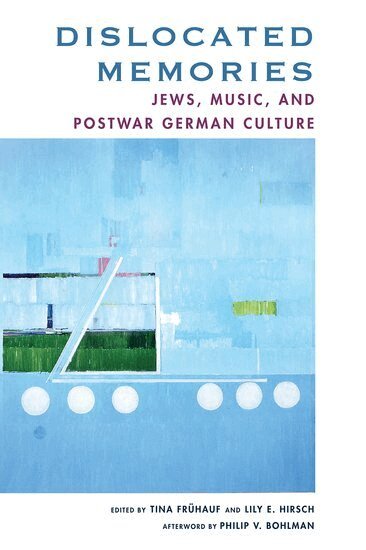
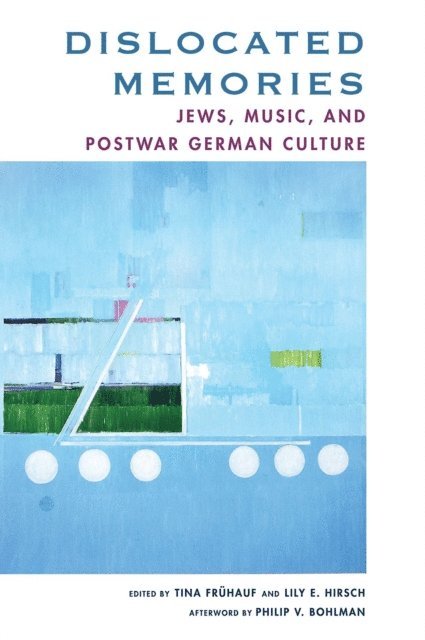
The first volume of its kind, Dislocated Memories: Jews, Music, and Postwar German Culture draws together three significant areas of inquiry: Jewish music, German culture, and the legacy of the Holocaust. Jewish music-a highly debated topic-encompasses a multiplicity of musics and cultures, reflecting an inherent and evolving hybridity and transnationalism. German culture refers to an equally diverse concept that, in this volume, includes the various cultures of prewar Germany, occupied Germany, the divided and reunified Germany, and even "German (Jewish) memory," which is not necessarily physically bound to Germany. In the context of these perspectives, the volume makes powerful arguments on about the impact of the Holocaust and its aftermath in changing contexts of musical performance and composition. In doing so, the essays in Dislocated Memories cover a wide spectrum of topics from the immediate postwar period with music in the Displaced Persons camps to the later twentieth century with compositions conceived in response to the Holocaust and the klezmer revival at the turn of this century. Dislocated Memories builds on a wide range of recent and critical scholarship in Cold War studies, cultural history, German studies, Holocaust studies, Jewish studies, and memory studies. What binds these distinct fields tightly together are the contributors' specific theoretical inquiries that reflect separate yet interrelated themes such as displacement and memory. While these concepts link the multi-faceted essays on a micro-level, they are also largely connected in their conceptual query by focus, on the macro-level, on the presence and the absence of Jewish music in Germany after 1945. Filled with original research by scholars at the forefront of music, history, and Jewish studies, Dislocated Memories will prove an essential text for scholars and students alike.
E-bok
PDF, Engelska, 20141 210 kr
Läs direkt efter köp
Winner of the 2015 Ruth A. Solie Award from the American Musicological SocietyThe first volume of its kind, Dislocated Memories: Jews, Music, and Postwar German Culture draws together three significant areas of inquiry: Jewish music, German culture, and the legacy of the Holocaust. Jewish music-a highly debated topic-encompasses a multiplicity of musics and cultures, reflecting an inherent and evolving hybridity and transnationalism.German culture refers to an equally diverse concept that, in this volume, includes the various cultures of prewar Germany, occupied Germany, the divided and reunified Germany, and even "German (Jewish) memory," which is not necessarily physically bound to Germany. In the context of these perspectives, the volume makes powerful arguments about the impact of the Holocaust and its aftermath in changing contexts of musical performance and composition. In doing so, the essays in Dislocated Memories cover a wide spectrum of topics from the immediate postwar period with music in the Displaced Persons camps to the later twentieth century with compositions conceived in response to the Holocaust and the klezmer revival at the turn of this century.Dislocated Memories builds on a wide range of recent and critical scholarship in Cold War studies, cultural history, German studies, Holocaust studies, Jewish studies, and memory studies. What binds these distinct fields tightly together are the contributors'' specific theoretical inquiries that reflect separate yet interrelated themes such as displacement and memory. While these concepts link the multi-faceted essays on a micro-level, they are also largely connected in their conceptual query by focus, on the macro-level, on the presence and the absence of Jewish music in Germany after 1945. Filled with original research by scholars at the forefront of music, history, and Jewish studies, Dislocated Memories will prove an essential text for scholars and students alike.
Häftad, Engelska, 2012
455 kr
Skickas inom 5-8 vardagar
The Organ and Its Music in German-Jewish Culture examines the powerful but often overlooked presence of the organ in synagogue music and the musical life of German-speaking Jewish communities. Tina Frühauf expertly chronicles the history of the organ in Jewish culture from the earliest references in the Talmud through the 19th century, when it had established a firm and lasting presence in Jewish sacred and secular spaces in central Europe. Frühauf demonstrates how the introduction of the organ into German synagogues was part of the significant changes which took place in Judaism after the Enlightenment, and posits the organ as a symbol of the division of the Jewish community into Orthodox and Reform congregations. Newly composed organ music for Jewish liturgy after this division became part of a cross-cultural music tradition in 19th and 20th century Germany, when a specific style of organ music developed which combined elements of Western and Jewish cultures. Concluding with a discussion of the organ in Jewish communities in Israel and the USA, the book presents in-depth case studies which illustrate how the organ has been utilized in the musical life of specific Jewish communities in the 20th century. Based on extensive research in the archives of organ builders and Jewish musicians, The Organ and Its Music in German-Jewish Culture offers comprehensive and detailed descriptions of specific organs as well as fascinating portraits of Jewish organists and composers. With an extensive companion website featuring full color illustrations and over 200 organ dispositions, this book will be eagerly read by performers, students, and scholars of the organ, as well as students and scholars in historical musicology and Jewish music.
Inbunden, Engelska, 2018
550 kr
Skickas inom 10-15 vardagar
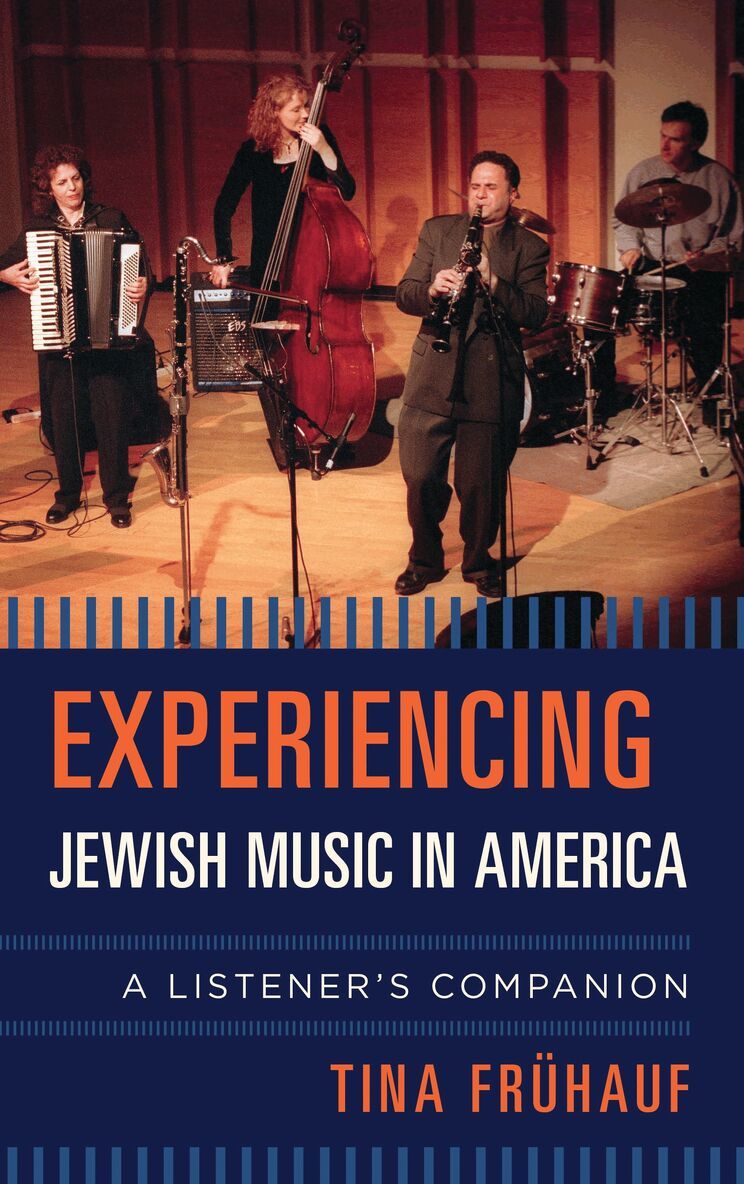
Experiencing Jewish Music in America: A Listener's Companion offers an easy-to-read and new perspective on the remarkably diverse landscape that comprises Jewish music in the United States. This much-needed survey on the art of listening to and enjoying this dynamic and diverse musical culture invites listeners curious about the many types of music in its connection to Jewish life. Experiencing Jewish Music in America is intended to encourage further reading about, listening to, and viewing of this portion of America’s musical heritage, and provide listeners with the tools to understand and appreciate this body of work. This volume is designed to appeal to listeners of all stripes, regardless of ability to read music, and of religious or cultural background. Experiencing Jewish Music in America offers insights into an extensive range of musical genres and styles that have been central to the Jewish experience, beginning with the arrival of the first Jewish immigrants in the sixteenth century and the chanting of the Torah, to the sounds of pop today. It lays the groundwork for the listener’s understanding of music in its relation to Jewish studies by exploring the wide range of venues in which this music has appeared, from synagogue to street to stage to screen. Each chapter offers selected case studies where these unique forms of music were—and still can be—heard, seen, and experienced. This book gives readers unique insights into the challenges of classifying Jewish music, while it traces its history and development on American soil and outlines “ways of listening” so readers can draw clear connections to Jewish culture. The volume thus brings together American Jewish history, the story of American and Jewish music, and the roles of the individuals important to both. It offers the reader tools to identify, evaluate, and appreciate the musical genres, and reflect the growing interest of the past decade in the academic study of Jewish music.
E-bok
Engelska, 2018593 kr
Läs direkt efter köp
Experiencing Jewish Music in America: A Listener''s Companion offers an easy-to-read and new perspective on the remarkably diverse landscape that comprises Jewish music in the United States. This much-needed survey on the art of listening to and enjoying this dynamic and diverse musical culture invites listeners curious about the many types of music in its connection to Jewish life. Experiencing Jewish Music in America is intended to encourage further reading about, listening to, and viewing of this portion of America’s musical heritage, and provide listeners with the tools to understand and appreciate this body of work. This volume is designed to appeal to listeners of all stripes, regardless of ability to read music, and of religious or cultural background. Experiencing Jewish Music in America offers insights into an extensive range of musical genres and styles that have been central to the Jewish experience, beginning with the arrival of the first Jewish immigrants in the sixteenth century and the chanting of the Torah, to the sounds of pop today. It lays the groundwork for the listener’s understanding of music in its relation to Jewish studies by exploring the wide range of venues in which this music has appeared, from synagogue to street to stage to screen. Each chapter offers selected case studies where these unique forms of music were—and still can be—heard, seen, and experienced. This book gives readers unique insights into the challenges of classifying Jewish music, while it traces its history and development on American soil and outlines “ways of listening” so readers can draw clear connections to Jewish culture. The volume thus brings together American Jewish history, the story of American and Jewish music, and the roles of the individuals important to both. It offers the reader tools to identify, evaluate, and appreciate the musical genres, and reflect the growing interest of the past decade in the academic study of Jewish music.
Inbunden, Engelska, 2020
1 260 kr
Skickas inom 10-15 vardagar
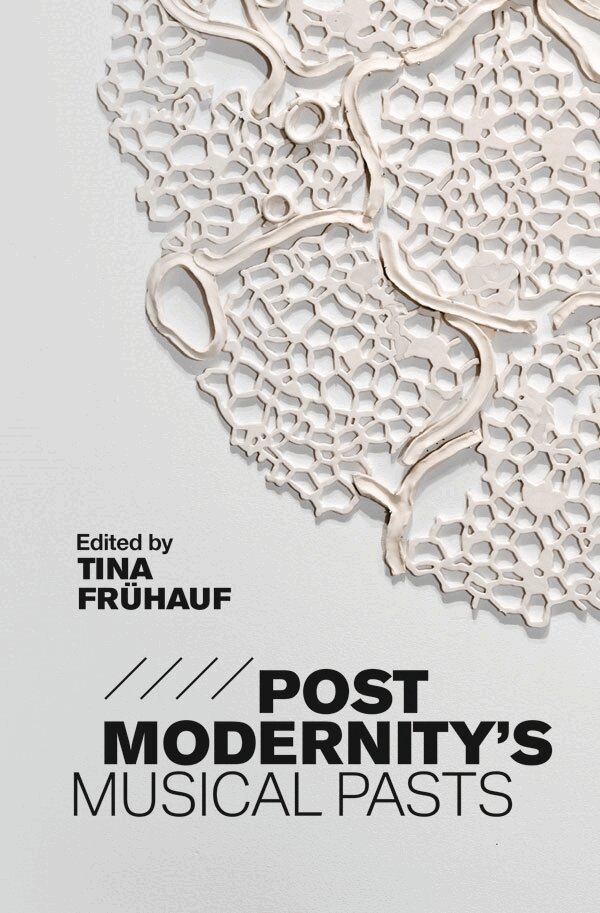
Postmodernity's Musical Pasts covers topics from classical to popular and neo-traditional musics to concerns of the disciplines of musicology. These provide insights how the progression of time and history can be conceptually understood after 1945.Postmodernity's Musical Pasts relies on an extensive and varied spectrum of topics, from both the centre and the periphery of the musicological canon, that mirror the eclectic and diverse nature of the postwar era itself. The first section, 'Time and the (Post)Modern', investigates how to understand manifestations of the past in musical composition with regard to time, on the one hand, and with regard to genre, style, and idiom, on the other. The second section, 'Manifestations of History', shows how time and history manifest themselves in art music. A third section, 'Receptions of the Past', takes the contrasts and transitional moments of post-1945 practices further by looking at the temporality of reception from different angles. A final part investigates questions of nostalgia and the temporalities of belonging. The volume subverts the understanding of temporality as linear progression of past, present, and future. It offers new avenues of conceptual thinking relevant for those engaged in the study of music history and culture and for the humanities at large.
344 kr
Läs direkt efter köp
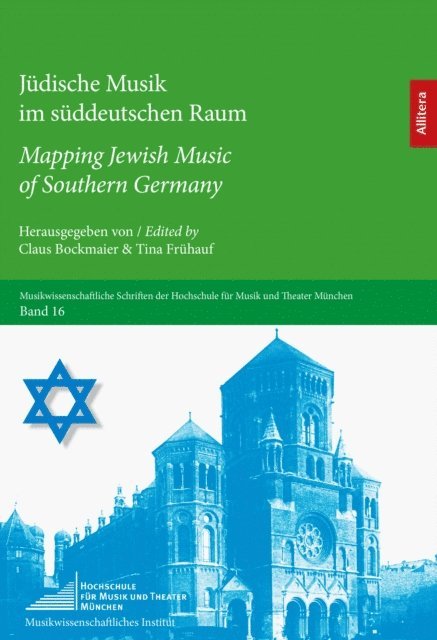
Dieser Band kartiert die jüdische Musik Süddeutschlands im 19. und 20. Jahrhundert: als einen Raum, der jüdische Musikgeschichte produziert, beherbergt und bewahrt; als einen gemeinsamen Raum von Juden und Nicht-Juden mit der möglichen Kultur des Zusammenflusses; und als einen Raum der Ausgrenzung und Verfolgung. Diese Räume - teils symbolisch, abstrakt, metaphorisch, teils konkret und inszeniert - erschließen sich in acht Kapiteln: zur Topografie jüdischen Musiklebens im NS-Staat in München, zum Leben und Wirken von Jakob Schönberg und Richard Fuchs im Kontext jüdischer Kunstmusik, zu den musikalischen Praktiken der jüdischen Gemeinden in Bamberg und Binswangen, zu den Aktivitäten des Esslinger Cantors Mayer Levi, zur Verlagerung süddeutscher und österreichischer jüdischer Musiker und ihrem Wirken in Ferramonti di Tarsia und nicht zuletzt zu Paul Ben-Haims sozialem und intellektuellem Umfeld vor und kurz nach der Emigration.This volume maps Jewish music of southern Germany in the nineteenth and twentieth centuries. It explores this region as a space that produces, inhabits, and preserves Jewish musical history; as a shared space between Jews and non-Jews that can result in a culture of confluence; and as a space of exclusion and persecution. These spaces - some symbolic, abstract, metaphorical, and others concrete and enacted - are unraveled in eight chapters that address the topography of Jewish musical life in the NS state using the example of Munich, the life and work of Jakob Schönberg and Richard Fuchs in the context of Jewish art music, the musical practices of the Jewish communities in Bamberg and Binswangen, the activities of Cantor Mayer Levi of Esslingen, the dislocation of South German and Austrian Jewish musicians and their activities in the camp of Ferramonti di Tarsia, and Paul Ben-Haim''s social and intellectual environment before and shortly after emigration.
E-bok
PDF, Tyska, 2021344 kr
Läs direkt efter köp
Dieser Band kartiert die jüdische Musik Süddeutschlands im 19. und 20. Jahrhundert: als einen Raum, der jüdische Musikgeschichte produziert, beherbergt und bewahrt; als einen gemeinsamen Raum von Juden und Nicht-Juden mit der möglichen Kultur des Zusammenflusses; und als einen Raum der Ausgrenzung und Verfolgung. Diese Räume - teils symbolisch, abstrakt, metaphorisch, teils konkret und inszeniert - erschließen sich in acht Kapiteln: zur Topografie jüdischen Musiklebens im NS-Staat in München, zum Leben und Wirken von Jakob Schönberg und Richard Fuchs im Kontext jüdischer Kunstmusik, zu den musikalischen Praktiken der jüdischen Gemeinden in Bamberg und Binswangen, zu den Aktivitäten des Esslinger Cantors Mayer Levi, zur Verlagerung süddeutscher und österreichischer jüdischer Musiker und ihrem Wirken in Ferramonti di Tarsia und nicht zuletzt zu Paul Ben-Haims sozialem und intellektuellem Umfeld vor und kurz nach der Emigration.This volume maps Jewish music of southern Germany in the nineteenth and twentieth centuries. It explores this region as a space that produces, inhabits, and preserves Jewish musical history; as a shared space between Jews and non-Jews that can result in a culture of confluence; and as a space of exclusion and persecution. These spaces - some symbolic, abstract, metaphorical, and others concrete and enacted - are unraveled in eight chapters that address the topography of Jewish musical life in the NS state using the example of Munich, the life and work of Jakob Schönberg and Richard Fuchs in the context of Jewish art music, the musical practices of the Jewish communities in Bamberg and Binswangen, the activities of Cantor Mayer Levi of Esslingen, the dislocation of South German and Austrian Jewish musicians and their activities in the camp of Ferramonti di Tarsia, and Paul Ben-Haim''s social and intellectual environment before and shortly after emigration.