Tina Spies – författare
Visar alla böcker från författaren Tina Spies. Handla med fri frakt och snabb leverans.
4 produkter
4 produkter
503 kr
Skickas inom 10-15 vardagar
Mit Rückgriff auf unterschiedliche theoretische und methodologische Prämissen ist in den letzten Jahren die Verbindung von Biographie- und Diskursforschung diskutiert worden.
Following the Subject
Grundlagen und Zugänge empirischer Subjektivierungsforschung - Foundations and Approaches of Empirical Subjectivation Research
Häftad, Tyska, 2022
602 kr
Skickas inom 10-15 vardagar
Die Subjektivierungsanalyse verbindet gesellschafts- und sozialtheoretische Reflektionen moderner Selbst- und Weltverhältnisse mit empirischen Analysen zur Wechselwirkung von Subjekten und ihren Subjektivierungsinstanzen. Im Zentrum steht die Frage, wie die von der Gesellschaft hervorgebrachten Subjekte auf das gegenwärtige Subjektivierungsgeschehen einwirken und es bestimmen (können). Der Band führt in theoretische Grundlagen ein, stellt methodische Ansätze vor und diskutiert Potentiale empirisch begründeter Theoriebildung zur Subjektivierung in Gegenwartsgesellschaften.Subjectivation research explores the relationship amongst social theory, reflections of the modern self, and empirical analyses of subject formations. Drawing on these empirical analyses of interactions between subjects and instances of subjectivation, this volume highlights how subjects can ‘talk back’. Readers are introduced to theoretical foundations, methodological approaches as well as empirically based theories on subjectivation in contemporary societies.Die Kapitel "What is Subjectivation? Key Concepts and Proposals for Future Research" werden auf link.springer.com unter der Creative Commons Namensnennung 4.0 International Lizenz veröffentlicht.
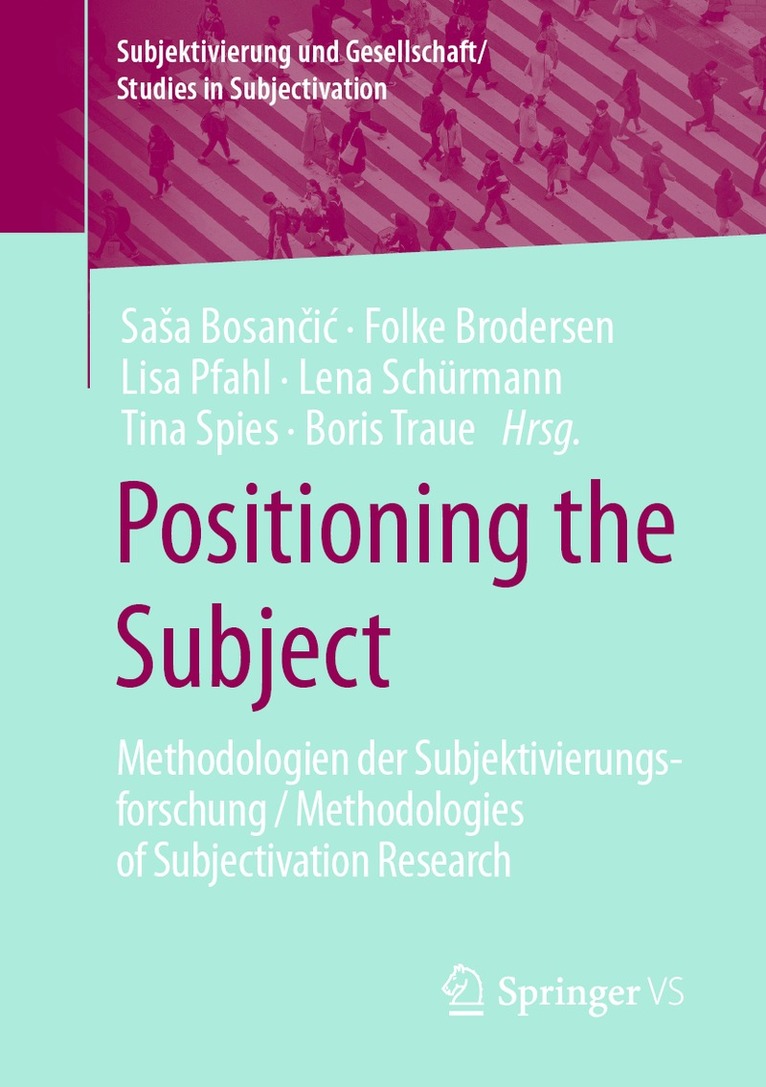
Positioning the Subject
Methodologien der Subjektivierungsforschung / Methodologies of Subjectivation Research
Häftad, Tyska, 2022
800 kr
Skickas inom 10-15 vardagar
Subjektivierungsforschung zielt auf ein Verständnis der subjektkonstitutiven Wirkungen von sozialen, diskursiven und materiellen Ordnungen. Sie untersucht, wie Individuen und Gruppen im Subjektivierungsgeschehen hervorgebracht werden und sich gegenseitig hervorbringen. Wie werden Subjekte positioniert? Wie positionieren sie sich selbst? Zur Untersuchung von Positionen und Positionierungen schließen die Beiträge an subjekttheoretische Ansätze sowie interpretative Verfahren an und erweitern das methodologische Repertoire der Sozial-, Kultur- und Bildungswissenschaften.Subjectivation research aims to understand how subjects are constructed through social, discursive, and material orders, examining how individuals and groups constitute themselves and each other in processes of subjectivation. How are subjects positioned? Why do they position themselves as they do? To uncover diverse positions and positionings, these contributions engage with theories of the subject as well as interpretative approaches to expand the methodological repertoire of the social, cultural and educational sciences.
1 491 kr
Kommande
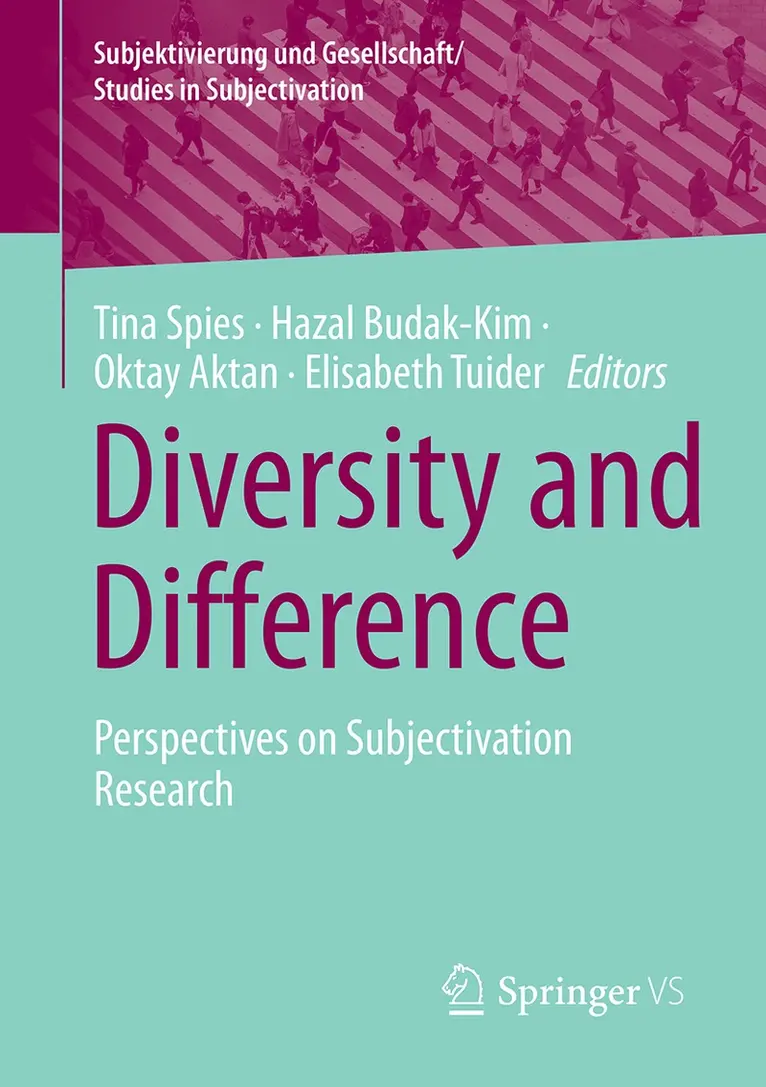
Diversity characterizes societies of the present. Some fight using the slogans “We’ll come united”, “Leave no one behind,” “Black lives matter”, and “Trans rights”. Others, however, experience diversity as a loss of control, which they counter with defense mechanisms, including an “us” versus “them” mindset. Accordingly, demands for inclusion and integration are often interwoven with diffuse fears of “new identities” (Hall), for example of refugees and migrants, but also of queer persons and non-heteronormative ways of life. In turn, demarcation struggles and identitarian divisions within social groups can arise from emphasizing difference, and can lead to “positional fundamentalism” (Villa Braslavsky) or so-called social "trigger points" (Mau/Lux/Westheuser). The publication selects these points of departure to enquire about subjectivation, i.e., about processes of socialization and of “becoming a subject”. The volume includes contributions that offer feminist, post/decolonial, diversity-sensitive perspectives on subjectivation research, alongside critiques of ableism and racism, in order to analyse existing relations of diversity and difference, including the privileges and disadvantages, discriminations, inequalities and racisms embedded in them.