• Fri frakt över 249 kr
  • •
  • Snabba leveranser
  • •
  • Billiga böcker
Kundservice

Du är på sajten för privatpersoner.

Företag, bibliotek eller offentlig verksamhet?

Du handlar på classic.bokus.com, där alla dina funktioner finns intakta.
Till classic.bokus.com
Bokus logotyp. Gå till startsidan.
  • Erbjudanden
  • Nyheter
  • Student
  • Topplistor
  • Barn & ungdom
  • Bokus Play
  • E-böcker
  • Pocketböcker
  • Spel & pussel

10% studentrabatt med kod TERM26

Sidfot

Mina sidor

    Hjälp

    • Kundservice
    • Vanliga frågor och svar
    • Frakt och leverans
    • Retur vid ångerrätt
    • Reklamera vara
    • Betalning
    • Köpvillkor
    • Allmänna villkor
    • Information om webbplatsens tillgänglighet

    Om Bokus

    • Om oss
    • Pressrum
    • För studenter
    • För företag
    • För bibliotek och offentlig verksamhet
    • För leverantörer
    • Hållbarhet

    Populärt

    • Aktuella erbjudanden
    • Presentkort
    • Studentlitteratur
    • Nya böcker
    • Topplistor
    • Signerade böcker
    • Engelska böcker

    Inspiration

    • Boktips
    • BookTok
    • Populära bokserier
    • Barnbokskaraktärer
    • Populära författare
    Logotyp för Bokus
    Följ oss på Facebook (extern länk)Följ oss på Instagram (extern länk)Följ oss på YouTube (extern länk)Följ oss på TikTok (extern länk)
    bokus @ CookiesAnpassa cookiesIntegritetspolicyKöpvillkor
    Till Citymail hemsida (extern länk)Till Budbee hemsida (extern länk)Till Postnord hemsida (extern länk)Till Schenker hemsida (extern länk)Till Early Bird hemsida (extern länk)Till Walleys hemsida (extern länk)
    1. Samhälle och politik
    2. Sociologi och antropologi
    3. Sociologi

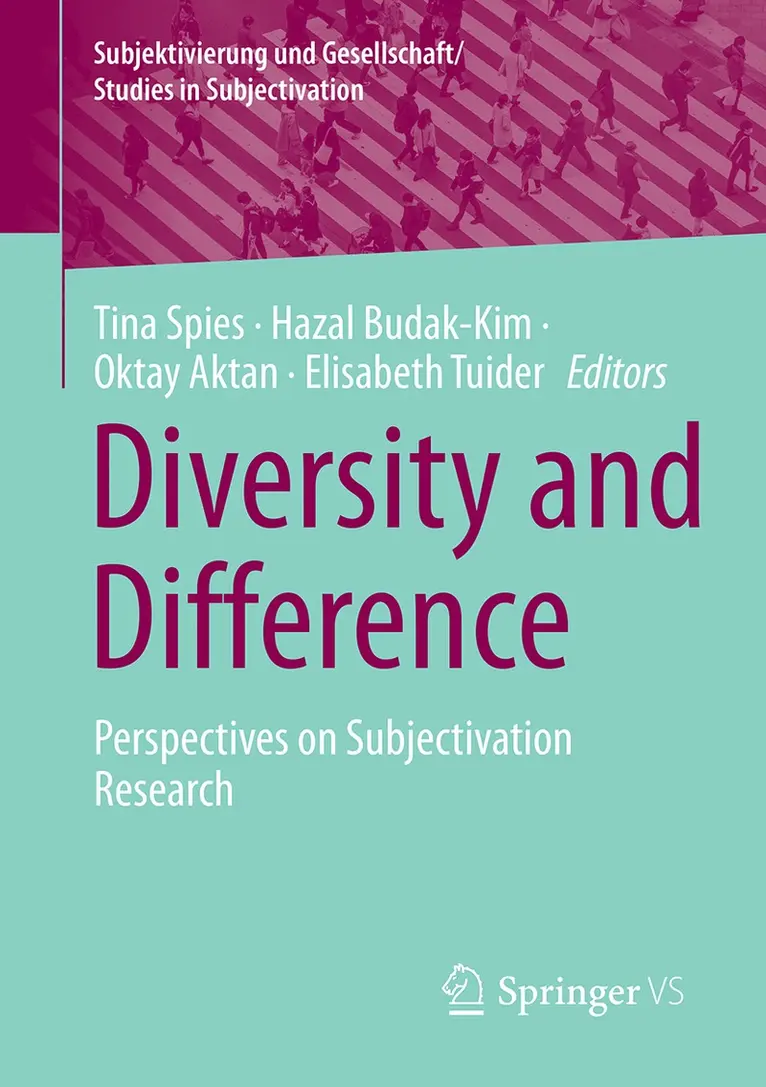
    Diversity and Difference

    Perspectives on Subjectivation Research

    AvTina Spies,Hazal Budak-Kim

    Häftad, Engelska, 2026

    Del i serien Subjektivierung und Gesellschaft/Studies in Subjectivation

    1 196 kr

    Kommande

    Beskrivning

    Diversity characterizes societies of the present. Some fight using the slogans “We’ll come united”, “Leave no one behind,” “Black lives matter”, and “Trans rights”. Others, however, experience diversity as a loss of control, which they counter with defense mechanisms, including an “us” versus “them” mindset. Accordingly, demands for inclusion and integration are often interwoven with diffuse fears of “new identities” (Hall), for example of refugees and migrants, but also of queer persons and non-heteronormative ways of life. In turn, demarcation struggles and identitarian divisions within social groups can arise from emphasizing difference, and can lead to “positional fundamentalism” (Villa Braslavsky) or so-called social "trigger points" (Mau/Lux/Westheuser). The publication takes these points of departure to explore processes of subjectivation, that is, processes of becoming a subject shaped through discourses, power relations, and social practices.The volume includes contributions that offer feminist, post/decolonial, and intersectional perspectives on subjectivation research, alongside critiques of ableism and racism, in order to analyse existing relations of diversity and difference, including the privileges and disadvantages, discriminations, inequalities and racisms embedded in them.

    Produktinformation

    • Utgivningsdatum:2026-11-03
    • Mått:148 x 210 x undefined mm
    • Format:Häftad
    • Språk:Engelska
    • Serie:Subjektivierung und Gesellschaft/Studies in Subjectivation
    • Antal sidor:399
    • Förlag:Springer Fachmedien Wiesbaden
    • ISBN:9783658520144

    Utforska kategorier

    • Sociologi inom Samhälle och politik

    Mer om författaren

    Prof. Dr. Tina Spies, Chair of Sociology, Gender & Diversity at Kiel UniversityDipl.-Soz. Hazal Budak-Kim, Research Fellow at Kiel UniversityDr.  Oktay Aktan, Research Fellow at Kiel UniversityProf. Dr. Elisabeth Tuider, Chair of Sociology of Diversity at Kassel University

    Innehållsförteckning

    • Chapter 1: Historicizing Intersectional Subjectifications.- Chapter 2: Studies on Subjectivation in Postmigrant Societies. Situational Analyses in an Intersectional-decolonial Approach.- Chapter 3: Reflections on “positionality” and its role in addressing difference in methodological designs.- Chapter 4: Paradoxical Difference and the (Im)Possibility of Self-Positioning.- Chapter 5: Dis/Ability and Sexual Difference: On the Subjectivation of Sexuality in Sex Education for People with Disabilities.- Chapter 6: The Somatechnics of Difference: Virginity Certificates, Erectile Dysfunction Medication, and the Gendered and Racialized (Non-)Agentic Subject.- Chapter 7: Prediagnostic Attribution of Persons with Obsessive-Compulsive Disorder: The Sociology of Attribution and Biosubjectivation.- Chapter 8: itsokaynottobeokay—Subjectivation processes of “mental health advocates” on Instagram.- Chapter 9: People with Disabilities in Jewish Religious Communities in France: Subjectivation and Intersectionality.- Chapter 10: Rethinking the Orders of Difference and Embodiment. Lived Experience, Bodies, and Human Rights in Studies of Subjectivation.- Chapter 11: Precarious subjectivation beyond the binary.- Chapter 12: Bildung as the Formation of Heteronormative Subjects? Queer Perspectives on Education and Subjectivation in Times of Antifeminism and Neoliberalism.- Chpater 13: CrossFit: The Construction of “Bulky” Femininity.- Chapter 14: More than Shame and Guilt—Understanding Subjectivation Processes of People who have Unintended Pregnancies as Affective-Discursive Practices.- Chapter 15: Forced Migration, Subjectivation, and Gender: A Biographical Perspective on Migration Experiences from Syria and Ukraine.- Chapter 16: Diversity Programmes, Subjectivation Research and Intersectoral Approach: Tracing “Diversity” from Organisations to Society.- Chapter 17: On the Potential of Bodily Encounters of Different Subjectivities in a Border Conflict.- Chapter 18: Content despite a life of everyday hardship? Self-positionings of Romanian migrants in Vienna through an interpretive lens on subjectivation.- Chapter 19: Cell Phones, Performance, and Participatory Ethnographic Subjectivation Research in Schools.- Chapter 20: Bringing Refusal into Research: Insights from Community-Based Participatory Study with Racially Marginalized Communities in Germany.