Tom Sparks – författare
Visar alla böcker från författaren Tom Sparks. Handla med fri frakt och snabb leverans.
5 produkter
5 produkter
Inbunden, Engelska, 2024
2 061 kr
Skickas inom 3-6 vardagar
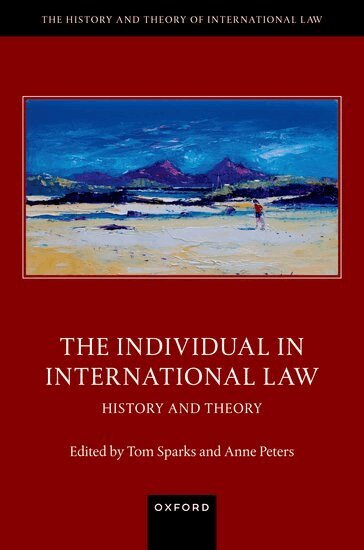
Shifts across the corpus of international law have brought the international legal system into a closer alignment with the interests of the individual. This has led to a great and growing interest in the roles and status of individuals in international law, and provided new impulses for debate. The Individual in International Law is an exploration of what is described as the humanisation of international law. It examines how international law has accommodated individuals, and how individual status, rights, and obligations have become denser and more important in the international legal system. Split into two parts, the book analyses the humanisation of international law in different historical periods and from various theoretical perspectives. The first part focuses on the historical evolution of international law, exploring how the interests of individuals have shaped the development of the legal system from antiquity to 1945, providing a counterpoint to State-centric readings of international law's history. The second part contains theoretical debates, critical approaches, and interdisciplinary investigations, offering perspectives from ius positivism and ius naturalism, Marxism, TWAIL, feminism, global law, global constitutionalism, law and economics, and legal anthropology. The book aims to stimulate further research on the humanisation and dehumanisation of new fields ranging from the ius contra bellum to climate law. The editors' introduction and conclusion frame the contributions, draw together their findings, and address critiques comprehensively. Written by a team of acknowledged experts in their fields, this volume elucidates how the interests, rights, obligations, and responsibilities of individuals have shaped international norms and regimes, and suggests how a reoriented transformative humanism can inform and develop international law in an era of profound ideological, ecological, and technical challenge.This is an open access title. It is made available under a Creative Commons Attribution-Non Commercial-No Derivatives 4.0 International licence. It is available to read and download as a PDF version on the Oxford Academic platform.
E-bok
Engelska, 20241 328 kr
Läs direkt efter köp
Shifts across the corpus of international law have brought the international legal system into a closer alignment with the interests of the individual. This has led to a great and growing interest in the roles and status of individuals in international law, and provided new impulses for debate. The Individual in International Law is an exploration of what is described as the humanisation of international law. It examines how international law has accommodated individuals, and how individual status, rights, and obligations have become denser and more important in the international legal system. Split into two parts, the book analyses the humanisation of international law in different historical periods and from various theoretical perspectives. The first part focuses on the historical evolution of international law, exploring how the interests of individuals have shaped the development of the legal system from antiquity to 1945, providing a counterpoint to State-centric readings of international law''s history. The second part contains theoretical debates, critical approaches, and interdisciplinary investigations, offering perspectives from ius positivism and ius naturalism, Marxism, TWAIL, feminism, global law, global constitutionalism, law and economics, and legal anthropology. The book aims to stimulate further research on the humanisation and dehumanisation of new fields ranging from the ius contra bellum to climate law. The editors'' introduction and conclusion frame the contributions, draw together their findings, and address critiques comprehensively. Written by a team of acknowledged experts in their fields, this volume elucidates how the interests, rights, obligations, and responsibilities of individuals have shaped international norms and regimes, and suggests how a reoriented transformative humanism can inform and develop international law in an era of profound ideological, ecological, and technical challenge.This is an open access title. It is made available under a Creative Commons Attribution-Non Commercial-No Derivatives 4.0 International licence. It is available to read and download as a PDF version on the Oxford Academic platform.
Inbunden, Engelska, 2023
1 149 kr
Skickas inom 10-15 vardagar
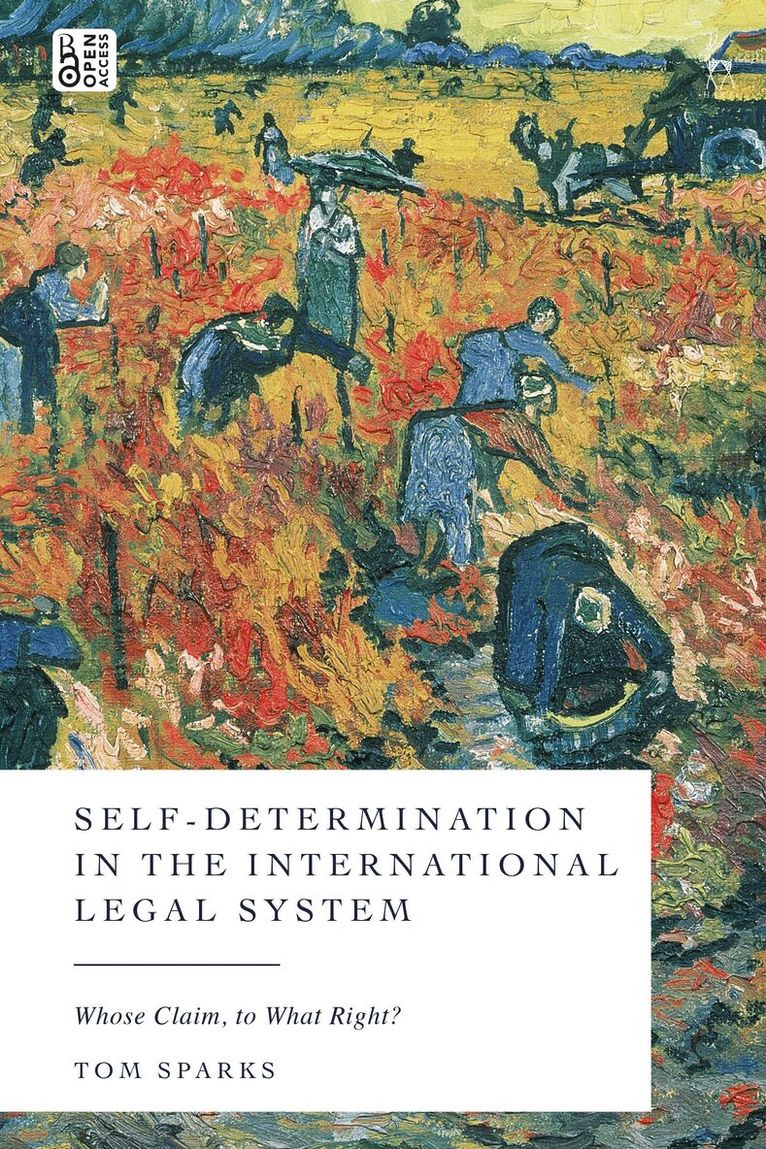
This open access book brings conceptual clarity to the study and practice of self-determination, showing that it is, without doubt, one of the most important concepts of the international legal order. It argues that the accepted categorisation of internal and external self-determination is not helpful, and suggests a new typology. This new framework has four categories: the polity-based, secessionary, colonial, and remedial forms. Each will be distinguished by the grounds, or the legitimacy-claim, on which it is based. This not only ensures consistency, it moves the question out of the purely conceptual realm and addresses the practical concerns of those invoking self-determination. By presenting international lawyers with a typology that is both theoretically consistent and more practically useful, the author makes a significant contribution to our understanding of this keystone of international law.The open access edition of this book is available under a CC BY-NC-ND 3.0 licence on bloomsburycollections.com. Open access was funded by Max-Planck-Institut für ausländisches öffentliches Recht und Völkerrecht.
Häftad, Engelska, 2024
552 kr
Skickas inom 10-15 vardagar
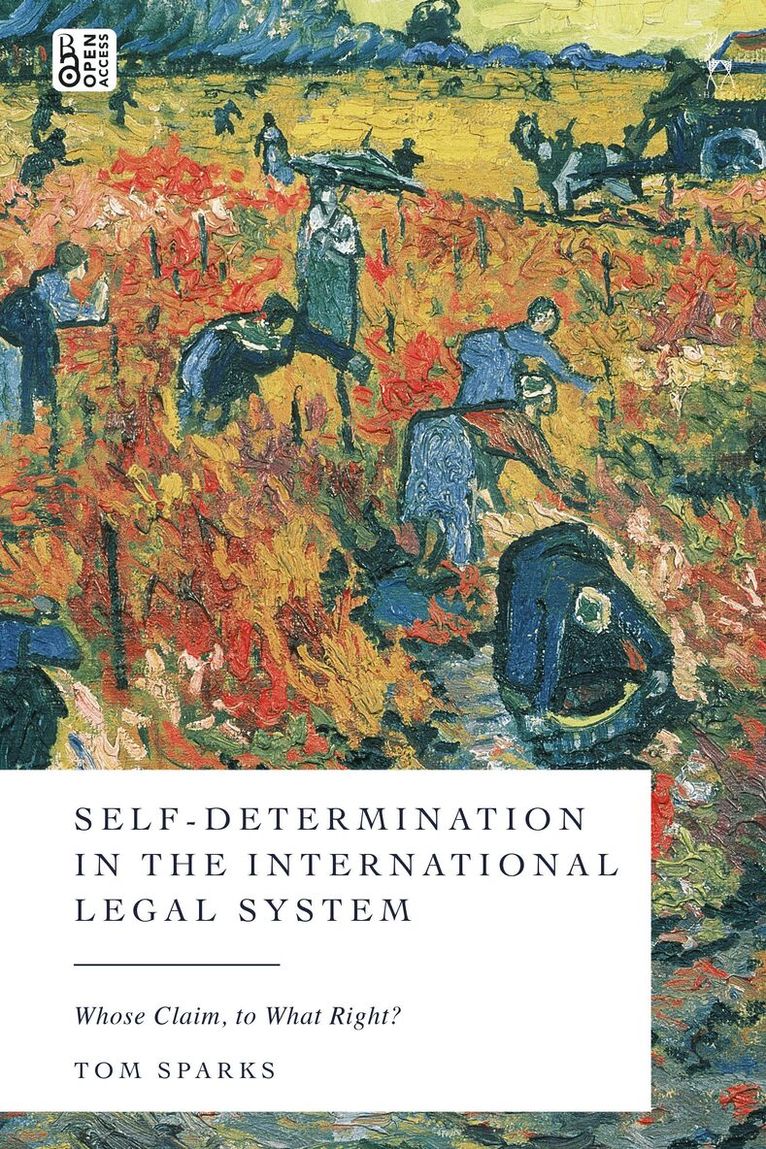
This open access book brings conceptual clarity to the study and practice of self-determination, showing that it is, without doubt, one of the most important concepts of the international legal order. It argues that the accepted categorisation of internal and external self-determination is not helpful, and suggests a new typology. This new framework has four categories: the polity-based, secessionary, colonial, and remedial forms. Each will be distinguished by the grounds, or the legitimacy-claim, on which it is based. This not only ensures consistency, it moves the question out of the purely conceptual realm and addresses the practical concerns of those invoking self-determination. By presenting international lawyers with a typology that is both theoretically consistent and more practically useful, the author makes a significant contribution to our understanding of this keystone of international law.The open access edition of this book is available under a CC BY-NC-ND 3.0 licence on bloomsburycollections.com. Open access was funded by Max-Planck-Institut für ausländisches öffentliches Recht und Völkerrecht.
Inbunden, Engelska, 2022
1 636 kr
Skickas inom 3-6 vardagar