Tong H. Lee – författare
Visar alla böcker från författaren Tong H. Lee. Handla med fri frakt och snabb leverans.
6 produkter
6 produkter
E-bok
PDF, Engelska, 20121 367 kr
Läs direkt efter köp
Relay feedback has attracted considerable research attention for more than a century but there has been no recent summary of the many newly-developed tools and results now available for this important area as a whole, those that have been published tending to focus on one process or controller type only. Relay Feedback is divided into three parts, the first of which is devoted to the analysis of relay feedback systems within a general setting with information on: existence of solutions; existence of limit cycles; local and global stability of limit cycles; limit cycles with more than two switchings per period; plants with time delay; relays with asymmetric hysteresis. The second part, on the improvement of process identification shows the reader how to: modify a standard relay to provide better excitation of a process at a number of important frequencies; devise new algorithms designed to make better use of information from relay feedback tests. The book''s third part is a presentation of recent developments in control design providing: a unified framework for the design of internal-model, proportional-integral-derivative or general-single-loop controllers for SISO or MIMO systems with or without time delays; characterisation of time delays and non-minimum phase zeros for closed-loop systems. Relay Feedback presents a comprehensive, up-to-date and detailed treatment of relay feedback theory, the use of relay feedback for process identification and the use of identified models for general control design in a single volume. The work assumes only knowledge of linear system theory on the part of the reader and should therefore be of use to graduate students and practising engineers as well as to researchers.
Häftad, Engelska, 2012
1 080 kr
Skickas inom 10-15 vardagar
Relay feedback has attracted considerable research attention for more than a century but there has been no recent summary of the many newly-developed tools and results now available for this important area as a whole, those that have been published tending to focus on one process or controller type only. Relay Feedback is divided into three parts, the first of which is devoted to the analysis of relay feedback systems within a general setting with information on: existence of solutions; existence of limit cycles; local and global stability of limit cycles; limit cycles with more than two switchings per period; plants with time delay; relays with asymmetric hysteresis. The second part, on the improvement of process identification shows the reader how to: modify a standard relay to provide better excitation of a process at a number of important frequencies; devise new algorithms designed to make better use of information from relay feedback tests. The book's third part is a presentation of recent developments in control design providing: a unified framework for the design of internal-model, proportional-integral-derivative or general-single-loop controllers for SISO or MIMO systems with or without time delays; characterisation of time delays and non-minimum phase zeros for closed-loop systems. Relay Feedback presents a comprehensive, up-to-date and detailed treatment of relay feedback theory, the use of relay feedback for process identification and the use of identified models for general control design in a single volume. The work assumes only knowledge of linear system theory on the part of the reader and should therefore be of use to graduate students and practising engineers as well as to researchers.
E-bok
PDF, Engelska, 20131 140 kr
Läs direkt efter köp
Precision manufacturing is a development that has been gathering momentum over the last century and accelerating over the last 25 years in terms of research, development, and application to product innovation. The driving force in this development arises from requirements for much higher performance of products, higher reliability, longer life, lower cost, and miniaturization. This development is widely known as precision engineering and, today, it is generally defined as manufacturing to tolerances which are better than one part in 105. Applications are abound and can be found in various semiconductor processes (e.g., lithography, wafer probing, inspection), Coordinate Measuring Machines (CMMs) and precision metrology systems (e.g., Scanning Probe Microscopy (SPM)), and robot/machine tools to carry out micro-assembly (e.g., MEMS) and delicate short wavelength laser processes.As an enabling technology for precision engineering, precision instrumentation and measurement, geometrical calibration and compensation, and motion control are directly important issues to be addressed in the overall system design and realization. This book is focused on these aspects of precision engineering. It is a compilation of the major results and publications from a major project which develop a state-of-the-art high-speed, ultra-precision robotic system. A comprehensive and thorough treatment of the subject matter is provided in a manner that is amenable to a broad base of readers, ranging from the academics to the practitioners, by providing detailed experimental verifications of the developed materials.
E-bok
PDF, Engelska, 2007712 kr
Läs direkt efter köp
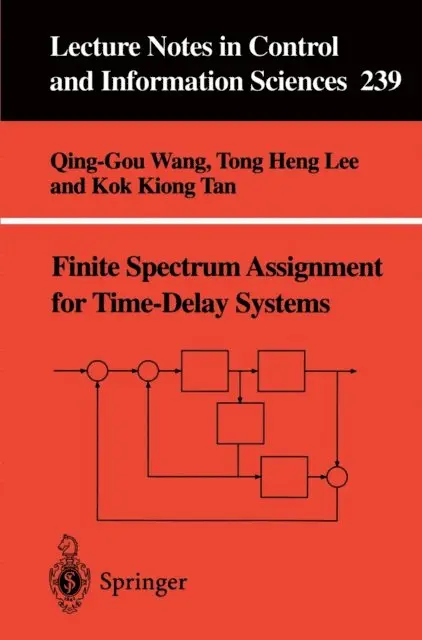
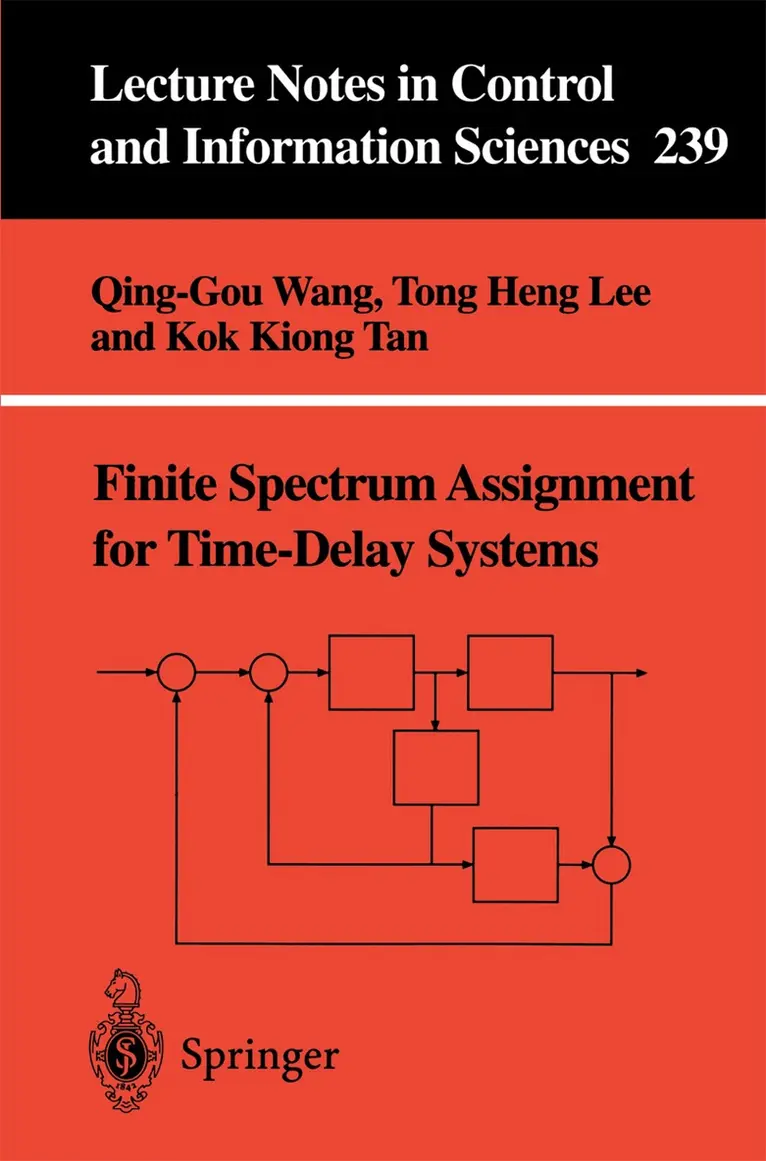
The presence of considerable time delays in many industrial processes is well recognized and achievable performances of conventional unity feedback control systems are degraded if a process has a relatively large time delay compared to its time constants. In this case, dead time compensation is necessary in order to enhance the performances. The most popular scheme for such compensation is the Smith Predictor, but it is unsuitable for unstable or lightly damped processes because the compensated closed-loop system always contains the process poles themselves. An alternative scheme for delay elimination from the closed-loop is the finite spectrum assignment (FSA) strategy and it can arbitrarily assign the closed-loop spectrum. One may note that the Smith Predictor Control can be found in delay systems control books and many process control books, but the FSA control is rarely included in these books. It is therefore timely and desirable to fill this gap by writing a book which gives a comprehensive treatment of the FSA approach. This is useful and worthwhile since the FSA provides not only an alternative way but also certain advantages over the Smith-Predictor. The book presents the state-of-the-art of the finite spectrum assignment for time-delay systems in frequency domain. It mainly contains those works carried out recently by the authors in this field. Most of them have been published and others are awaiting publication. They are assembled together and reorganized in such a way that the presentation is logical, smooth and systematic.
Häftad, Engelska, 1998
543 kr
Skickas inom 10-15 vardagar
The presence of considerable time delays in many industrial processes is well recognized and achievable performances of conventional unity feedback control systems are degraded if a process has a relatively large time delay compared to its time constants. In this case, dead time compensation is necessary in order to enhance the performances. The most popular scheme for such compensation is the Smith Predictor, but it is unsuitable for unstable or lightly damped processes because the compensated closed-loop system always contains the process poles themselves. An alternative scheme for delay elimination from the closed-loop is the finite spectrum assignment (FSA) strategy and it can arbitrarily assign the closed-loop spectrum. One may note that the Smith Predictor Control can be found in delay systems control books and many process control books, but the FSA control is rarely included in these books. It is therefore timely and desirable to fill this gap by writing a book which gives a comprehensive treatment of the FSA approach. This is useful and worthwhile since the FSA provides not only an alternative way but also certain advantages over the Smith-Predictor. The book presents the state-of-the-art of the finite spectrum assignment for time-delay systems in frequency domain. It mainly contains those works carried out recently by the authors in this field. Most of them have been published and others are awaiting publication. They are assembled together and reorganized in such a way that the presentation is logical, smooth and systematic.
Inbunden, Engelska, 2002
1 080 kr
Skickas inom 10-15 vardagar
Relay feedback has attracted considerable research attention for more than a century but there has been no recent summary of the many newly-developed tools and results now available for this important area as a whole, those that have been published tending to focus on one process or controller type only. Relay Feedback is divided into three parts, the first of which is devoted to the analysis of relay feedback systems within a general setting with information on: existence of solutions; existence of limit cycles; local and global stability of limit cycles; limit cycles with more than two switchings per period; plants with time delay; relays with asymmetric hysteresis. The second part, on the improvement of process identification shows the reader how to: modify a standard relay to provide better excitation of a process at a number of important frequencies; devise new algorithms designed to make better use of information from relay feedback tests. The book's third part is a presentation of recent developments in control design providing: a unified framework for the design of internal-model, proportional-integral-derivative or general-single-loop controllers for SISO or MIMO systems with or without time delays; characterisation of time delays and non-minimum phase zeros for closed-loop systems. Relay Feedback presents a comprehensive, up-to-date and detailed treatment of relay feedback theory, the use of relay feedback for process identification and the use of identified models for general control design in a single volume. The work assumes only knowledge of linear system theory on the part of the reader and should therefore be of use to graduate students and practising engineers as well as to researchers.